Trust The Signal: A New Approach To Intuition


Trust the Signal helps ambitious leaders reconnect with intuition through a practical framework of regulation, alignment, and conscious leadership.
When Success Stops Feeling Like Success
There is a particular kind of success that can look complete from the outside while feeling strangely disconnected from the inside. The career is established. The responsibilities are substantial. The decisions keep coming. Yet somewhere along the way, the ability to hear what you actually think, want, or know has become harder to access.
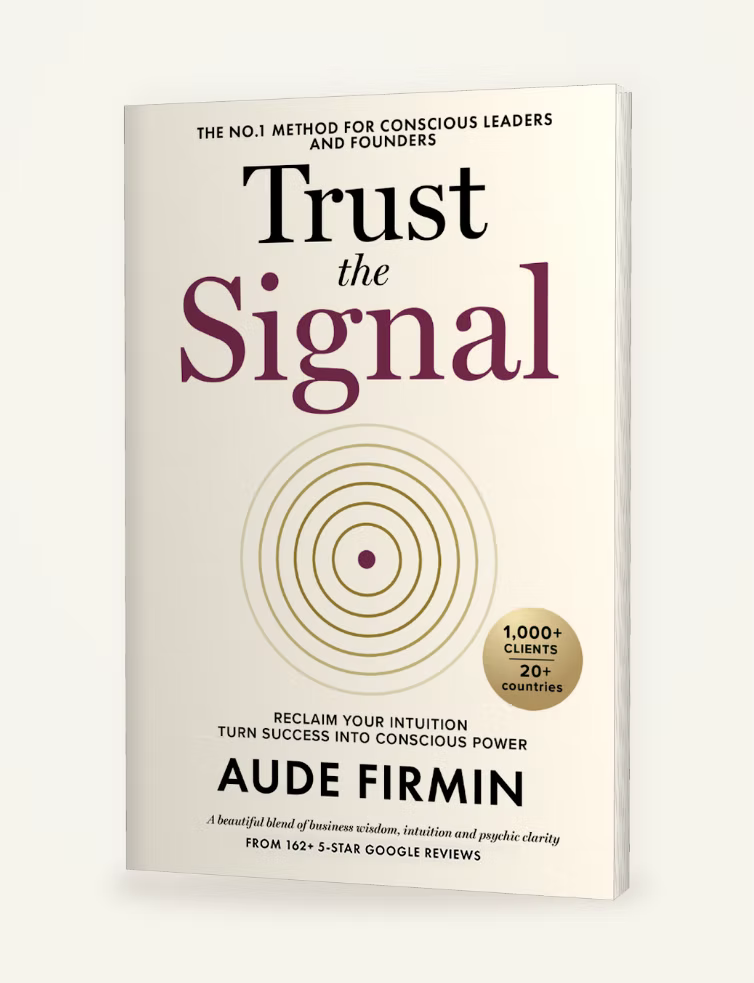
That tension sits at the heart of Trust the Signal, the forthcoming book by Aude Firmin. Rather than presenting intuition as an elusive gift reserved for a select few, Firmin approaches it as a discipline that can be developed, practiced, and applied to real decisions. Her central premise is simple but challenging: people who have spent years learning to override themselves may need to relearn how to listen before they can lead from their own judgment.
The idea comes from an unusual intersection of experience. Firmin spent 15 years in senior roles with major brands including Microsoft, Gucci, Publicis, and Trainline, working closely with executives and boards. She later trained as a psychic medium, became a Reiki Master and intuitive business coach, and tutored at The College of Psychic Studies in London. Across her practice, she has worked with more than 1,000 clients in 20 countries, including founders and senior leaders building organizations at scale.
That combination informs the book's distinctive perspective. Traditional leadership development often emphasizes analysis, strategy, data, and increasingly sophisticated decision making. Yet Firmin argues that another source of information is often overlooked: the body itself. In Trust the Signal, she explores the relationship between regulation and intuition, proposing that a dysregulated system can create noise while a regulated body makes it easier to recognize a meaningful signal.
A Book Designed To Be Used
The structure of Trust the Signal reflects that practical ambition. The book contains 12 chapters, 36 practices, and 96 takeaways, turning its ideas into a framework readers can actively test in their own lives.
Instead of stopping at reflection, each chapter includes a client case, practical takeaways, and exercises designed for immediate application. Readers encounter tools such as the embodied decision scan, which helps them distinguish intuition from fear while making a decision; boundary scripts for difficult conversations; a calendar detox; an alignment audit; and a weekly leadership ritual.
The progression is intentional. The first section, Awakening, examines how adaptation can become identity and how highly capable people can lose access to their own judgment. Regulation and Intuition then turns toward the body's role in perception and decision making. Alignment and Expression explores boundaries, truth, self respect, and the difficult work of choosing alignment over approval. The final section, Purpose and Conscious Leadership, brings those ideas into careers, businesses, vision, and leadership.
For Firmin, the sequence matters. The book is designed to address the foundations before asking readers to build something new on top of them. It speaks both to accomplished people who feel disconnected from their own direction and to practitioners who have meaningful gifts but struggle to create the commercial and personal structures that allow those gifts to grow.
From External Success To Conscious Power
At its core, Trust the Signal asks a question that many accomplished people eventually encounter: What happens when the structures that helped create success no longer fit the person who built it?
Firmin's answer is not to abandon ambition. Instead, she explores what ambition can become when it is informed by greater self awareness, regulation, and alignment. The goal is not simply to make better decisions. It is to develop a different relationship with decision making itself.
That distinction gives the book a broader relevance beyond personal reflection. Its framework is designed for people navigating leadership, entrepreneurship, career transitions, boundaries, visibility, pricing, and purpose. It also reflects Firmin's experience working with leaders who may have access to considerable external expertise yet still find themselves unable to resolve an important internal decision.
The result is a book positioned at the intersection of leadership development and intuitive practice. Its approach challenges readers to consider that more information is not always the missing ingredient. Sometimes, the deeper task is learning how to recognize the information already available within themselves.
Beginning The Practice
Trust the Signal is scheduled for publication on November 26, with a free launch event at The College of Psychic Studies in South Kensington on November 25. For readers curious about the method before the book arrives, Firmin also offers a complimentary seven minute guided Signal Practice designed for founders and conscious leaders facing decisions that have remained unresolved.
For anyone who has built an impressive life but suspects there is another level of clarity beneath the noise, Trust the Signal offers something more substantial than another set of inspirational ideas. It offers a sequence of practices to work through, test, and bring into everyday decisions. Explore the book, learn more about Firmin's approach, and join the launch community to begin developing a more deliberate relationship with your own signal.
Learn More
Explore Trust The Signal The Book
Visit Aude Firmin's Website
Join The Trust The Signal Launch Event

CEO Times Contributor
Covers leadership, business strategy, entrepreneurship, and the people building innovative companies.
This article features partner, contributor, or branded content from a third party. Members of the CEO Times editorial staff were not involved in the creation of this content. All views and opinions are those of the contributor alone.