
Paradyne AI Builds Client-Owned AI In Las Vegas

Paradyne AI builds sovereign systems that give organizations more control over AI infrastructure, data, and mission-specific capabilities.
For many organizations, the early excitement around artificial intelligence has become more practical and measured. Businesses are no longer only asking what AI can do. They are asking where their data goes, who controls the infrastructure, and whether a system can be adapted to the specific realities of their work. Paradyne AI, a sovereign artificial intelligence company headquartered in Las Vegas, is entering that conversation with a model built around client ownership and controlled deployment.
The company’s approach centers on what it describes as AI systems that clients can own and operate within dedicated environments. Rather than relying solely on external platforms or standardized tools, Paradyne AI develops infrastructure, model configurations, and applied systems designed around a client’s operational needs. The goal is to help organizations use artificial intelligence while maintaining clearer control over data, infrastructure, and long-term strategy.
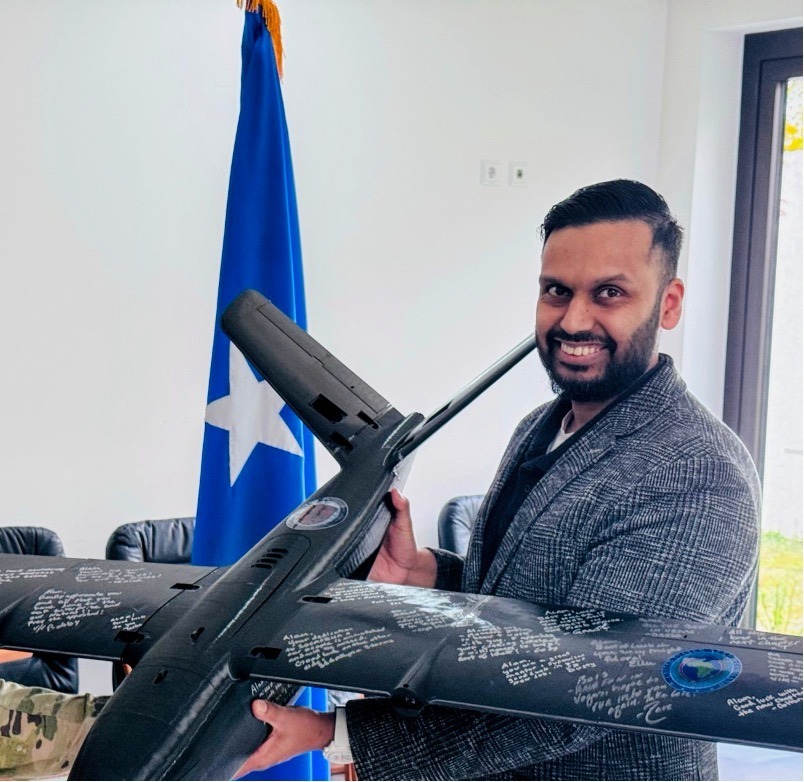
That philosophy is shaped in part by Alam Anthony Jamal, Chief Architect of Paradyne AI. Jamal’s background includes more than two decades of work involving artificial intelligence, intelligence operations, and mission-focused technology in defense-related environments. Those settings often require careful handling of sensitive information, defined operational goals, and systems that can be trusted before they are placed into use.
“In my senior role at the US Department of War, I had reached the edge of policy,” Jamal said. “The technology I was fielding had moved faster than the processes around it. At some point, I wanted to build an environment where the mission could guide the work more directly.”

Why Client-Owned AI Matters
Paradyne AI was built around a clear concern in the enterprise AI market: many organizations want the benefits of artificial intelligence but are cautious about sending sensitive information into systems they do not control. For sectors that handle confidential data, proprietary research, regulated operations, or high-value strategic information, the question of ownership can become just as important as the technology itself.
The company’s model is designed to place more of that control with the client. Paradyne AI says its systems can be structured so that infrastructure, model weights, and data remain within a dedicated client environment. This approach is intended to support privacy-conscious operations, predictable access, and more direct oversight of how AI is deployed.
“There are different ways to deploy AI, and not every model fits every organization,” Jamal said. “Some companies need systems designed around their workflows, their data, and their mission from the beginning. The deployment model matters.”
Paradyne AI develops on-premise AI infrastructure and applied AI capabilities for commercial, operational, and technical use cases. Its work may include custom-tuned models, agentic systems, and purpose-built architectures designed for specific business or scientific problems. Instead of positioning AI as a one-size-fits-all product, the company begins with the problem a client needs to solve and builds from that point.
That structure may also help organizations think more clearly about long-term AI costs. Some companies using cloud-based AI tools can face variable expenses as usage grows. By placing systems inside a dedicated environment, Paradyne AI aims to give clients a different way to manage utilization, capacity, and planning over time.
Building Around The Mission
Paradyne AI’s work also reflects a broader shift in how organizations are evaluating artificial intelligence. Many leaders are moving beyond experimentation and asking how AI can become part of core operations. For those use cases, reliability, control, and fit often matter more than novelty.
The company researches and builds custom artificial neural networks and multi-model systems that can be tailored to specific challenges. In some cases, these systems may be designed to compare outputs, evaluate information from different models, and provide more structured results before a response is delivered to the user.
“AI should be matched to the actual problem,” Jamal said. “That takes more work than adapting a generic tool, but it can create systems that are better aligned with the client’s needs.”
Paradyne AI also emphasizes computing infrastructure as part of its offering. The company operates high-performance on-site computing resources built with NVIDIA Blackwell GPU architecture, with appliances manufactured in partnership with Supermicro. For clients evaluating sovereign AI, that infrastructure is part of a larger focus on performance, discretion, aand operational control.
Jamal’s professional background adds a human dimension to the company’s direction. His career includes work in artificial intelligence integration, computer vision, sensor fusion, and intelligence leadership. He has also received recognition through defense and intelligence community awards – notably the Superior Achievement Award from the National Defense Industrial Association. He also completed executive education through institutions including the University of Oxford, MIT, Yale University, and the USAF Air War College.
Award Winning Custom AI Excellence In Nevada Today
Paradyne AI has been recognized as the Best Custom AI Systems Provider in Nevada of 2026 by Best of Best Review, honoring the company’s leadership in sovereign AI, client owned infrastructure, and custom engineered artificial intelligence systems.
Las Vegas And A Different AI Path
Paradyne AI’s decision to build from Las Vegas is also part of its identity. Rather than position itself within a traditional coastal technology hub, the company is developing sovereign AI capacity from a city increasingly associated with infrastructure, enterprise growth, and applied innovation.
For Jamal, the move represents a shift from large institutional systems into a more direct building environment. After leaving federal service in 2026, he joined Paradyne AI to help create systems guided by specific client missions rather than broad technology trends.
“We are not trying to make clients tenants in someone else’s strategy,” Jamal said. “When the work is complete, the goal is for them to understand, operate, and own the system supporting their mission.”
As organizations become more selective about how they adopt artificial intelligence, Paradyne AI is presenting a model focused on ownership, customization, and controlled deployment. Its work reflects a practical question now facing many enterprises: not simply whether they should use AI, but whether the AI they use should be built around their own mission from the start.
To learn more about Paradyne AI and its sovereign AI systems, visit paradynetech.ai or email info@paradynetech.ai for more information.

CEO Times Contributor
Covers business, innovation, and leadership, with a particular interest in entrepreneurs and emerging brands.
This article features partner, contributor, or branded content from a third party. Members of the CEO Times editorial staff were not involved in the creation of this content. All views and opinions are those of the contributor alone.