
Atlantic Health Strategies: Building Secure, Reliable Technology for Behavioral Healthcare

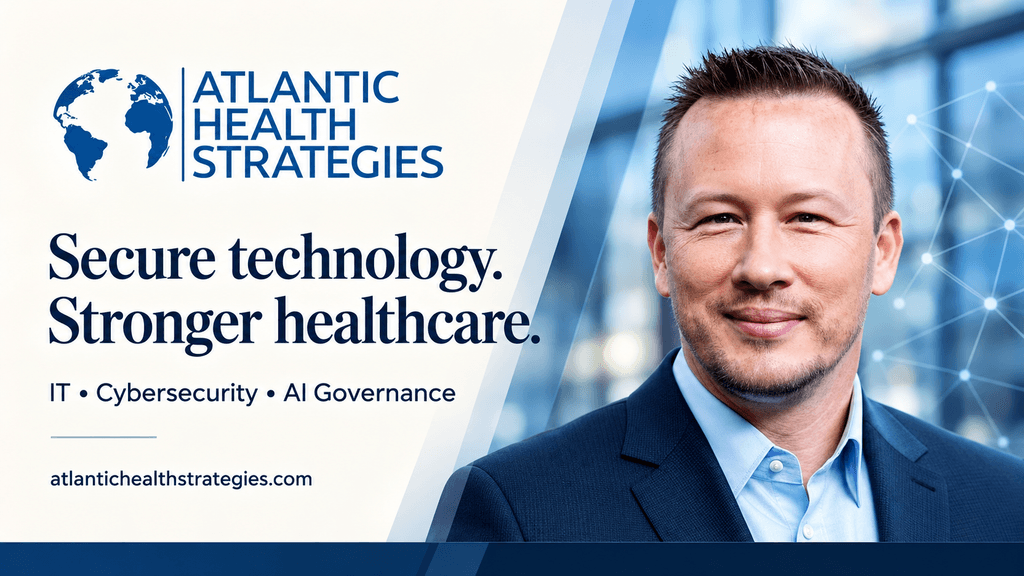
How integrated IT support, cybersecurity, breach readiness, and AI governance help providers protect patient information and strengthen daily operations.
An employee opens a convincing email and enters a password into a fraudulent website. A departing staff member retains access to clinical systems. A clinician uploads patient information into an AI tool without knowing how that information will be stored or used.
Each situation begins with an ordinary workplace action. Each can create consequences that extend across patient privacy, clinical operations, and organizational accountability.
For behavioral health providers, technology decisions are inseparable from the responsibility to deliver safe, consistent care.
Atlantic Health Strategies approaches healthcare IT through that operational lens. The firm connects technology support with compliance and executive oversight, helping providers build systems that staff can use reliably and leadership can manage responsibly.
The work extends from everyday IT management to cybersecurity, incident preparedness, and governance for the growing use of artificial intelligence in healthcare.
Reliable IT Is Part of the Care Infrastructure
A treatment organization depends on technology throughout the patient journey. Staff use electronic medical records to document services, access clinical information, coordinate care, and support billing. Administrative teams rely on email, shared files, communications platforms, and workforce systems.
When those systems become unavailable or unreliable, the effects reach beyond the IT department.
Atlantic’s technology services address the operating environment around these tools, including user access, device management, systems support, and electronic medical record implementation and optimization.
The objective is to create a dependable foundation with clear ownership. Providers need to know which systems they use, who can access them, how problems are escalated, and what happens when a critical service becomes unavailable.
“Technology is part of the care infrastructure,” says Benjamin Fillmore, Chief Technology Officer of Atlantic Health Strategies. “If clinicians cannot access the information they need, or leadership cannot trust how that information is protected, the problem becomes operational very quickly.”
That perspective connects IT performance with the daily responsibilities of clinical teams and organizational leadership.
Healthcare Cybersecurity Requires Continuing Attention
Cybersecurity depends on how systems are configured, maintained, and used over time.
Access should reflect an employee’s responsibilities. Devices need appropriate protection. Updates require follow-through. Staff need to recognize suspicious activity and know how to report it. Leadership needs visibility into unresolved vulnerabilities and the work required to address them.
“The most damaging incidents are often the most preventable,” Fillmore says. “Strong passwords, updated systems, encrypted devices, and ongoing monitoring go a long way. Behavioral health organizations do not need overly complicated tools. They need dependable systems that reduce risk and keep patient information safe.”
Those foundations work best as part of a coordinated security program. Multifactor authentication, appropriate access restrictions, secure configurations, and workforce education can strengthen protection when implemented and maintained together.
Atlantic connects these technical measures with operational processes, helping providers establish responsibility for account management, staff transitions, system changes, and corrective actions.
For behavioral health organizations, the sensitivity of patient information makes that coordination especially consequential.
From Security Risk Assessment to Corrective Action
A healthcare security risk assessment should give leadership a practical understanding of where electronic protected health information resides and what could threaten its confidentiality, integrity, or availability.
The assessment needs to account for the organization’s actual environment: its applications, devices, vendors, workforce practices, and information flows.
Its findings must then inform action.
An identified weakness needs an owner, a response, and a way to confirm that the response has been implemented. As services, systems, or staffing change, the organization needs to revisit whether its protections remain appropriate.
“An assessment has value when it changes what the organization does,” says Sariah Hopkins, CEO and founder of Atlantic Health Strategies. “Leadership needs to understand the risk, decide what requires attention, and make sure the corrective work happens.”
Atlantic’s integrated model helps connect those findings with IT management, policies, staff preparation, and compliance oversight.
That connection gives providers a way to move from identifying exposure to managing it.
Breach Readiness Begins Before an Incident
During a suspected security incident, technical recovery and organizational decision-making must proceed together.
The provider needs to contain the incident, preserve relevant evidence, understand which systems and information may be affected, and maintain essential operations. Leadership also needs a clear process for involving legal counsel, insurers, vendors, and specialized response professionals as appropriate.
A security incident and a reportable breach are distinct determinations. Establishing what occurred and evaluating the information involved are essential to an informed response.
Atlantic’s role connects operational coordination and technology support with the organization’s compliance and legal response. Counsel advises on legal obligations, while technical specialists may be needed to investigate the incident and support recovery.
“A response plan needs to tell people what to do when systems are unavailable and the facts are still developing,” Fillmore says. “Who makes decisions? Who contacts the vendors? What evidence needs to be preserved? How will staff continue essential work? Those responsibilities should be established before an incident occurs.”
Preparedness also includes reviewing downtime procedures and testing recovery capabilities. A backup is useful only if the organization can restore the information it needs and resume operations.
AI Governance Is Now an Operational Responsibility
Artificial intelligence introduces another layer of technology risk and opportunity.
Healthcare teams may use AI to draft administrative content, summarize information, support documentation, or automate routine tasks. These applications can offer value, but they also raise questions about privacy, accuracy, access, and accountability.
Providers need a clear understanding of which tools are approved, what information may be entered, and which uses require additional review.
An enterprise subscription or a vendor’s security claim does not, by itself, establish that every proposed healthcare use is appropriate. Evaluation needs to consider the specific product, contractual terms, configuration, data handling, and intended workflow.
Practical AI governance establishes boundaries around these decisions.
It includes an inventory of AI tools, a process for approving uses, staff training, and review requirements appropriate to the task. Uses involving patient information, clinical judgment, billing, or regulatory interpretation warrant closer scrutiny than a routine administrative draft.
“The first question is what the tool will be allowed to access and do,” Fillmore says. “A system drafting general training content has a different risk profile from one processing patient records or taking actions inside an application. Permissions and oversight need to reflect that difference.”
Human review must also be meaningful. The reviewer needs the expertise and information required to identify inaccurate, incomplete, or unsupported output.
Keeping Leadership Accountable as Technology Evolves
IT, cybersecurity, and AI governance involve decisions about resources, access, patient information, and organizational risk. Those decisions require executive attention.
A provider needs clear ownership for evaluating new tools, approving changes, monitoring performance, and responding when problems emerge.
“Healthcare organizations remain accountable for the work performed in their name,” Hopkins says. “That includes work supported by AI. Our role is to help providers put the right processes around technology so innovation supports quality, privacy, and responsible operations.”
Atlantic brings technology into the same operating framework as compliance, workforce readiness, and clinical documentation.
That integration matters when a problem crosses departments. An access issue may begin with a staffing change. A documentation problem may involve an electronic medical record workflow. An inappropriate AI use may reveal gaps in both training and technology controls.
Addressing the full process helps organizations build more durable improvements.
A Technology Partner for the Work That Continues
Reliable technology requires continuing maintenance, support, and oversight.
As a behavioral health organization adds staff, changes vendors, expands services, or adopts AI, its systems and governance need to evolve alongside it.
Atlantic Health Strategies focuses on that continuing work: connecting technical expertise with the practical responsibilities of running a healthcare organization.
For providers, the objective is a technology environment that supports care, protects sensitive information, and gives leadership a clearer understanding of its risks and responsibilities.
To learn more about Atlantic Health Strategies and its healthcare IT managed services, cybersecurity, breach readiness, and AI governance support, visit atlantichealthstrategies.com.

CEO Times Contributor
Covers business, innovation, and leadership, with a particular interest in entrepreneurs and emerging brands.
This article features partner, contributor, or branded content from a third party. Members of the CEO Times editorial staff were not involved in the creation of this content. All views and opinions are those of the contributor alone.