
Robert Menzies Institute CEO rediscovers forgotten Australian explorers: Wilkinson and Gosse

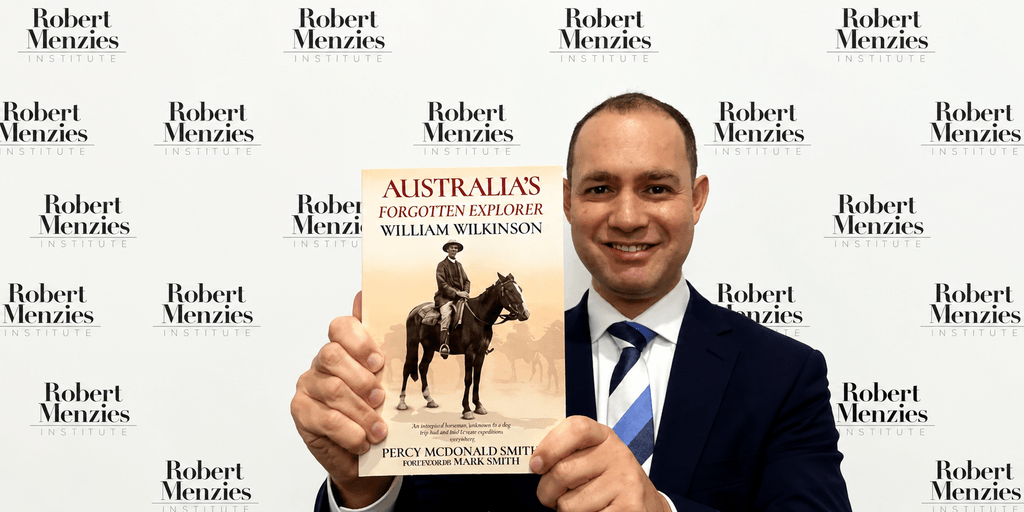
Mark Smith has revived the forgotten journeys of Australian explorers William Wilkinson.
Mark Smith with the new book Australia's Forgotten Explorer. To buy the book go to liveheart.com.au/wilkinson.
While Australian soldiers fought at Gallipoli in 1915, William Wilkinson travelled 12,000 kilometres over 847 days through remote Queensland and the Northern Territory, bringing news, mail, hope and spiritual support to isolated communities. Armed with a Bible, saddle and gun, he journeyed alongside two Indigenous guides and 15 horses, exploring regions largely unknown to Europeans.
Wilkinson's remarkable story is being revived by historian and writer Mark Smith through Australia's Forgotten Explorer, discussed on a Robert Menzies Institute (RMI) podcast hosted by CEO Georgina Downer at the University of Melbourne. The discussion also revealed a fascinating connection to the Downer family.
More than a clergyman, Wilkinson served as an explorer, blacksmith, messenger and occasional medical helper. Yet, unlike James Cook or Burke and Wills, his contributions have largely faded from Australian history.
Smith's mission is deeply personal. His grandfather, Anglican priest Percy Smith, wrote about Wilkinson following his death in 1935. First published in 1947, the original book called The Strenuous Saint remained largely forgotten for decades. Now, approaching its 80th anniversary, Mark Smith is bringing this extraordinary story of service, exploration and resilience back into the public eye.
"It was a story that my grandfather thought was worth telling," Smith says.
"And I think he was right."
"Some of us like to stay close to the campfire. Some of us like to wander. Wilkinson was definitely a wanderer."
Wilkinson was not looking for fame. He was not searching for gold or trying to put his name on a map. He was simply doing his duty.
"For me, it's about bringing this remarkable story back into the public eye," Smith says.
Wilkinson, he believes, belongs in the company of Australia's better-known explorers.
Forgotten Explorers, Gosse and Wilkinson
Like William Wilkinson, explorer William Gosse has largely faded from Australian memory. In 1873, Gosse named Ayers Rock (now Uluru) after South Australian Premier Henry Ayers and the Musgrave Ranges after Governor Anthony Musgrave. Although he died at just 38 in 1881, his legacy survives through landmarks including Gosse’s Bluff, the Gosse River and land on Kangaroo Island. Gosse’s Bluff also holds deep significance in Western Arrernte Dreaming stories.
His family legacy extends to Australia's longest serving foreign minister, Alexander Downer, a descendant who carries “Gosse” as a middle name.
Similarly, Wilkinson's contributions remained largely forgotten, preserved through his diaries, photographs and the efforts of Percy Smith, who documented his remarkable life.
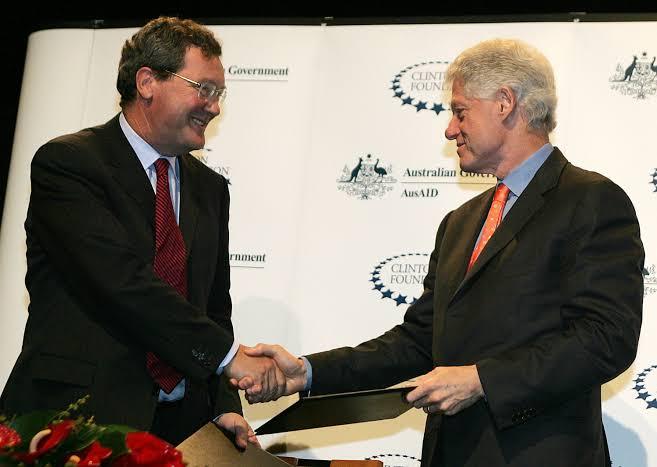
A descendent of an explorer. Australia's longest-serving Minister for Foreign Affairs and the tenth leader of the Federal Liberal party Alexander Downer meeting US President Bill Clinton.
Riding Into The Unknown
After migrating from England, Wilkinson worked as a plasterer in Sydney and raised seven children before entering the priesthood. His mission took him into remote Northern Territory to determine whether Anglican communities needed a permanent priest. Although he confirmed the need, it took another twenty years before Percy Smith arrived in 1933 and established the first church in 1933.
Travelling through isolated regions with few roads and limited communication, Wilkinson combined exploration with religious service and survival. He delivered mail, shared news, helped residents write letters, conducted baptisms and marriages, and offered spiritual guidance.
He also provided occasional medical assistance, becoming a vital connection to the outside world for families living in Australia's remote interior.
The War Comes To The Outback
Wilkinson's extraordinary journey unfolded during World War I, while Australian soldiers fought at Gallipoli and on the Western Front. Two of his sons served in the war, and his youngest was killed in Belgium in 1916 at just 27. Meanwhile, Wilkinson travelled through remote regions of Australia where European knowledge of the land and its people remained limited.
His travels brought him into contact with German Lutheran communities during a period of growing hostility toward German Australians. Many faced internment, while 49 Lutheran schools in South Australia closed in 1917 amid restrictions on German language education.
At the Hermannsburg Lutheran missions, Wilkinson met anthropologist and missionary Carl Strehlow and shared news about the transfer of German mission operations to Anglican control in Brisbane. The controversy extended into politics, with James Menzies, father of future prime minister Robert Menzies, crossing the floor of parliament in 1916 to oppose legislation targeting German speaking Lutheran schools.
Wilkinson's experiences revealed how the effects of war reached far beyond Europe's battlefields and into Australia's most isolated communities.
A Complicated Encounter With Indigenous Australia
Wilkinson's diaries offer valuable insights into Aboriginal and European relations during an era of government protection and segregation policies. His survival depended heavily on Aboriginal guides, whose knowledge of the landscape helped him navigate unfamiliar and dangerous territory.
Aboriginal communities also taught Wilkinson how to find traditional foods, including quandongs, mulga apples and yams, supplementing his diet of salt beef, damper and tea. He hunted native animals and shared food with local communities while observing cultural practices, including differences in burial traditions between coastal and desert groups.
However, his encounters also exposed the harsh realities of European settlement. Conflicts arose over land, livestock and unfamiliar laws. Aboriginal people sometimes killed cattle for survival, while authorities considered it theft. Similarly, some of the 44,000 wooden telegraph poles erected across Australia were used as firewood, highlighting different understandings of land and resources.
Wilkinson also witnessed the disruption of traditional Aboriginal life through land dispossession, the introduction of tobacco and opium, and tensions between communities. Even his Aboriginal guides sometimes feared entering unfamiliar territories.
Although his journeys reflected cooperation and cultural exchange, they also unfolded amid the inequalities and hardships of frontier Australia. His unpublished diaries remain an important historical record, offering firsthand observations that, as Mark Smith emphasises, must be understood within the attitudes and language of their time.
Missionaries: Protectors And Agents Of Change
Wilkinson's story reveals the complex role of Christian missionaries in Aboriginal Australia. During the protection and segregation era, churches provided education, food, shelter and medical care where government support was limited.
At 'The Bungalow' in Alice Springs, Ida Standley educated Aboriginal children, while Lutheran missionaries at Hermannsburg taught in the Arrernte language, helping preserve it. Anglican missions also offered refuge from frontier violence.
However, missionaries often imposed European beliefs and customs, disrupting Aboriginal traditions and limiting Indigenous independence. Their legacy reflects both compassion and control.
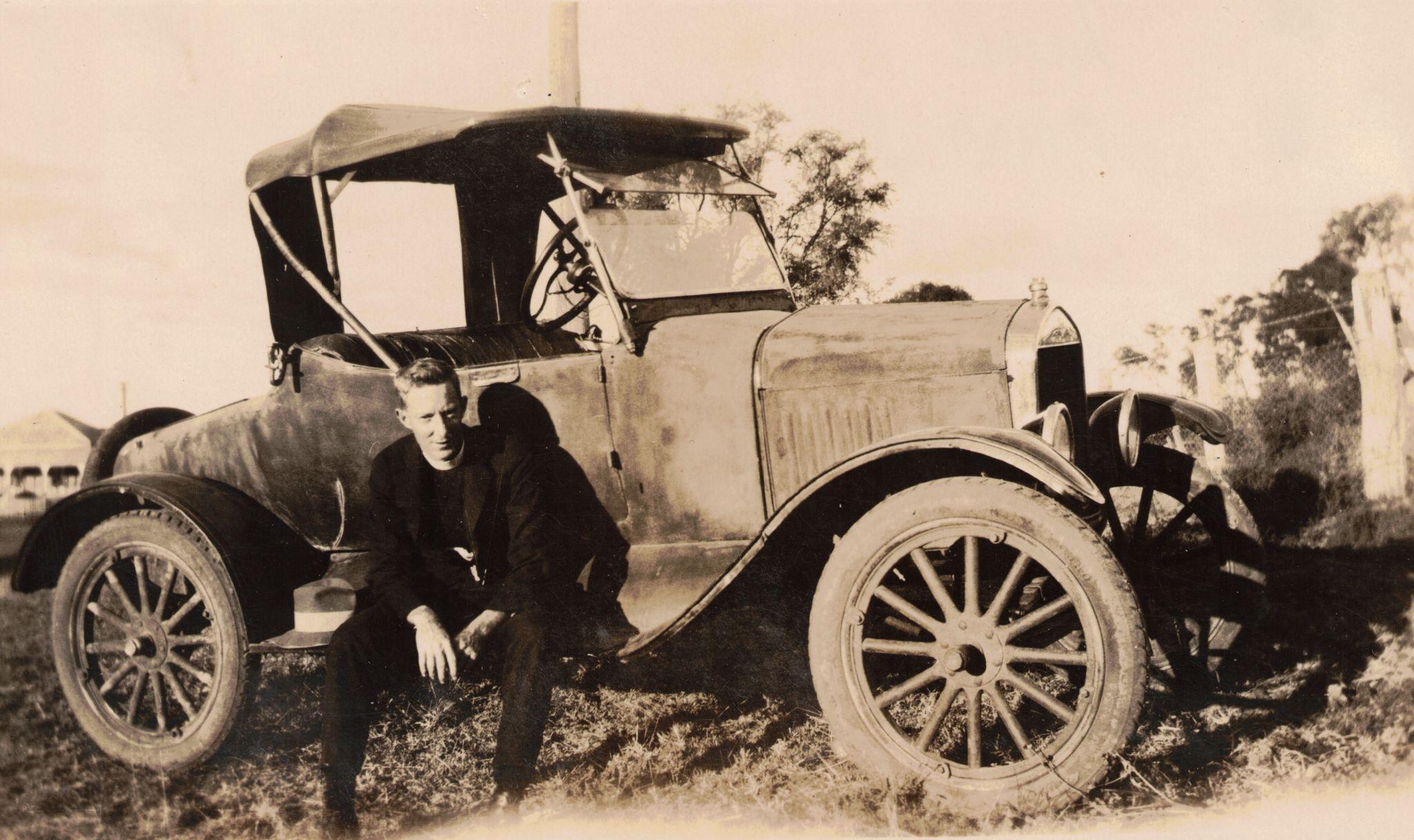
Percy Smith MBE was inspired by William Wilkinson. In 1933 he responded to his call and became the first permanent priest in Alice Springs for the Church of England.
The Man Who Followed Wilkinson
Inspired by Wilkinson, Anglican priest Percy Smith joined the Bush Brotherhood tradition and spent twenty years serving Indigenous communities in Central Australia. He promoted education while emphasising family connections, establishing St John's Hostel in Alice Springs and later St Francis House in Adelaide.
St Francis House helped educate future Indigenous leaders, including Charles Perkins, John Moriarty and Gordon Briscoe. Among its 66 former residents, seven received the Order of Australia, while others achieved success in sports and contributed to the 1960s civil rights movement. Percy's work reflected both the compassion and limitations of his era.
Why Wilkinson Matters Today?
For Mark Smith, reviving his grandfather's book means preserving the legacy of a man driven by service rather than fame. Wilkinson's journeys reveal Australia's changing history, from wartime struggles and exploration to Indigenous relations and religious missions.
More than a century later, Smith hopes Australians will remember Wilkinson's extraordinary dedication to serving isolated communities and his largely forgotten contribution to the nation's history.
To listen to this Robert Menzies Institute 'Afternoon Light' podcast discussion between Mark Smith and Georgina Downer head to Spotify, Apple or YouTube.
More About Live Heart Productions
Live Heart Productions Pty Ltd is an Australian film production company built on a simple but powerful belief: authentic storytelling can amplify voices that history left behind. Under the direction of Mark Smith, the company set out to tell stories that matter, stories that carry emotional weight and lasting cultural significance.
Their debut project, "Finding Miss Almond," embodies that mission. It is a book and feature film that traces the extraordinary lives of Isabel and Percy Smith, a couple whose wartime work in Alice Springs gave Indigenous children something rare and precious: the gift of opportunity. Through education and care at St Francis House, they helped shape a generation of Indigenous leaders.

CEO Times Contributor
Covers global markets, corporate finance, and the executive careers built on them.
This article features partner, contributor, or branded content from a third party. Members of the CEO Times editorial staff were not involved in the creation of this content. All views and opinions are those of the contributor alone.