
Mohammed Abdul Kamran built My Amaal, a privacy-first Islamic app inspired by personal experience and designed for meaningful, distraction-free worship.
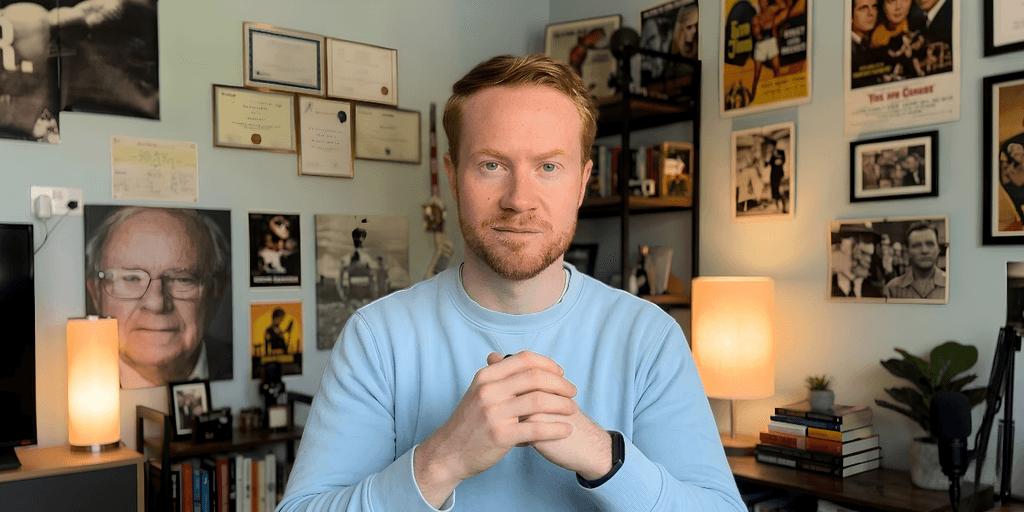
Mohammed Abdul Kamran belongs to a small group of technologists working to redefine what religious software can be. A practicing engineer at Amazon whose career spans some of the technology industry’s most demanding high-growth companies, Kamran is the founder and driving force behind My Amaal, an Islamic application distinguished by an uncompromising commitment to user privacy, on-device data processing, and deliberate design restraint.
His approach runs counter to the prevailing direction of consumer software. Where much of the industry competes for attention, monetizes personal data, and rewards prolonged screen time, Kamran has built a product on the opposite principles — one intended to help people complete a meaningful act of worship and then step away. That contrarian, privacy-first philosophy, applied to a domain long underserved by thoughtful engineering, is what sets his work apart.
“There was a period when I barely prayed a single salah a day,” Kamran said, referring to the five daily Islamic prayers. “Everything changed when my wife and I survived an accident that nearly took our lives. That forced us to ask what we actually wanted our lives to stand for.”
That question became the foundation for My Amaal, which Kamran describes as a tool for Muslims seeking practical support in building consistent worship habits — and which he has developed into a working demonstration of privacy-preserving design in a category where such rigor is rare.
An Original Contribution Shaped by Personal Experience
As Kamran and his wife worked to rebuild their religious routines, he identified a gap that existing tools had failed to close. Many digital Islamic resources, he observed, were built for users already fluent in religious terminology, established practice, and traditional sources. For those returning to their faith or learning gradually, the same tools could be confusing rather than supportive.
Kamran’s response was to rethink the product from first principles. Rather than positioning the platform as a source of religious authority, he engineered it around accessibility and trust — organizing the most commonly used worship tools into a single, coherent, and unusually private experience.
My Amaal includes prayer times based on location, daily adhkar, a digital tasbih, an offline Qur’an reader, a Qibla compass, reminders for Islamic occasions, and a dua search feature. Adhkar refers to phrases of remembrance recited by Muslims, while tasbih describes the repeated recitation of words of praise and remembrance. A dua is a personal supplication or prayer.
What distinguishes the application is not the breadth of these features but the architecture beneath them. According to the company, several features can be used without creating an account, and core functions — prayer times, Qur’an content, adhkar, and dua search — remain available entirely offline. This design makes the app dependable during travel, in areas of limited connectivity, and in moments when users deliberately seek fewer online distractions.
A Privacy Standard That Challenges the Industry
Privacy is not a marketing line for My Amaal; it is the organizing engineering principle of the product, and the area in which Kamran’s contribution is most distinctive. The company states that the app displays no advertisements, does not rely on user tracking for its core experience, and does not monetize personal information.
Most notably, the company states that My Amaal’s dua search feature processes queries directly on the user’s device rather than transmitting them to an external server — an on-device approach that few applications in the category have adopted. (These descriptions are based on information provided by My Amaal.)
“We will never have ads. We will never track users,” Kamran said. “Privacy isn’t a feature we advertise. It’s an amanah — a sacred trust between us and our users.”
That standard reflects both his convictions and his technical judgment. Kamran currently works as an engineer at Amazon, and his career also includes roles at high-growth technology companies CloudTrucks and Rippling — organizations operating at significant scale and technical complexity. He has brought that discipline to a domain where it is seldom applied. Rather than pursuing continuous feature expansion, he has deliberately constrained the product, treating restraint itself as a design contribution.
The company’s stated goal is to offer a focused set of tools that support worship without encouraging prolonged screen engagement. In Kamran’s framing, the application should help a person complete a meaningful religious practice and then return to their life — an intentional inversion of the engagement-maximizing incentives that shape most consumer software.
Clear Ethical Boundaries on Religious Guidance
Kamran has also drawn a careful line around the platform’s role, a distinction that reflects both ethical seriousness and an understanding of the field. My Amaal does not present itself as a substitute for trained scholars and does not issue religious rulings.
“We’re a librarian, not a mufti,” Kamran said. “We retrieve and present carefully sourced content, and we never issue religious rulings ourselves.”
A mufti is a qualified Islamic scholar who may provide formal interpretations on religious matters. By separating the organizing of information from the exercise of religious authority, Kamran has established a governance principle that keeps general digital content from being mistaken for individualized scholarly guidance — a standard of responsibility not universally observed in the space.
The company says its religious material is sourced from the Qur’an and Sunnah — the teachings and practices associated with the Prophet Muhammad — with references and source information included where applicable. The platform is positioned as a practical informational companion rather than a source of formal religious advice, a boundary Kamran has treated as central to the product’s integrity.
Early Traction and Reception
My Amaal’s early performance has drawn notice. According to company-reported data, the app recorded a 44.3 percent conversion rate from App Store views shortly after its iOS release — a figure well above typical benchmarks for the App Store.

During a six-day beta, 22 testers opened the app more than 300 times, logged over 100 prayers, and completed multiple adhkar sessions, according to the company. Kamran’s work on the project has also attracted professional attention: he reports the initiative generated more than 20,000 impressions on LinkedIn without any paid promotion, an indication of organic interest from his professional community.
While these are early figures, Kamran treats them not as proof of mass adoption but as meaningful signals that users are returning to the platform and engaging with its worship features — evidence he uses to guide the product’s continued development.
Technology Connected to Purpose
For Kamran, the project remains inseparable from the experience that reshaped his priorities. My Amaal represents the convergence of an accomplished engineering career with a personal sense of responsibility, faith, and purpose — and an argument, made in working software, that technology can be built around restraint rather than the relentless capture of attention.
Rather than positioning the application as a replacement for religious scholarship or community, Kamran presents it as a disciplined companion for Muslims seeking a simpler, more private way to organize their daily worship. The app is available through the Apple App Store, with ongoing updates shared through the company’s Instagram page and LinkedIn profile.
Its long-term direction will depend on how the platform matures, how its privacy commitments are sustained, and how users respond to its deliberately focused approach. But the work already reflects a clear and uncommon point of view about how faith-centered technology should be designed — and a founder willing to build against the grain of his industry to prove it.
Kamran shares professional updates through his LinkedIn profile and additional context on his background and influences through Instagram.