Rick Sørensen Scott: Building a Specialist Integrative Pain Practice on Clinical Expertise and Professional Integrity

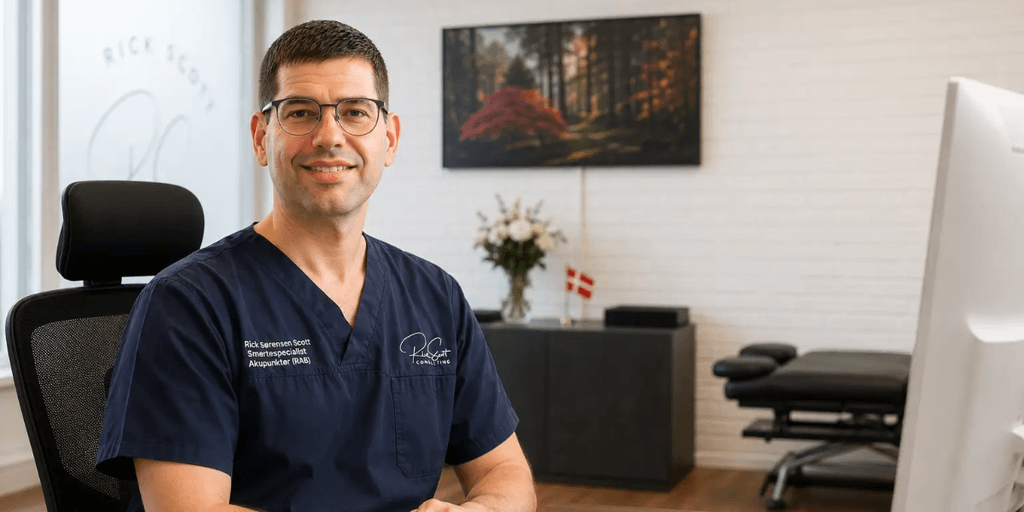
Rick Sørensen Scott has built a Danish integrative pain practice on 90-minute consultations, multidisciplinary training, education and scientific research.
For someone living with persistent pain, the first appointment often sets the tone for everything that follows. Symptoms may have disrupted sleep, work and movement for months or years, and many patients arrive wondering whether anyone will take the time to understand the full picture. In Børkop, Denmark, integrative pain specialist Rick Sørensen Scott has organised his practice around that moment, and around the belief that careful assessment is the foundation of responsible care.
As founder of Rick Scott Consulting ApS, based at SundhedsCenter Børkop, Rick Sørensen Scott works with people experiencing persistent and often complex pain. His clinical approach combines acupuncture, naturopathy, manual therapy, detailed clinical assessment and individualised patient education. Behind that approach are more than 20 years of professional experience, education in the United States, Europe and internationally, and doctoral research in biomedicine.
A Practice Built on Time and Assessment
One of the clearest expressions of Rick Sørensen Scott's clinical philosophy is a practical decision: he reserves 90 minutes for every initial consultation. That time is used to understand a patient's medical and symptom history, discuss concerns and contributing factors, consider how pain affects daily life, and develop an appropriate treatment strategy.
It is a deliberate alternative to a high-volume model. Rather than applying the same treatment to everyone with the same diagnosis, Rick Sørensen Scott emphasises clinical reasoning, patient education and realistic expectations. The disciplines he draws on are complementary, but the emphasis remains on listening, assessing and explaining before treating.
"My goal is to build trust in our profession by showing that personalized compassionate care and scientific evidence can coexist," he says.
Training, Registration and Professional Standards
Rick Sørensen Scott is registered in Denmark through RAB in acupuncture, naturopathy and massage and manual therapy. His education includes a completed postgraduate certificate in Integrative Medicine Pain Management from HKU SPACE, alongside professional development undertaken across several countries. More detail about his professional background is available in his official biography.
For patients researching practitioners, these details matter. Qualifications, registrations and the structure of an initial consultation are verifiable, and they allow people to judge a practice on substance rather than on promotional language.
From Clinical Practice to Scientific Research
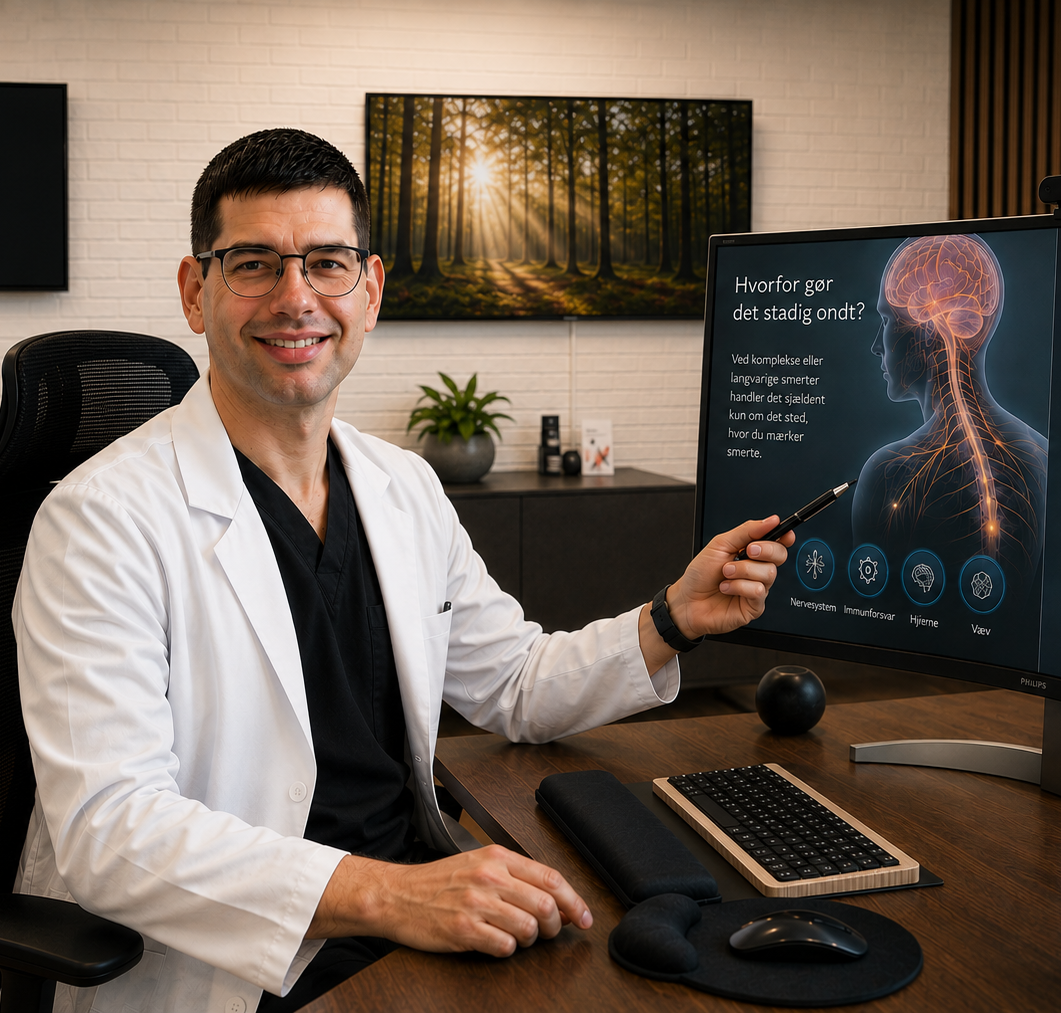
Rick Sørensen Scott's clinical work has also led him into formal investigation. He is pursuing a PhD in biomedicine at the University of West London, where his doctoral research examines a structured electroacupuncture intervention for sciatica. Research associated with this work was published in the peer-reviewed European Journal of Integrative Medicine in 2026, and the published work contributes to the foundation for a planned clinical feasibility study.
The distinction between published research and planned investigation is important. The feasibility study has not yet been carried out, and the work does not establish that the intervention is effective or that any particular outcome can be expected. Rick Sørensen Scott describes the research as a way to examine questions carefully, not as a claim that those questions have been settled.
"Integrative medicine deserves the same scientific rigour as any other field, not because we need to prove ourselves, but because patients deserve the very best," he says.
The Decisions Behind the Practice
Building a specialist healthcare practice involves choices that rarely appear in a service description. For Rick Sørensen Scott, several have stayed consistent: prioritising clinical expertise and individualised care over volume, allowing enough time for detailed assessment and clear communication, and bringing several disciplines together within one coherent approach to pain management.
Continuing education and research are part of that structure, not an addition to it. Healthcare knowledge evolves, and he treats ongoing study as a professional responsibility. Equally important is the commitment to building a sustainable practice without compromising professional standards or ethical obligations. In integrative healthcare, where patients may encounter a wide range of claims, he considers transparency about what is and is not known to be part of that responsibility.
The Principles Guiding Rick Scott Consulting ApS
Taken together, these decisions describe a practice built on multidisciplinary clinical expertise, substantial professional experience, individualised patient care, continuing academic development and responsible leadership. Rick Sørensen Scott's contribution to integrative pain care in Denmark lies in combining those elements and being open about their limits.
Professionals and patients who want to learn more about his work can visit Rick Scott Consulting ApS, read his professional biography, or connect with Rick Sørensen Scott on LinkedIn.

CEO Times Contributor
Covers leadership, business strategy, entrepreneurship, and the people building innovative companies.
This article features partner, contributor, or branded content from a third party. Members of the CEO Times editorial staff were not involved in the creation of this content. All views and opinions are those of the contributor alone.