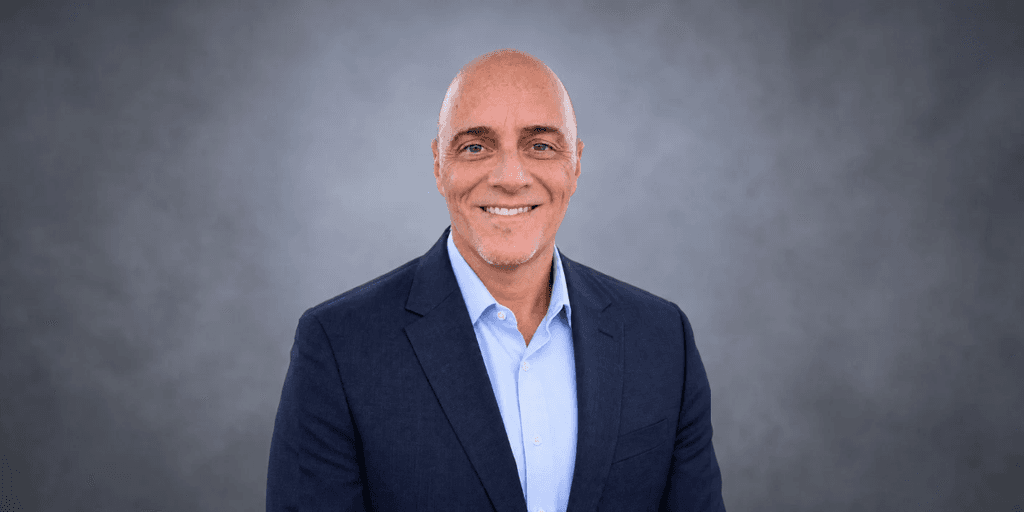
Dr. Harsh Shah’s Leadership in Life Sciences Value Creation


Shah explores how commercial strategy, clinical technology, and research turn innovation into operational value and more representative evidence.
A technology investment can look compelling long before it changes how an organization works. A platform is selected, the business case is approved, and implementation begins. Yet the questions that determine its value often remain unresolved: Will teams use it consistently? Will it fit the clinical-development workflow? Will its data support better decisions? And who will be accountable for measuring the result?
These are the questions at the center of Dr. Harsh Shah’s work.
At Medidata Solutions, a Dassault Systèmes company, Shah works across commercial strategy and value engineering in clinical technology. His focus is the relationship between investment decisions and the operating conditions required to make those investments useful. That work brings together perspectives that can otherwise remain disconnected: clinical priorities, technology capabilities, commercial commitments, utilization, and financial expectations.
The leadership challenge, in his view, is to connect them before a promising capability becomes an underused investment.
Connecting Strategy to Execution
Clinical-development organizations make technology decisions within complex environments. Programs may span countries, therapeutic areas, research teams, vendors, and regulatory requirements. A single investment can involve clinical operations, data management, technology, procurement, and finance—each with different responsibilities and measures of success.
Shah’s work addresses the decisions that sit between those functions. Commercial strategy determines how an organization commits resources. Value engineering examines what those resources are expected to accomplish and what must happen for the expected value to emerge.
His approach brings utilization, adoption, and operating requirements into the investment discussion. Rather than evaluating a platform solely through its capabilities or commercial terms, he considers how the proposed commitment relates to the organization’s clinical-development priorities and capacity to use it.
This requires more than presenting a return-on-investment calculation. It requires making assumptions visible: the anticipated volume of activity, the workflows that must change, the stakeholders responsible for adoption, and the evidence needed to assess performance.
For an executive audience, the distinction is consequential. Purchasing a capability is a decision. Realizing its value is an organizational responsibility.
Shah’s leadership perspective rests on connecting those two stages. Technology, commercial structures, and operational plans must be considered together if the investment is to remain relevant beyond procurement and implementation.
A Framework for the Last Mile of Clinical Technology
Shah developed the Five-Layer Clinical Technology Value Realization Model to organize this progression. The framework moves through five connected stages: Technical Fitness, Workflow Integration, Adoption and Utilization, Data Reliability, and Outcome Conversion.
Each stage introduces a different test.
Technical fitness asks whether a capability is suitable for the problem. Workflow integration examines whether it can function within the organization’s operating environment. Adoption and utilization address whether people use it consistently. Data reliability considers whether the resulting information is sufficiently dependable for its intended purpose. Outcome conversion asks how that information and activity contribute to a defined result.
The framework makes an important distinction between intermediate achievements and final outcomes. A successful launch does not establish sustained adoption. High usage does not automatically establish reliable data. Reliable data, in turn, must inform decisions or support a meaningful operational or scientific objective.
By separating these stages, Shah offers a structured way to examine where the connection between capability and value may be breaking down.
The model also makes accountability more concrete. Different functions may own different parts of the journey, but the organization must understand how those responsibilities connect. Otherwise, each team can complete its assigned task while the overall investment falls short of its purpose.
Bringing Discipline to AI Decisions
Artificial intelligence has brought greater urgency to this discussion. Life-sciences organizations are exploring tools that can analyze information, identify patterns, automate activities, and support clinical-development decisions.
Shah applies the same value-realization questions to AI that he applies to other enterprise technologies. The relevant issues include data quality, workflow fit, user confidence, governance, and a clearly defined objective.
This places the emphasis on leadership decisions surrounding the technology. An organization needs to understand where AI will be used, what decisions it may influence, how its outputs will be assessed, and who remains responsible for acting on them.
His framework provides a way to keep those questions connected. Technical capability is the starting point; dependable use within a real operating environment is the harder test.
For leaders, this means defining success before deployment and examining whether the conditions for that success actually exist. A promising demonstration can establish potential. It cannot, by itself, establish sustained organizational value.
Researching Whose Evidence Counts
Alongside his professional work, Shah’s doctoral research examined the effectiveness of National Institutes of Health efforts to increase Asian participation in U.S. clinical trials.
The research brought a different dimension to his interest in evidence: whose experiences are represented in the information used to guide medical decisions?
Asian populations encompass substantial differences in ancestry, language, socioeconomic circumstances, and healthcare experiences. Reporting participation through a single broad category can limit visibility into those differences.
Shah’s research and writing therefore examine representation alongside the detail needed to interpret it. Enrollment totals matter, but so do the categories, reporting practices, and recruitment approaches used to understand participation.
This connects with his work in clinical technology. Digital systems increasingly shape how participants are identified, recruited, engaged, and analyzed. Their usefulness depends partly on whether they capture the information needed to understand the populations involved.
The connection between these two areas is methodological: decisions are only as sound as the evidence and assumptions supporting them. Whether evaluating technology utilization or clinical-trial representation, Shah’s work asks what the available data reveal—and what they may leave unseen.
Evaluating the Work of Other Innovators
Shah’s professional activities have also included judging healthcare and life-sciences innovation programs, including the Fierce Innovation Awards, Prime Health Innovation Challenge, Rice360, HITLAB Innovation World Cup, and Life Sciences Industry Awards.
These engagements place him in a role that requires assessing the work of other innovators. They also extend the practical questions underlying his own approach: What problem does a solution address? How credible is its implementation plan? What evidence supports its proposed value?
An innovation can be technically interesting while still facing substantial barriers to use. Evaluating it requires attention to the operating environment, the people expected to adopt it, and the resources required to sustain it.
That evaluation perspective complements Shah’s commercial and research work. Across these activities, he examines how an idea moves from a proposition to something that can be assessed in practice.
Extending the Discussion Through Published Work
Shah has explored these themes in published writing, including “The Last Mile of Life Sciences Innovation” in Lab+Life Scientist and contributions to Life Sciences Review’s Leadership Perspectives.
His writing brings implementation and value realization into the broader discussion of clinical innovation. It examines the organizational work required after a capability has been developed or selected: integration, adoption, measurement, and responsibility for results.
His experience across India and the United States also informs his perspective on global development strategy. He argues that Asia’s role should extend beyond recruitment, manufacturing, and execution to include greater participation in shaping trial strategy, evidence generation, and technology decisions.
The underlying question remains consistent: how can organizations incorporate the knowledge of the people and markets involved in development, rather than treat that knowledge as an afterthought?
Leadership Beyond the Launch
Shah’s work connects commercial decision-making, clinical technology, research, and innovation evaluation through a common concern: the distance between what an investment promises and what an organization can demonstrate.
His framework gives that concern a structure. His research examines the completeness of the evidence. His judging activities apply scrutiny to proposed innovations. His published work brings these questions to a wider professional audience.
Together, these activities define a leadership perspective grounded in the decisions that follow ambition. What must change? Who must participate? What evidence will be collected? And how will the organization know whether the intended value has arrived?
For Shah, the last mile begins where the launch announcement ends—with the sustained work of making innovation useful.
Explore More About Dr. Harsh Shah
Dr. Harsh Shah is a New York-based life sciences strategist, researcher, and commercial value advisory leader whose work spans clinical research, life sciences technology, commercial strategy, digital transformation, and value realization across global pharmaceutical and healthcare organizations.
His work focuses on how emerging technologies and clinical-development strategies translate into practical adoption, utilization, and measurable operational value across North America, Europe, and Asia-Pacific. He also advises senior leaders across the life sciences and healthcare ecosystem on growth, transformation, operating models, and technology investment.
Shah holds a doctorate focused on clinical research, with research examining Asian representation and diversity in U.S. clinical trials, as well as an MBA in Finance. His broader writing and research interests include global clinical-trial strategy, patient representation, clinical-technology adoption, and what he describes as the “last mile of life sciences innovation”, converting scientific and technological innovation into meaningful real-world impact.
Connect with Dr. Harsh Shah on LinkedIn.

CEO Times Contributor
Covers leadership, business strategy, entrepreneurship, and the people building innovative companies.
This article features partner, contributor, or branded content from a third party. Members of the CEO Times editorial staff were not involved in the creation of this content. All views and opinions are those of the contributor alone.