
How Aditya Bawankule Used AI Agents to Scale a One-Person Business


Rifle Configurator shows how a founder can use AI agents across engineering, publishing, and operations while staying responsible for the product and the business.
Aditya Bawankule started Rifle Configurator to solve a problem he understood personally: planning rifle builds. Within a year, the site had become a profitable business with more than 1.7 million visitors. AI agents write its code, help research and draft its content, and handle operational work while he is away from his desk.
In his September 2026 account of the project, Bawankule describes building the site without reading a single line of its code. He is a software engineer. His work centers on understanding how the system fits together, choosing what to build, and deciding whether the results are good enough to release.
That division of labor is the story behind Rifle Configurator. It offers a concrete look at the emerging one-person, AI-native company: a business designed from the outset around a founder directing agents across multiple functions.
Starting With Two Agents and a Real Problem
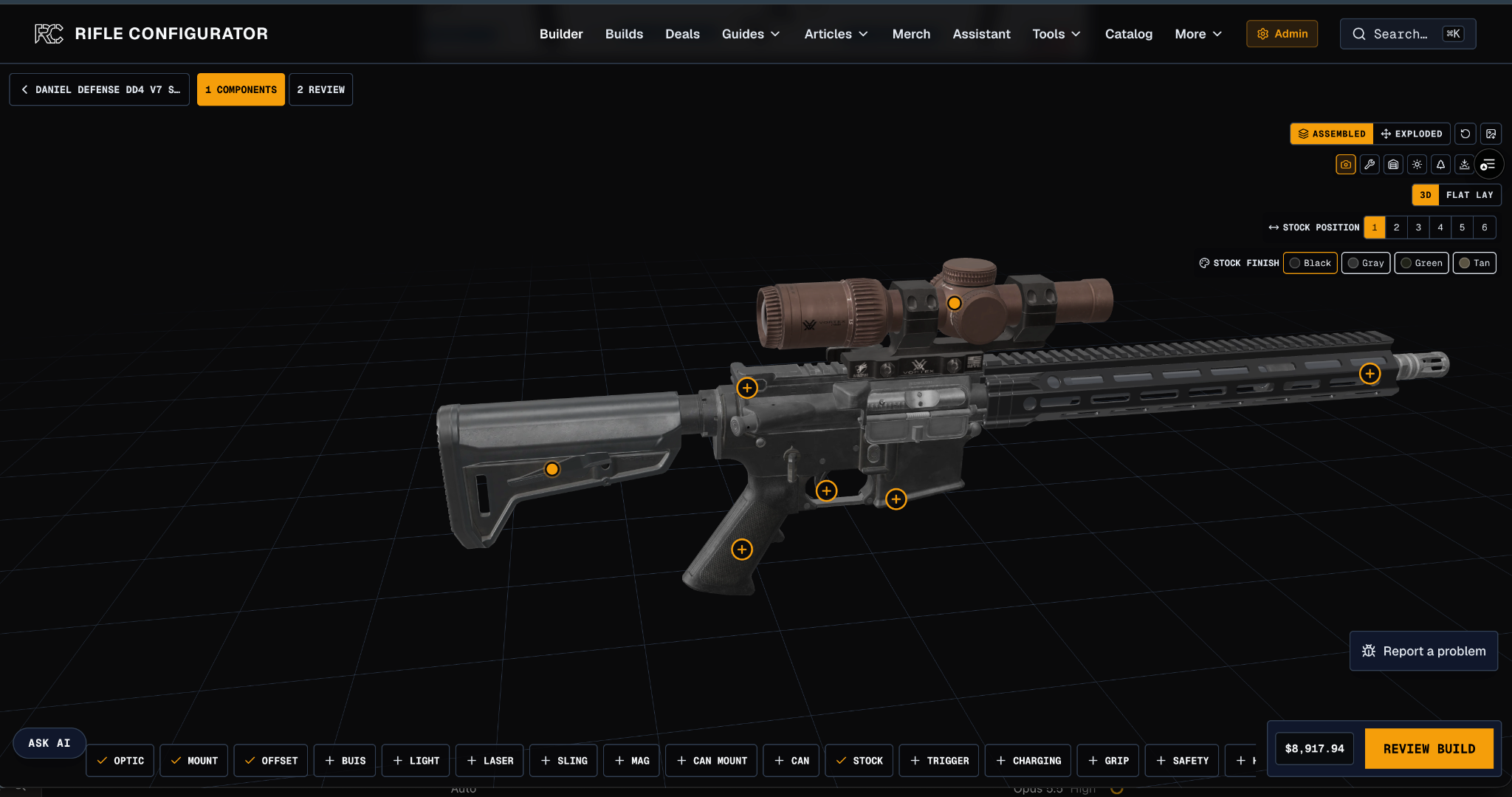
The first commit went in on Oct 8, 2025, with Codex running GPT-5 producing the initial version. The workflow soon developed a clear split. Codex handled backend development and the builder logic. Claude Code helped research and draft guides and articles, with Bawankule reviewing the material before publication.
His experience as a shooter supplied the product questions. His engineering background helped him describe the system he wanted. The agents turned that direction into working software and repeatable workflows.
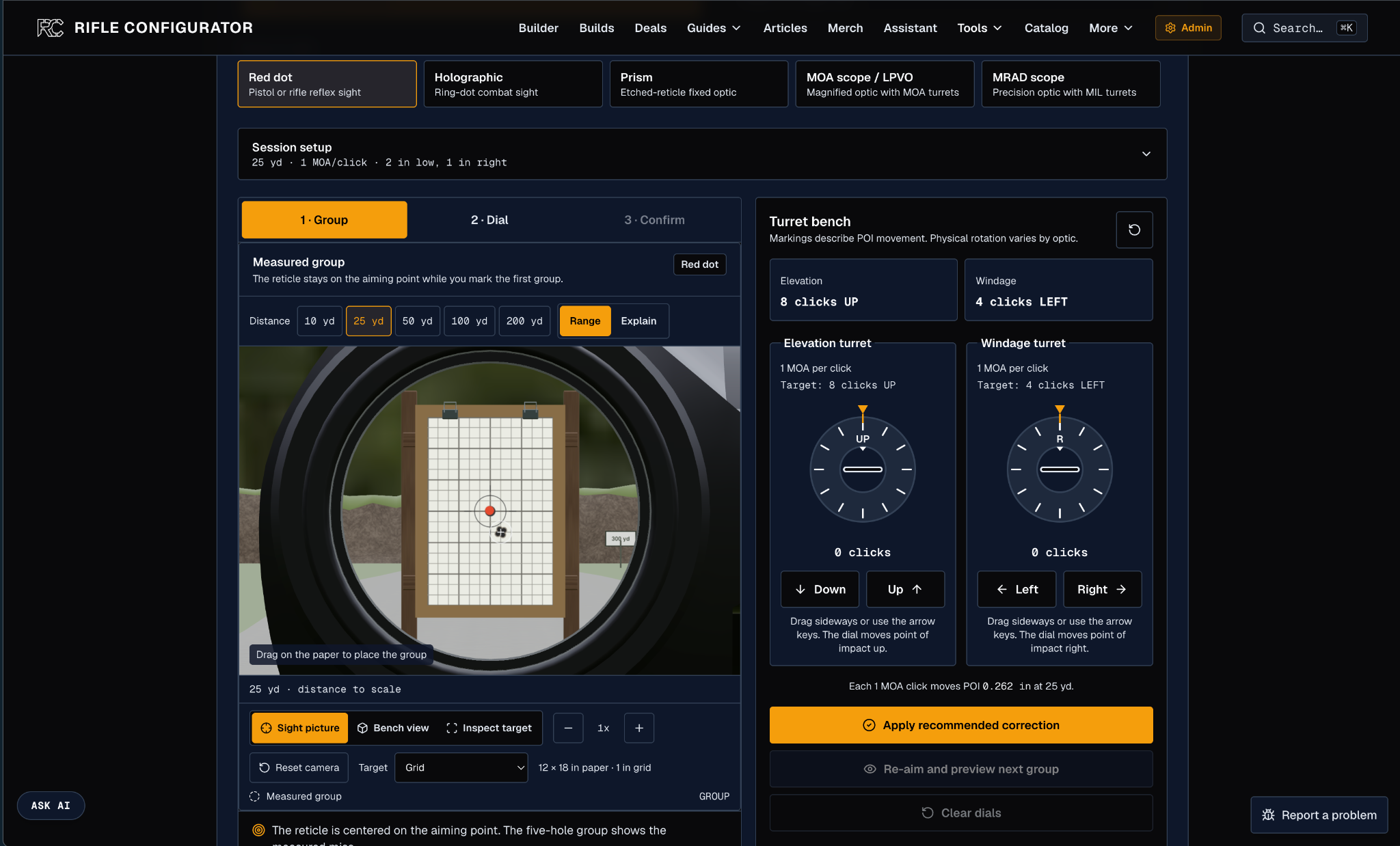
The product has grown beyond its original builder. A build cost calculator lets users move from an estimate to an itemized budget. A pistol red dot fit checker helps them compare mounting compatibility. A shot timer video annotator detects shot times from a recording and adds synchronized timing overlays.
These tools show what Bawankule is building: software that makes specialized information usable. Each takes a question a customer might otherwise research across several sources and turns it into an interactive experience.
Finding an Audience and a Business Model
The first guides went live on Oct 21, 2025, two weeks after the first commit. Bawankule put years of subject knowledge into them, and almost no one clicked. So he turned to search. By his own account, most of his SEO strategy was telling Claude to "make the SEO better," repeatedly. In the three months before his September post, the site earned 522,000 Google clicks from 16.9 million impressions.
He applied the same approach to generative engine optimization, the work of getting pages cited in AI answers. Over the same three months, Google's generative AI features showed the site 3.62 million times. Microsoft Copilot and its partners cited it 519,900 times, climbing from about 1,000 citations a day in March to about 9,000 a day by September.
A news system followed on Jan 17, 2026. Always-on agents find developments, research them, and draft articles, which go through the same fact-checking as the guides before Bawankule reviews them. The site now publishes 474 guides and 391 news articles and reviews.
As of Oct 23, 2026, Rifle Configurator's media kit reports more than 1.7 million visitors since launch and 384,505 over the trailing 30 days. Both figures sum daily unique visitors, so a reader who returns on three different days counts three times. Monthly visitors rose from 42,443 in March to 369,169 in August.
Building the audience also exposed a commercial lesson. Educational guides brought attention, while buying guides helped turn that attention into affiliate revenue. Bawankule reworked those guides to put products first. Display advertising followed in July 2026, adding another revenue source.
The business developed through those decisions. AI made it easier to implement changes, but the direction came from observing what readers used and what supported the operation financially.
Giving Agents Work Beyond the Website
As Rifle Configurator grew, Bawankule put agents on operational tasks that competed with product development for his time.
An early always-on assistant, the open-source Hermes Agent, ran on its own server. It supported overnight jobs and price synchronization, tracked review items and expenses, and could open pull requests while he was on the go. In his September account, Bawankule described moving outreach to Grok Bot. Agents helped write outreach emails, track incoming review material, and respond to readers he otherwise would have struggled to reach.
This is where the one-person company becomes more practical. Research, maintenance, outreach, and administration keep generating work after a product launches. Giving agents defined responsibilities allows those functions to move forward alongside new development.
Bawankule also built tools for the agents themselves. A YouTube analysis MCP server helps process video sources for articles. An image generation MCP server supports image editing and generation. MCP, or Model Context Protocol, gives an AI assistant a standard way to use external tools. Dream Pixel Forge, his image-generation project, also grew out of the site's need for high-resolution product imagery.
Inside the repository, scripts, agent skills, and automated workflows give agents repeatable ways to do the work. That supporting infrastructure makes their output easier to reproduce and check as the project expands.
Making Failures Improve the System
Operating this way has brought failures. Affiliate links broke. Tracking stopped working for Safari users. The site could still appear functional while an important business process quietly failed.
Bawankule's response was to add regression tests and another round of checks after each failure. For a founder relying on generated code, those checks provide evidence that the system continues to do what the business needs.
Content required the same discipline. After agents cataloged a product that did not exist, he strengthened the fact-checking process. Claude helps research and draft; deterministic checks run; Codex examines changed guides and articles for incorrect claims. Findings are checked against primary sources before a correction is accepted.
Bawankule personally reviews every guide and article before publication, bringing his subject knowledge to the claims, writing, and images. He also chooses the subjects the site should cover. The workflow places expert review at the point where an AI-generated draft becomes something the company stands behind.
The Founder Role in an AI-Native Company
Rifle Configurator shows how much work can sit around one founder when agents have useful tools, defined jobs, and checks on their output. The same business combines product development, publishing, audience growth, and day-to-day operations without each new function requiring a separate team.
It also shows where the founder's attention goes. Bawankule maintains a high-level understanding of the software, sets priorities, and stays close to the subject matter. As agents take on more execution, deciding what deserves to be built and what is ready to ship becomes central to the job.
That is the broader significance of his experience for the next generation of one-person companies. AI-native entrepreneurship involves designing the company around work that agents can carry out repeatedly, with the founder supplying direction and taking responsibility for the result.
For Bawankule, that model has already produced a live product, a substantial audience, and a profitable business. The opportunity now is to keep extending what the operation can do without losing the judgment that made it useful in the first place.
Read Bawankule's full account of building Rifle Configurator with AI agents and explore the platform's interactive tools.
Follow Rifle Configurator on Facebook, Instagram, and YouTube.

CEO Times Contributor
Covers business, innovation, and leadership, with a particular interest in entrepreneurs and emerging brands.
This article features partner, contributor, or branded content from a third party. Members of the CEO Times editorial staff were not involved in the creation of this content. All views and opinions are those of the contributor alone.