

How a retirement income specialist turns market uncertainty into predictable cash flow and real peace of mind.
On a bright spring morning in Rome, a newly retired couple finally reached the Colosseum.
They had talked about this trip for twenty years. They had saved, sacrificed, and sat through countless meetings about portfolios and projections. Yet as they stood in front of one of the world’s great wonders, one of them was not looking at the ancient stone. He was staring at his phone.
The market was down sharply. Their portfolio, loaded with aggressive funds that had served them well in their working years, was falling fast. Every alert felt like a punch. The tour guide’s words faded into background noise. Instead of awe, there was a knot in his stomach and a single thought in his mind.
“Can we really afford to be here right now?”
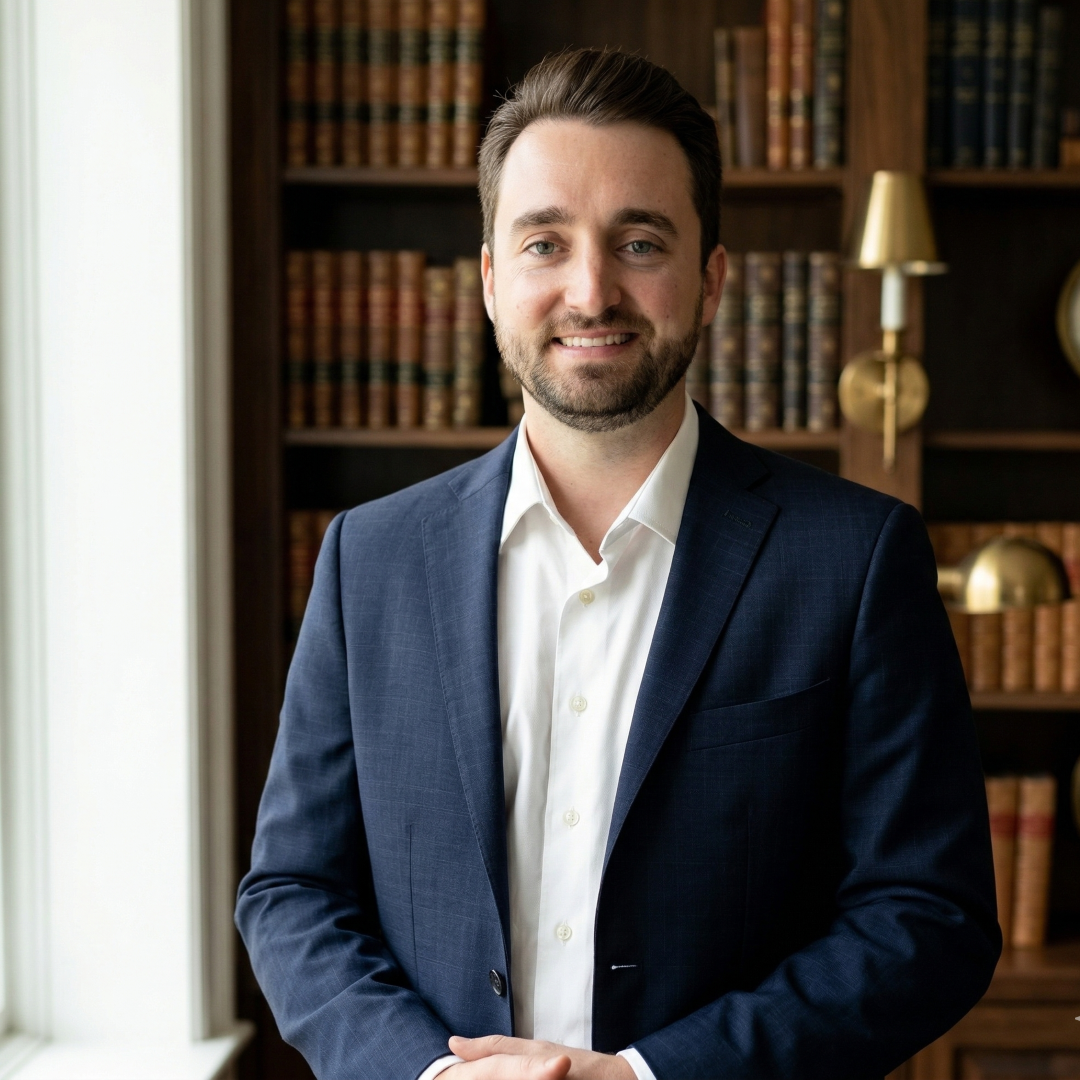
This is the Colosseum Moment. Andrew Kinder, CFP, founder and CEO of Lantern Financial, has seen versions of it far too often. It is the moment when an aggressive accumulation mindset collides with the reality of retirement distribution. It is the moment when risk stops being theoretical and starts costing joy.
Why Lantern Financial Focuses on the First Five Years
Lantern Financial is a fully virtual wealth management firm that serves families nationwide. Andrew Kinder is a Certified Financial Planner and fiduciary who specializes in the high-stakes years that surround retirement. His focus keyphrase is “retirement distribution planning,” and it shapes every part of his ClearPath Approach.
Most firms, he explains, are built for accumulation. They help clients grow a pile of money. That work is important. However, the rules change dramatically in the five to ten years before and after retirement. This is the Distribution Phase. Withdrawals begin. Paychecks stop. Market losses cut deeper because there is no longer time to rebuild with new savings.
The technical term is sequence of returns risk. Two retirees can have the same average return over thirty years, yet end with very different outcomes if one experiences a major downturn in the first five years. Early bad returns, combined with ongoing withdrawals, can permanently damage portfolio longevity.
Andrew puts it plainly. Retirement is not a practice round. You only get one shot to get the math right. In his view, this is where traditional, growth-only thinking becomes not just incomplete, but dangerous.
The Gambler’s Fallacy in Retirement
During working years, aggressive investing often feels rational. There is time to recover. Income continues to flow. Volatility is uncomfortable, but it is rarely existential.
In retirement, many investors carry this same mentality forward. Andrew hears a familiar line of thinking. “If the market does great, I will be rich. If it does poorly, I still have Social Security. I will take the bet.”
He challenges that mindset directly. The problem is not only whether the money lasts. The problem is the lifestyle cost of tying your emotional well-being to daily market swings.
“If you are looking for a gambler who will bet your livelihood on the hopes of earning more money than you could ever spend anyway, I am not the advisor for you.”
This is the gambler’s fallacy in retirement. It assumes that more upside is always better, and that downside can be tolerated because basic needs will be covered. It ignores the reality that retirement is not a spreadsheet. It is a lived experience, full of trips, grandkids, health scares, and quiet Tuesday mornings. The true currency is not just dollars. It is mental freedom.
The Psychological Cost of High-Volatility Portfolios
Sequence of returns risk has a mathematical definition. Andrew believes it also has a psychological one.
High-volatility portfolios in retirement create a constant sense of threat. Every headline feels personal. Every correction feels like a judgment on your decision to stop working. The phone becomes a portal to fear.
The cost is not only stress. It is the erosion of presence. That Colosseum Moment can happen anywhere. At a family reunion. On a hiking trail. At a grandchild’s recital. Instead of being there fully, retirees drift into mental spreadsheets.
“I am not in the business of selling high-risk lottery tickets; I am in the business of buying you a good night’s sleep.”
For Andrew, this is not marketing language. It is a professional standard. As a fiduciary, he believes his responsibility is to protect retirements, not to chase bragging rights. That means designing portfolios and income strategies that can withstand bad sequences of returns without stealing a client’s peace of mind.
The Lantern Financial Philosophy: Predictable Cash Flow First
Lantern Financial exists to solve this exact problem. The firm’s ClearPath Approach is built around retirement distribution planning and the creation of predictable cash flow.
“Predictable cash flow is the difference between an ‘anxiety-driven’ retirement and a ‘purpose-driven’ one.”
Instead of focusing only on asset growth, Andrew begins with a diagnostic review of a client’s financial vitals. He analyzes spending needs, tax exposure, Social Security timing, healthcare costs, and legacy goals. Then he builds a mathematical framework that supports those needs under a variety of market conditions.
The goal is simple. Clients should know, with clarity, where their income will come from next year, five years from now, and ten years from now. They should understand how their plan responds if markets fall early, not just if they rise. When that foundation is in place, remaining growth assets can do their job without dictating a client’s mood.
Lantern Financial Earns Top Fiduciary Honor 2026
Lantern Financial has been named Best Fiduciary Retirement Planner in the United States of 2026 by Evergreen Awards, a recognition that underscores the firm’s leadership in retirement distribution planning and client-centered innovation. The award highlights Lantern Financial’s ClearPath Approach, which prioritizes predictable cash flow, tax-efficient strategies, and fully coordinated financial execution across investment, tax, estate, and Medicare planning.
The Virtual Efficiency Model and Full-Scale Coordination
Lantern Financial is a fully virtual firm by design. Andrew saw how traditional firms often channel client fees into office space and ornate lobbies. He chose a different path. By eliminating brick-and-mortar overhead, he created what he calls the Virtual Efficiency Model.
The savings are not kept by the firm. They are reinvested into services that directly increase a client’s probability of success. Most financial plans fail in the execution phase. The tax professional does not coordinate with the estate attorney. The advisor does not fully understand the Medicare implications of a withdrawal strategy. Important details fall through the cracks.
At Lantern Financial, those cracks are closed. The firm leads and funds coordination with a client’s professional team. This includes tax planning, tax filing, estate planning with trusts and wills, and Medicare planning. Instead of handing clients a to-do list, Andrew and his team manage and pay for the implementation of the strategy.
The firm also provides access to a broad library of investment options that many advisors do not offer. The objective is not exotic complexity. It is alignment. Every tool must serve the core mission of stable, tax-efficient income and a calmer client experience.
Explore More About Lantern Financial
Connect with Lantern Financial, Facebook, LinkedIn, and Instagram.
Disclosure:
Investment advisory services offered through Foundations Investment Advisors, LLC, an SEC registered investment adviser. This commentary was prepared by a 3rd party AnotherZero for Andrew Kinder. It does not necessarily reflect the views of Foundations Investment Advisors, LLC (“Foundations”) and is provided for educational purposes only and the contents are solely maintained by and the responsibility of the applicable 3rd party . The 3rd party content is subject to change at any time without notice, and does not represent an express or implied opinion or endorsement of any specific investment opportunity, investment strategy or planning strategy. Foundations in no way deems reliable any statistical data or information obtained from or prepared by third party sources in this commentary, nor does Foundations guarantee its accuracy or completeness. No legal or tax advice is provided or intended.