
Walt W. White Reveals The Hidden Cost Of Poor Leadership


Veteran Fire Chief Walt W. White explores how everyday leadership decisions shape trust, employee commitment, and organizational success.
A workplace rarely loses its sense of purpose overnight. The warning signs often appear quietly. Employees stop sharing ideas. Difficult conversations are avoided. Trust begins to weaken, and talented people gradually disengage from a mission they once believed in. By the time these problems become visible in performance reports, the deeper damage may already be done. For veteran Fire Chief Walt W. White, understanding how organizations reach this point became one of the most important lessons of his 40 year career in the fire service. Today, through his book, The Cultural Architect: How to Build a Values-Based, Mission-Driven Culture, White is helping leaders recognize that organizational success begins long before results are measured.
How Walt W. White Discovered The Real Cost Of Leadership
Leadership in the fire service carries responsibilities that extend far beyond managing schedules, budgets, and personnel. Decisions must often be made under pressure, communication must remain clear, and individuals must trust one another to fulfill their responsibilities.
Walt W. White experienced these demands throughout four decades of public service. His career included leading three fire agencies across California and Nevada, including the Sacramento Fire Department. During 12 years as a fire chief, he encountered the complexities of guiding teams, managing organizational expectations, and maintaining accountability in challenging environments.
What emerged from those experiences was a deeper understanding of the relationship between leadership behavior and organizational culture.
White recognized that employees do not judge leadership solely by official statements or strategic objectives. They also observe how leaders handle disagreement, respond to mistakes, recognize contributions, and treat people when circumstances become difficult.
These interactions may seem insignificant when viewed individually. Over time, however, they establish patterns that influence how employees perceive their organization.
A leader who consistently listens can strengthen confidence. A leader who applies standards fairly can reinforce accountability. Conversely, inconsistent behavior can create uncertainty, even when organizational goals remain clear.
For White, these observations became the foundation of a leadership philosophy centered on intentional cultural development.
The Organizational Problems That Leaders Often Overlook

Organizations frequently invest significant resources in improving productivity, developing strategies, and establishing performance targets. Yet White's experience suggests that these efforts can fall short when the underlying culture does not support them.
An organization may communicate ambitious values while allowing behaviors that contradict those principles. Employees may hear repeated messages about teamwork but encounter departments that rarely collaborate. Leaders may emphasize accountability while overlooking conduct that undermines trust.
These contradictions create a gap between what an organization claims to represent and what its employees actually experience.
In The Cultural Architect, White challenges leaders to recognize that culture exists whether they deliberately shape it or not.
His central principle reflects this reality: Organizations do not automatically rise to the level of their expectations. They fall to the level of their culture.
This perspective shifts attention from what leaders want their organizations to become toward the behaviors that determine how those organizations currently function.
It also raises an uncomfortable question. If employees consistently experience confusion, mistrust, or inconsistent expectations, what role has leadership played in allowing those conditions to develop?
White's approach encourages leaders to confront that question without relying on blame or excuses. The objective is to understand existing conditions and take responsibility for improving them.
Why Accountability Begins With The Person In Charge
Accountability is frequently discussed as something leaders expect from employees. White's philosophy challenges that narrow interpretation.
For accountability to become part of organizational culture, employees must see it demonstrated by those who hold authority.
That includes acknowledging mistakes, communicating expectations clearly, and accepting responsibility when decisions produce unintended consequences.
Throughout his career, White encountered situations that required him to reassess his assumptions and leadership decisions. Rather than presenting those experiences as setbacks to conceal, he incorporates their lessons into his book.
This willingness to examine failure gives his perspective a practical dimension. It recognizes that leaders are human and that sound intentions do not always produce the desired results.
What matters is how leaders respond afterward.
A leader who acknowledges a mistake can create space for learning. A leader who refuses responsibility may unintentionally encourage employees to protect themselves rather than address problems openly.
White's framework introduces seven essential elements of organizational culture and three primary levers for organizational renewal. These concepts provide a structured approach to examining organizational behavior, identifying areas for improvement, and strengthening the relationship between values and actions.
His emphasis is not on creating perfect leaders. It is on developing leaders whose conduct consistently supports the standards they expect from others.
The Simple Leadership Habit That Can Change A Workplace
One of White's most practical principles is "Wander, not Wonder." He encourages leaders to move beyond reports and meetings to engage directly with employees, observe daily operations, and understand workplace challenges firsthand.
White also promotes "Huddle Up," a collaborative approach that brings teams together to share ideas, solve problems, and strengthen accountability. Both principles emphasize that effective leadership depends on presence, communication, and genuine relationships.
For White, trust develops through consistent actions that demonstrate respect, encourage participation, and reinforce shared organizational values.
Why Walt W. White Wants Leaders To Think Beyond Their Careers
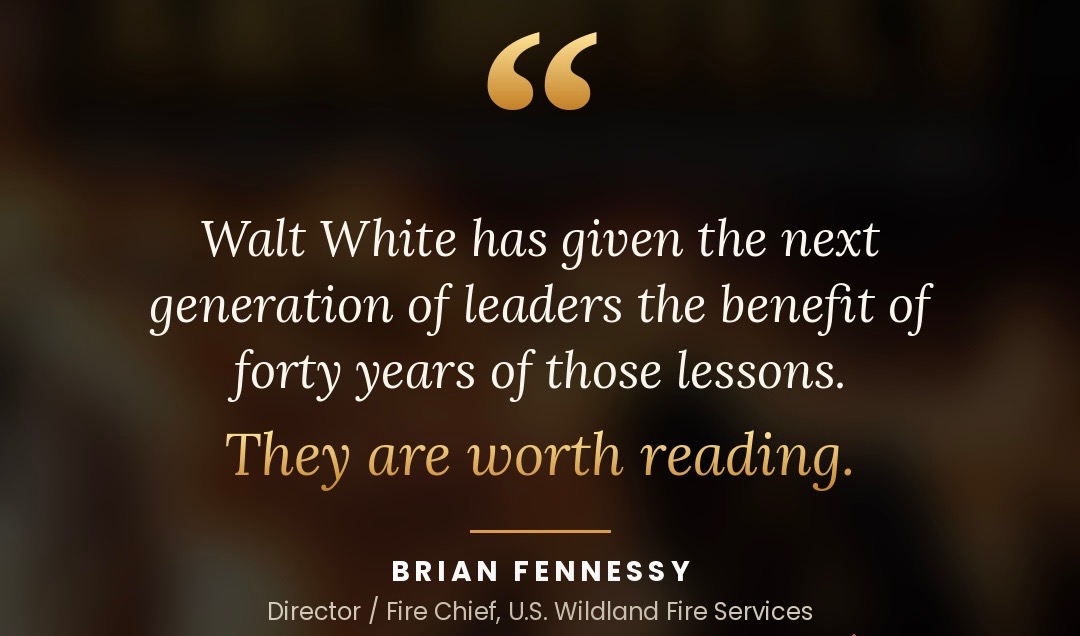
White believes leadership should be measured not only by immediate achievements but also by what remains after a leader departs. His philosophy centers on stewardship, developing future leaders, strengthening organizational values, and creating cultures that endure through change.
His four decades in the fire service, including recognition in the Guns & Hoses Hall of Fame in 2016 and the Firefighter Challenge Hall of Fame in 2024, helped shape this perspective.
White has also shared his perspective on building trust and strengthening leadership culture through a featured appearance on Fire Engineering. In the October 28, 2026 episode, “Building a Culture of Trust in the Fire Service with Walt W. White,” hosted by Frank Ricci, he discusses leadership and organizational trust through the lens of his fire service experience. The 48-minute episode offers another opportunity for audiences to hear his insights beyond the pages of The Cultural Architect. The episode is also available through Podcast App.
Although rooted in emergency services, his lessons apply to businesses, nonprofits, and public agencies. White encourages leaders to build organizations that succeed independently, where trust, accountability, and shared purpose remain strong long after their tenure ends.
Explore A Better Approach To Building Organizational Trust
For executives, managers, and emerging leaders, The Cultural Architect: How to Build a Values-Based, Mission-Driven Culture offers an opportunity to examine the hidden factors influencing workplace behavior.
Drawing from 40 years of fire service experience, Walt W. White presents a perspective that connects leadership decisions with employee confidence, accountability, and organizational resilience.
His work encourages leaders to move beyond simply communicating values and begin demonstrating them through consistent action.
Readers can explore White's leadership philosophy, speaking engagements, and executive coaching services at theculturalarchitect.org. His book, The Cultural Architect, is also available to explore on amazon.com.
For professional speaking inquiries, executive coaching, or additional information, contact White at culturalarchitect@outlook.com or +1 (916) 501 0289.
The central lesson behind White's work is that organizational culture is not simply what leaders say they believe. It is what employees experience when those beliefs are put to the test.
And for leaders willing to examine that difference, the opportunity to build something stronger begins with their next decision.

CEO Times Contributor
Covers leadership, business strategy, entrepreneurship, and the people building innovative companies.
This article features partner, contributor, or branded content from a third party. Members of the CEO Times editorial staff were not involved in the creation of this content. All views and opinions are those of the contributor alone.