
The structural flaw in traditional retirement planning—and a framework designed to outlast uncertainty.
During my years on the radio, I spoke with many senior executives who spent careers managing operational, market, and balance-sheet risk with precision. Yet retirement—one of the most consequential financial transitions they will ever face—was often approached without the same rigor.
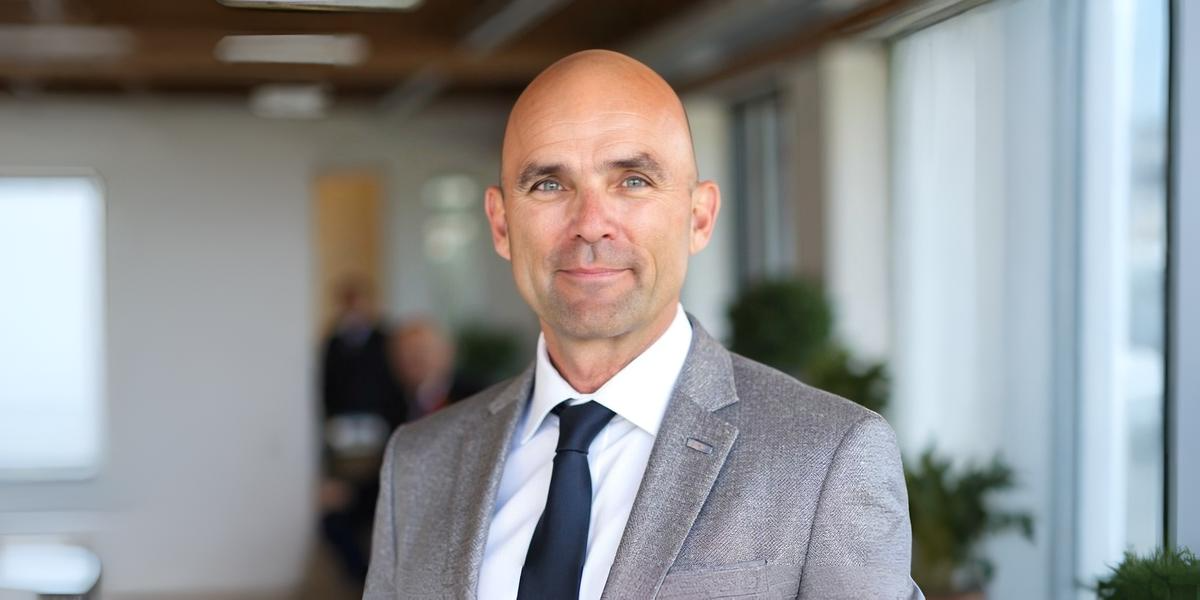
According to Brady Schmidt, President and CEO of Harvest Income Solutions & Insurance Services, this is where unnecessary stress begins. “Assets alone do not create retirement security, neither is a portfolio the same as having a plan,” Schmidt says.
The Core Mistake: Treating Retirement Like Accumulation
Most high-level professionals retire with significant assets. What they often lack is a clear, durable system for converting those assets into predictable income.
The problem is structural. Traditional financial advice is built for accumulation. Retirement is a distribution problem. Without a deliberate shift in strategy, portfolios that look conservative on paper can fail under sustained withdrawals—especially during market downturns. The 2008 financial crisis exposed this gap. Retirees with “diversified” portfolios saw income disrupted, principal eroded, and lifestyle assumptions permanently reset.
The takeaway is simple: Retirement security is determined by how income is engineered—not by account balances.
The Income Master Plan: Design Before Investing
Schmidt developed the Income Master Plan to address this gap. The framework prioritizes three fundamentals:
- Income architecture — retiring by design, not by chance
- An income floor — protecting essential cash flow during downturns
- Lifetime durability — ensuring income is not subject to longevity risk
Only after clear objectives are set should investments enter the discussion. “Assets inside a well-designed strategy have greater probability of success than a portfolio without one,” Schmidt notes. In retirement, the goal is not to beat markets. It is to withstand them. That’s generally the priority for those who prefer a safer approach.
Why Executives Still Procrastinate
Retirement planning is complex by design—Social Security, pensions, IRAs, 401(k)s, tax rules, healthcare, and timing decisions with irreversible consequences. Complexity can indeed delay execution. Delay increases risk.
“The ability to solve potential pitfalls in advance diminishes the longer a person delays,” Schmidt says. “Anticipating risk is the key to fixing a problem before it’s broken.”
Schmidt’s approach emphasizes clarity as a form of risk management. When clients understand how safer income strategies work, they are far less likely to make emotional or reactive decisions during volatility.
Retirement Is Not a One-Time Decision
Even plans designed to reduce or eliminate direct market risk require ongoing alignment. Health changes, tax law shifts, legislation, and family dynamics all affect outcomes. A successful retirement strategy must be secure but adaptive—stable enough to deliver income, flexible enough to adjust as life evolves.
The Outcome That Matters
Schmidt defines retirement success not by returns, but by confidence: the ability to remain calm regardless of headlines, knowing income is reliable and the plan functions as designed. He calls this a Drama-Free Retirement—one where financial uncertainty no longer dictates decisions.
The Bottom Line
“Economic cycles are inevitable,” Schmidt says. “What matters is whether your retirement strategy is structured to survive them—without surprises or interruptions.” Timing has a lot to do with retirement security as well. A person who retires at the top of a Bull Market cycle can fall prey to the assumption it will continue. Risk-mitigating steps should be considered when moving into or in retirement, especially when the trend lines are green. This way, when markets shift to red—sometimes violently—a retiree’s income producing assets, that took many years to accumulate, won’t be as vulnerable to loss. Peace of mind in retirement isn’t derived from the occasional big wins, it comes from knowing your financial house wasn’t built just for sunny days, but that it was thoughtfully constructed to withstand economic storms that inevitably occur.
Having a portfolio alone can create “what-ifs” scenarios and fear of the unknown. By focusing on income architecture first executives can turn retirement into what it was always meant to be: a period of income confidence, certainty & long term security.
Brady Schmidt, President and CEO of Harvest Income Solutions & Insurance Services, helps people aged 55 to 75 who prefer a safer approach to retirement planning. CA DOI License #0632846
Learn More:
Disclosure
This is for informational purposes only. It is not an offer to buy or sell securities or to invest or purchase any investment product. Brady does not provide securities, legal, or tax advice. For these services, refer to your respective professional.