Leadership Is Experienced One Interaction at a Time

How Scott Doggett and the Priceless Leadership Movement help organizations build workplaces where people feel seen, valued, and connected in the AI age.
The most important leadership moment may not happen in a boardroom. It may happen in a hallway, during a difficult conversation, after an employee makes a mistake, or in the few minutes when a leader chooses to listen instead of rushing to respond. These ordinary interactions quietly shape how people experience their workplace.
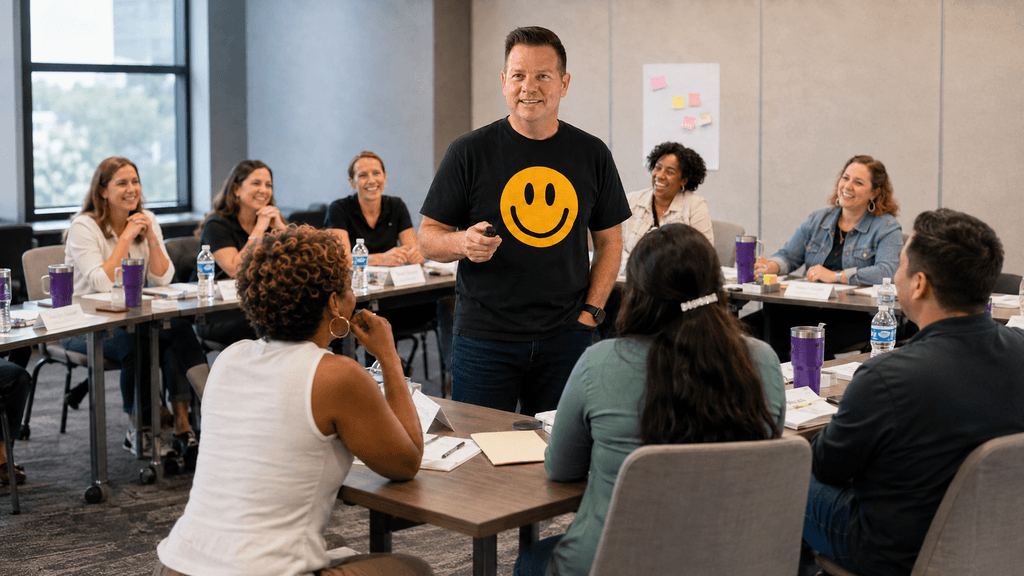
For Scott Doggett, Founder and Chief Servant Leader of the National Academy of Leadership Development, those moments are where leadership becomes real. They are also the foundation of the Priceless Leadership Movement, a growing effort built around a simple premise: people are priceless, and leadership should consistently prove it.
That belief may sound simple. Living it consistently (especially amid pressure, rapid change, competing priorities, and new technology) is anything but automatic. It requires leaders to pay attention not only to what their organizations accomplish, but also to what people experience along the way.
Culture Lives in the Small Moments
Organizations can publish values, launch engagement initiatives, conduct surveys, and invest in workplace technology. Those efforts can be valuable, but culture is ultimately experienced through human behavior.
Employees notice whether leaders listen. They notice how mistakes are handled, whose contributions are recognized, whether concerns are taken seriously, and whether their development matters. Any one of these interactions may seem small. Repeated over time, they become the culture.
Doggett calls the most affirming of these interactions "Priceless Moments" - everyday experiences that communicate a person's importance beyond a title, performance number, or organizational role.
"A Priceless Moment is any interaction that communicates to another person: You matter, your contribution matters, and you are more than the label placed on you," Doggett says.
Seeing People Differently Changes Leadership
The phrase "see people differently" sits at the heart of Doggett's philosophy because leadership behavior often begins with perception. Before leaders change what they say or do, they may need to examine the story they have attached to the person in front of them.
Leaders rarely set out to reduce someone to a label. Yet after a missed deadline, a difficult interaction, or a repeated mistake, words such as careless, resistant, negative, or disengaged can quietly harden into identity. Once that happens, leaders may begin noticing only the evidence that confirms the label and stop asking what else might be true.
The Priceless Leadership approach invites leaders to create space between a person's behavior and the person's identity. A mistake is something someone made; it is not the sum of who they are. Curiosity can open questions that labels close: What context am I missing? What strength have I overlooked? What support, conversation, or opportunity could help this person succeed?
In NALD experiences, leaders examine labels they may have inherited or assigned and consider what becomes possible when those labels are replaced by a fuller, more accurate view of the person. The goal is not to ignore behavior or pretend every interaction is easy. It is to keep one moment, metric, title, or assumption from becoming the entire story.
If an employee is viewed primarily as a position on an organizational chart, leadership may focus almost entirely on output. If that same person is seen as a whole human being with strengths, aspirations, challenges, ideas, and potential, conversations about development, recognition, collaboration, and trust begin to change.
"When leaders see people differently, they begin to lead people differently," Doggett says.

A Leadership Philosophy Shaped by Experience
Doggett's perspective was developed through more than 30 years of experience spanning hospitality operations, executive leadership, learning and development, and organizational culture.
As Vice President of Learning and Development for Holiday Inn Club Vacations, he built the company's learning academy and led work involving leadership development, succession planning, performance management, recognition, onboarding, internships, and organizational development. His later experience in Christian leadership development at World Vision USA further deepened his understanding of servant leadership and human dignity.
Together, those experiences shaped a realization that now anchors his work: leadership is not only about what an organization needs people to accomplish. It is also about the experience leaders create while people are accomplishing it.
That philosophy became the foundation for his book, Priceless! See People Differently. Lead People Better. It also became the foundation of the National Academy of Leadership Development and the broader movement surrounding them.
AI Raises the Stakes for Human Leadership
Artificial intelligence is rapidly changing how organizations analyze information, automate tasks, redesign roles, and make decisions. NALD does not approach that transformation from an anti-technology perspective. Its message is that technological progress should be accompanied by equally intentional human leadership.
As AI handles more tasks and organizations become increasingly data-driven, leaders must pay greater attention to the things technology cannot provide on its own: trust, empathy, judgment, belonging, moral courage, and genuine human connection.
"People do not follow technology. They follow leaders they trust," Doggett says. "The future of work may be powered by artificial intelligence, but it will still be shaped by human leadership."
That perspective reframes AI adoption as both a technology challenge and a leadership test. Employees may need new skills, but they also need clarity as roles change, a voice in the process, and confidence that efficiency will not become an excuse to treat people as expendable.
The organizations best prepared for the future may not be those with the smartest systems alone. They may be the ones whose leaders know how to combine technological capability with distinctly human wisdom. That is the human advantage.
From a Philosophy to a Movement
The National Academy of Leadership Development brings the Priceless Leadership Movement into organizations through workshops, keynotes, retreats, consulting, masterclasses, faculty-led programs, train-the-trainer experiences, organizational certification, and the Priceless Workplace Survey.
The goal is not to add another slogan to a wall. It is to help leaders recognize and repeat behaviors that strengthen trust, connection, performance, and belonging. A presentation can create enthusiasm, but everyday leadership determines what people experience after the presentation ends.
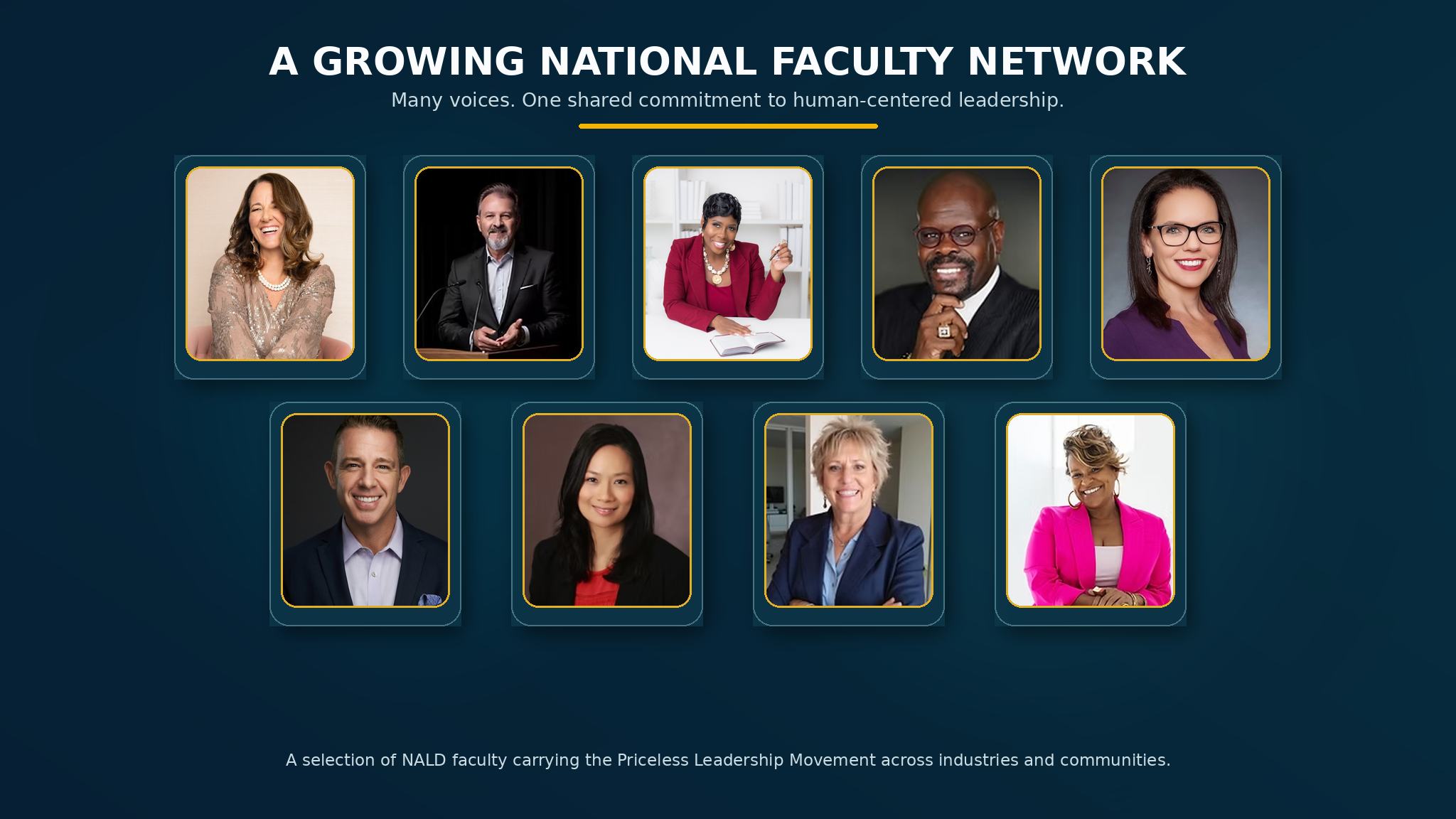
NALD’s growing faculty network now includes nearly 40 leadership professionals based across the United States, enabling the movement to support organizations nationwide and across a wide range of industries, communities, and organizational settings. That network reflects Doggett’s larger ambition: not simply to offer a leadership program, but to build a movement that helps rehumanize work one interaction at a time.
Beyond his work with NALD, Doggett founded National Learning & Development Month, observed each October, and regularly contributes to conversations about leadership, employee engagement, workplace culture, servant leadership, and the human side of artificial intelligence.
The Leadership Question Worth Asking
Workplaces will continue to change. Technology will become more capable, organizational structures will evolve, and the skills required for many roles will shift. One element, however, will remain constant: people will still need leaders they can trust.
The challenge of modern leadership may not be learning how to become more impressive. It may be learning how to make human value visible through everyday actions - especially when expectations are high, time is short, and the conversation is difficult.
The movement asks leaders to begin with a different question: What changes when I see this person not as a problem to manage or a position to fill, but as someone with value, context, strengths, and potential?
One interaction will not transform an entire culture. But every interaction is a chance to reinforce one. That is where the Priceless Leadership Movement begins - and where the future of human leadership may ultimately be decided.
Learn More
Readers interested in the Priceless Leadership Movement, Doggett's book, speaking engagements, leadership programs, and ways to become involved can explore nationalald.com. Scott Doggett can also be found on LinkedIn, while NALD shares additional leadership content through LinkedIn, Instagram, YouTube, and X.

CEO Times Contributor
Covers leadership, business strategy, entrepreneurship, and the people building innovative companies.
This article features partner, contributor, or branded content from a third party. Members of the CEO Times editorial staff were not involved in the creation of this content. All views and opinions are those of the contributor alone.