From Colombia to Dubai: Why AI Changed the Way I Think About Success


A Colombian professional's journey from Colombia to Dubai reveals how AI, adaptability and continuous learning are reshaping career success.
By Eliana Useche
When I graduated as a civil engineer in Colombia, I imagined that my professional future would be defined largely by what I had studied. Like many graduates, I believed there was a relatively clear formula: earn a degree, develop experience, become better at your profession and gradually build a successful career.
Life had a different education waiting for me.
Moving from Colombia to Dubai changed not only where I lived, but also the way I understood ambition, adaptability and professional growth.
I found myself thousands of kilometres away from home, building a life in one of the world's most international cities and learning to operate professionally in an environment very different from the one in which I had grown up.
Suddenly, technical knowledge was not enough.
I had to communicate every day in another language. I had to understand different cultures and ways of thinking. I had to become comfortable learning unfamiliar technologies and systems. Most importantly, I had to accept that my career did not necessarily have to follow the path I had imagined when I graduated from university.
That realization has become one of the most valuable lessons of my professional life:
The most valuable skill I have developed isn't knowing everything. It's knowing how to keep learning.
A Career No Longer Has to Be a Straight Line
For previous generations, professional identity was often closely connected to a single occupation.
You studied something, entered that profession and potentially remained in the same industry for decades.
That world is changing.
Today, a degree can provide an important foundation, but our ability to adapt may ultimately determine how far we can go.
My engineering background taught me discipline, analytical thinking and how to approach problems methodically. But living and working internationally taught me another set of skills: adaptability, communication, curiosity and the willingness to become a beginner again.
Dubai has been an extraordinary environment in which to learn those lessons.
Here, it is normal to work alongside people from completely different countries, cultures and professional backgrounds. Conversations about innovation, entrepreneurship and technology are everywhere.
And during the past few years, one technology in particular has changed the way I think about what an individual professional can accomplish.
Artificial intelligence.
AI Didn't Teach Me to Stop Thinking
When generative artificial intelligence became widely accessible, much of the conversation focused on one question:
Will AI replace people?
I gradually became interested in a different question:
What happens to the capabilities of people who learn how to work effectively with AI?
I began incorporating artificial intelligence into different aspects of my professional development and everyday work.
I used it to help structure information, improve communication, navigate language differences, explore unfamiliar subjects, organize ideas and approach problems from perspectives I might not have immediately considered.
What surprised me was that AI did not make me want to think less.
It made me realize how much more I could potentially do.
AI didn't replace my ability to think. It expanded what I could do with my thinking.
That distinction matters.
Artificial intelligence can produce an answer in seconds, but speed should not be confused with judgment.
A professional still needs to understand the context, question the output, recognize mistakes and ultimately take responsibility for the decision.
AI can generate possibilities. Humans still have to decide which possibilities make sense.
The Real AI Divide May Not Be Human Versus Machine
I believe we sometimes frame the future of work incorrectly.
We imagine a competition between humans and artificial intelligence, as though one must eventually defeat the other.
But another divide is already emerging: between people who learn how to use these technologies responsibly and effectively, and those who choose not to engage with them at all.
AI is lowering barriers that previously prevented ordinary people from exploring certain ideas.
Someone without a background in design can begin visualizing a brand. An entrepreneur can analyze and structure an idea before hiring an entire team. A professional working in a second language can communicate with greater confidence. A person curious about a new subject can have an interactive learning tool available at almost any moment.
None of those things eliminates the need for expertise.
If anything, easier access to information makes judgment even more valuable.
Knowing how to ask a question is useful. Knowing whether the answer makes sense is essential.
From Using Technology to Creating With It
My own relationship with AI is also evolving.
Initially, I approached it primarily as a productivity tool: something that could help me work, communicate and learn more efficiently.
Now I am becoming increasingly interested in another possibility.
Creation.
What happens when people stop asking only, "How can AI help me do my existing job faster?" and begin asking, "What can I build now that I couldn't realistically build before?"
That question has changed the way I think about my own future.
I am increasingly interested in entrepreneurship, digital education, content and the possibilities that emerge when human knowledge is combined with accessible technology.
I do not know exactly where every one of those explorations will lead.
And surprisingly, I have become comfortable with that.
Because another lesson of leaving Colombia and building a life in Dubai has been learning that you do not need to see the entire road before taking the next step.
Why Dubai Matters
There is something particularly fitting about experiencing this transformation in the UAE.
Dubai attracts people who arrive with extraordinarily different stories but often share something important: the desire to build.
People come here to establish careers, companies, families and new chapters of their lives.
At the same time, the UAE has positioned technological development and artificial intelligence prominently within its vision for the future.
For an expatriate professional, being surrounded by that environment can influence the way you think.
Living here has made my ambitions more international.
It has also made me increasingly aware that the skills that brought us to where we are today may not necessarily be the same skills that take us where we want to go tomorrow.
The Human Skills AI Makes More Important
Ironically, the more capable artificial intelligence becomes, the more I value distinctly human qualities.
Curiosity. Judgment. Empathy. Communication. Discipline. Creativity.
And perhaps most importantly, the courage to keep learning.
Technology changes quickly. Specific platforms will come and go. The AI tools we consider revolutionary today may look primitive a decade from now.
The ability to adapt will remain.
This is why I do not believe every professional needs to become an artificial intelligence expert.
But I do believe professionals should become curious about what these technologies mean for their industries and their own capabilities.
Ignoring AI will not prevent it from changing the workplace. Understanding it gives us a better chance of participating in that change.
Building Your Place
When I look back at the journey from Colombia to Dubai, the biggest transformation has not been geographical.
It has been mental.
I once thought building a successful career meant discovering the professional path I was supposed to follow and becoming increasingly accomplished within it.
Today, I see it differently.
Careers can evolve. Skills can be learned. Industries can change. Technology can open doors that did not exist when we chose what to study at university.
And sometimes the most important professional decision is simply remaining curious enough to walk through a new door when it appears.
I am still learning. I am still building. And I certainly do not have every answer about what artificial intelligence will mean for our future.
But perhaps we do not need to have all the answers yet.
We need the willingness to learn, the judgment to use these technologies responsibly and the ambition to imagine what we might create with them.
I left Colombia believing that building a career meant finding where I belonged.
Dubai taught me something different: sometimes you don't find your place - you build it.
About the Author
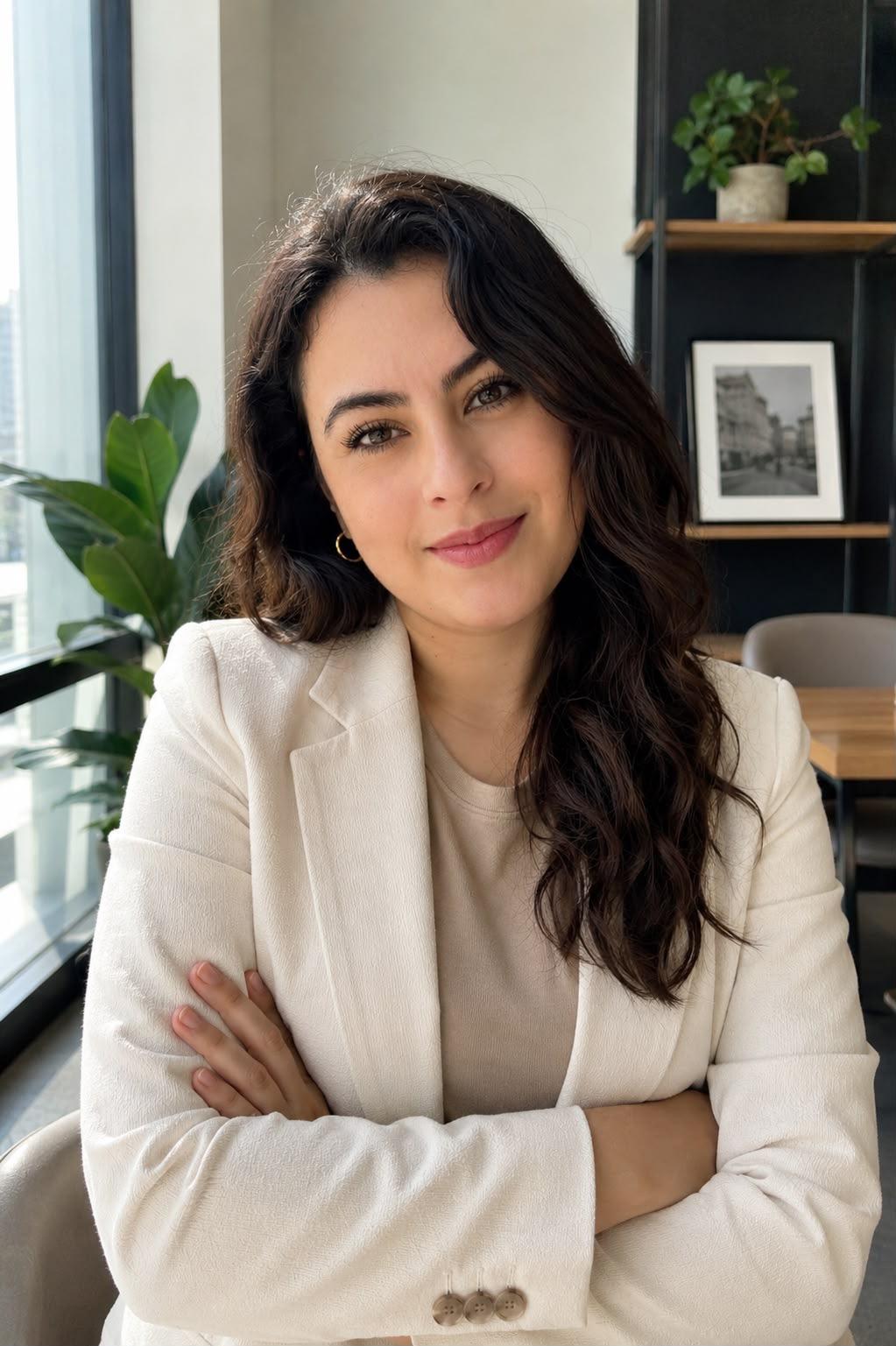
Eliana Useche is a Colombian civil engineer and international professional based in Dubai, UAE. Her professional journey has expanded from engineering into technology-driven environments, digital operations and cross-cultural communication. She is particularly interested in artificial intelligence, continuous learning, digital entrepreneurship and how emerging technologies are reshaping the possibilities available to individual professionals.
Connect with Eliana: Instagram
Learn more about Astra International via Instagram.

CEO Times Contributor
Covers leadership, business strategy, entrepreneurship, and the people building innovative companies.
This article features partner, contributor, or branded content from a third party. Members of the CEO Times editorial staff were not involved in the creation of this content. All views and opinions are those of the contributor alone.