
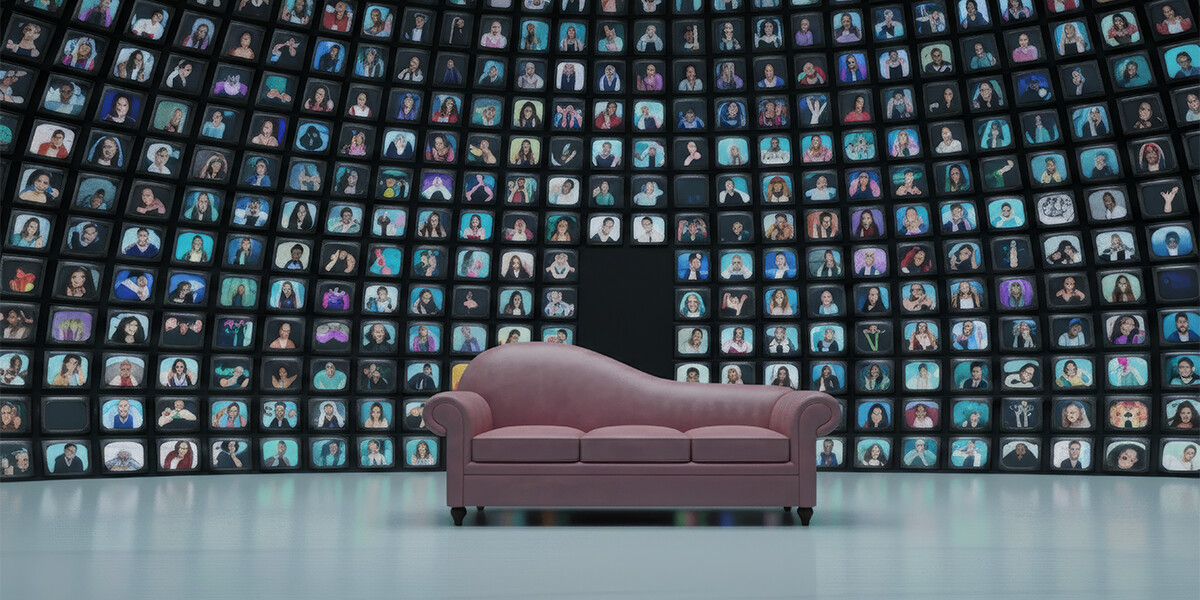
Psychoanalysis remains relevant in the digital age by addressing unconscious tensions, language, and the superego amidst hyperdigitalization.
In the early decades of the twenty-first century, amid the dizzying acceleration brought about by the algorithmic revolution and the emergence of new paradigms, an unavoidable question arises: does psychoanalysis still matter? Can a theory born in nineteenth-century Europe, through the listening to hysterical patients, help us understand the emotional life of individuals who today live hyperconnected, constantly interrupted by notifications and caught in rhythms that allow little respite?
If psychoanalysis is, above all, a method, a clinical practice, and a theory that provokes questions, it is worth asking what its truly revolutionary contributions were. Three seemingly simple, yet profoundly transformative, concepts explain why psychoanalysis continues to offer explanatory power today.
The first is the discovery, or invention, of the unconscious. Here lies Freud’s genius: opening an unknown territory. Much of what we do does not stem from rational decisions, but from internal forces of which we are largely unaware. Choices we repeat despite ourselves, emotions that return unannounced, recurring patterns we cannot seem to escape, Freud referred to this realization as “the third narcissistic wound of humanity.”
The second contribution is the talking cure, which argues that language is what articulates, conveys, and makes possible the elaboration of emotional experience. Today this may seem self-evident, but before psychoanalysis no one had proposed that speaking about one’s feelings, putting them into words, organizing them, and being heard by another, not only relieves suffering but transforms it. Every contemporary form of psychotherapy, even those that define themselves as anti-Freudian, relies on this discovery.
The third, and here psychoanalysis clearly distinguishes itself from other psychotherapies, is the conception of the symptom as a defense, the product of conflicting forces. A symptom is not a deficit or an error to be corrected quickly; it is a substitute solution that attempts to appease a form of distress that could not be processed otherwise. For this reason, psychoanalysis does not seek to eliminate symptoms, but to read them as meaningful signals, encrypted messages pointing toward what has been repressed. Eliminating a symptom does not resolve the underlying problem; what the symptom was attempting to manage will inevitably seek other forms of expression until it can be truly worked through. What is repressed insists.
These three contributions, the unconscious, the talking cure, and the symptom, remain fully relevant and constitute the foundation of modern psychotherapy. And yet, paradoxically, they continue to be resisted. We live in an era that celebrates the illusion of total control, where sadness, anxiety, or anguish are often interpreted as chemical malfunctions or personal failures. In such a context, psychoanalysis reminds us of something essential: symptoms are not mistakes, but psychic negotiations with trauma, anxiety, and the complexity of human existence.
Freud, however, was not only the discoverer of the unconscious. He was, above all, a restless scientist. Trained as a neurologist, he sought from early on to build a bridge between the brain and psychic life. He recognized limits, revised concepts, abandoned hypotheses, and maintained that the biology of the future would clarify what he could only sketch. Today, neuroscience and epigenetics resonate with this hypothesis: the biological and the psychic are woven from the same thread, where inner and outer realities intertwine and cannot be conceived as separate entities.
Research by Eric Kandel, Nobel Prize–winning neuroscientist, has provided evidence suggesting that psychotherapy, including psychoanalytic therapy, produces measurable changes in the brain. Kandel identified five principles linking psychoanalysis to biology: much of human behavior is unconscious; the mind is composed of representations that can enter into opposition; early childhood shapes adult life; psychological processes have neural correlates; and therapeutic experiences modify neural circuits.
Similarly, neuroscientist Antonio Damasio articulated a model in which body, emotion, and decision-making form a dynamic unity: there is no thinking detached from the body. His concept of “somatic markers” reformulates, in contemporary terms, Freud’s intuition regarding the continuity between body and psyche.
Psychiatrist and psychoanalyst Juan-David Nasio expanded on this theoretical line by proposing that the royal road to the unconscious is not limited to dreams, but also includes the body, conceived as a true stage for the subject’s conflicts and desires.
These resonances between psychoanalysis and neuroscience do not reduce the psychic to the biological, nor the biological to the psychic. On the contrary, they illuminate their complexity. They argue that emotions are not chemical failures or maladjustments to be corrected through training or medication, but interrelated processes inscribed in the body–psyche continuum, requiring time for the subject to remember, repeat, and work through. It is through this process, putting into words what returns, elaborating what insists, and creating new associations, that different psychic inscriptions emerge and, over time, alleviate suffering.
As science advances, the cultural conditions shaping subjectivity are also undergoing profound transformation. An increasingly ‘digital life’ intensifies constant comparison, accelerates self-demand, and multiplies implicit mandates: to be efficient, always available, attractive, successful, and happy. It is no coincidence that rates of depression, anxiety, and suicide have risen steadily over the past decade among digital-native generations, particularly adolescents and young adults. The feeling of insufficiency ceases to be occasional and becomes structural.
Psychoanalysis sheds light on these transformations by focusing on a central figure: the superego. Psychoanalyst Herbert Alexander Rosenfeld described two fundamental identifications that give rise to distinct aspects of the superego: one derived from a father who punishes and imposes obligations, and another stemming from an unbearably reproachful, persecutory, and cruel maternal figure. This sadistic and regressive maternal superego corresponds to the most primitive dynamics of the drives within the subject and is linked to what Rosenfeld described as a psychotic core of the personality. For him, the superego is not merely an internalized moral voice, as Freud conceived it, but a primary psychic structure emerging from the conflict between life drive and death drive, manifesting as a persecutory entity that exerts masochistic and self-destructive suffering, an internal enforcer always on guard.
Jacques Lacan, drawing on this orientation, radicalized the concept even further. The superego does not merely prohibit; it commands enjoyment. He defined it as an obscene and ferocious instance, tied to the death drive and a mute guilt, a cruel voice that pushes toward limitless enjoyment (jouissance), impossible to satisfy. For Lacan, the superego is a sadistic vestige of the father, not the symbolic father who introduces the law, but a ferocious and obscene remainder of the paternal function, a voice that always demands more and is never appeased.
Thus, the superego, as an internal watchdog, enforces obligations, but also submission and compliance. It has various faces: those of parents or teachers in Freud, the maternal figure in Rosenfeld and Klein, the terrifying father in Lacan. By contrast, the ‘digital superego’ emerging in the age of hyperdigitalization seems to lack a human face, or rather, it is composed of millions of faces, and thus becomes none at all !. It is a bodiless, dehumanized voice that issues commands from the screen, enforcing hypervigilance and producing constant hyperobedience.
These dynamics were anticipated by George Orwell in 1984, when he warned of a time in which it would be possible to force not only obedience but uniformity of thought.
When hyperdigitalization becomes absolute, pure metrics, pure image, pure comparison, it can alienate the subject into a simulacrum of identity, eroding what structures psychic life: language, analog traces of experience, and the formations of the unconscious Freud described. These formations are what allow the subject to sustain desire and social bonds, thereby tempering the ferocity of the superego, which always tends toward obedience and self-annihilation.
Faced with this new mandate of limitless enjoyment, one that leads to isolation and the illusion of consumption, where the subject ends up being consumed and even medicated in order to continue functioning as a cog, psychoanalysis has something singular to offer. It provides a space for working through the unconscious tensions between life drive, death drive, and superegoic demands. It does not train, optimize, or demand performance; it listens. It listens to irrational guilt, internal divisions, anxiety, and above all repetition, in order to extract from them a singular truth: that of the subject.
In an era of hyperdigitalization and the eclipse of desire, psychoanalysis becomes more necessary than ever, not to adapt individuals to the system, but to confront the helplessness produced by the loss of language and human connection, and to reopen a space where fundamental questions can still be asked: Who am I beyond what the algorithm tells me I should be? What do I truly desire? What place does the other occupy in my life? How can one work through suffering without erasing it or becoming enslaved by it?
Authors Information
This article is co-authored by Dr. Marta Gerez Ambertin, President of the Instituto Clínico J. Lacan, Argentina, and Lorena Salthu, Dean of the International Faculty of Psychology and Psychoanalysis Lalangue, France.
The International Faculty of Psychology and Psychoanalysis Lalangue is dedicated to a plural, non-dogmatic psychoanalytic approach, in dialogue with contemporary clinical practice and current scientific developments.
Faculty Lalangue website: https://facultadlalangue.com/
Institutional social media links:
– Instagram – Instituto Clínico J. Lacan
– Instagram – Facultad Lalangue
– LinkedIn – Lorena Salthu
Email: [email protected]