
Catherine Gallacher: The Pause Between Pressure and Decision Making

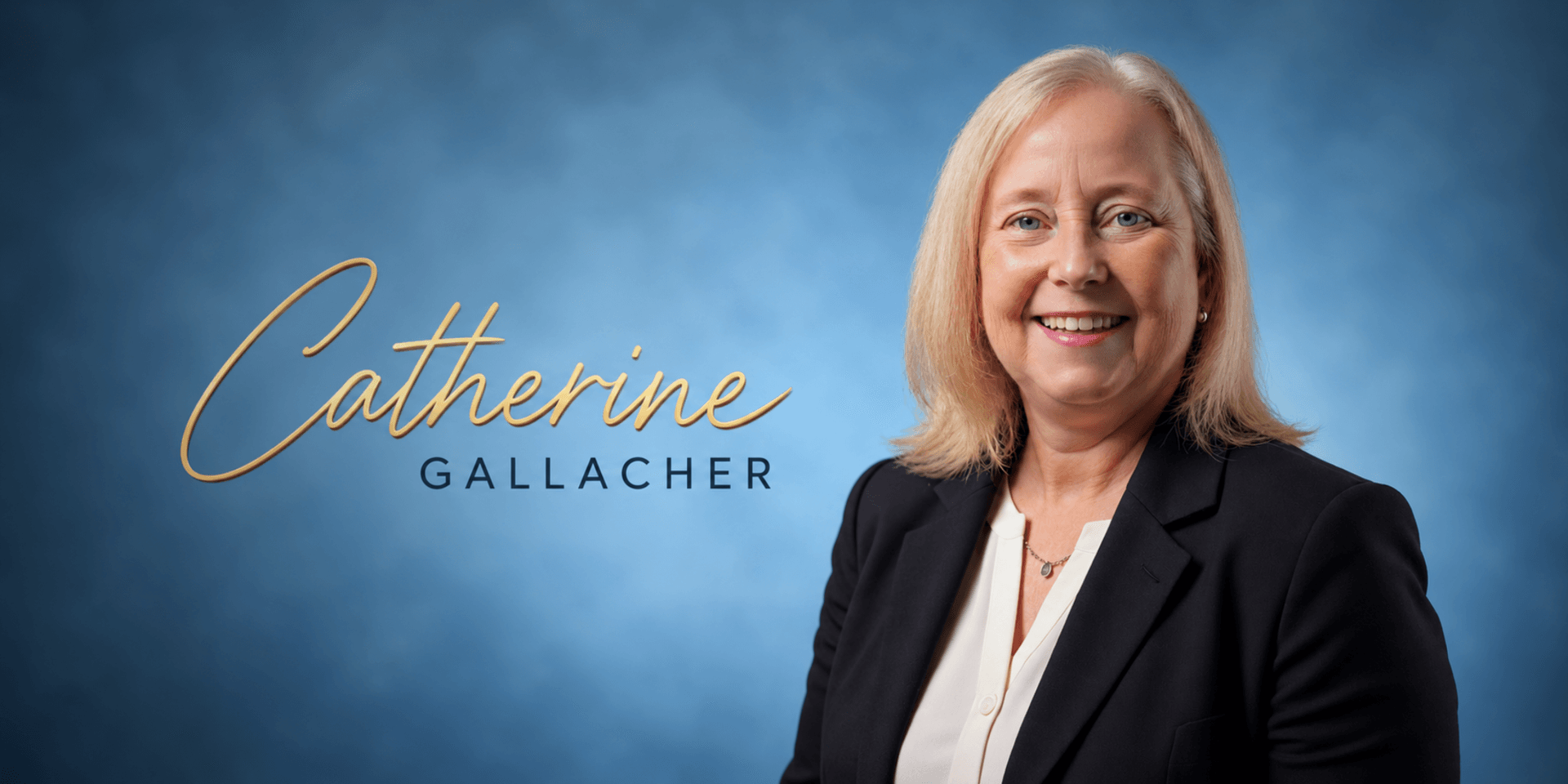
Catherine Gallacher's Pause Effect™ shows leaders that pressure does not remove intelligence. It can remove access to it.
A senior leader is halfway through a crisis briefing when the room goes quiet, waiting on a decision. In that pause, something happens that most organizations never examine. According to Catherine Gallacher, that gap is not empty. It is where leadership is actually won or lost.
"Pressure does not remove intelligence," Gallacher says. "It can remove access to it." That single idea now sits at the center of her work with senior leaders, executives, and organizations operating in high pressure environments.
From Empowerment Coaching To Leadership Under Pressure
Gallacher built her early reputation on personal resilience and empowerment work, developed over more than three decades in counselling and psychotherapy. She is now a Senior Accredited Psychotherapist and founder of StepUpcmg™. Her work has increasingly focused on a harder question facing organizations today: what actually happens inside a leader's mind when pressure rises, and why capable people sometimes make poor decisions in exactly the moments that matter most.
Her answer is The Pause Effect™, a framework built around the critical space between pressure and response. The premise is not that leaders lack the intelligence to handle hard moments. It is that pressure can cut leaders off from the intelligence they already have. Recognizing that pause, and learning to use it, is what separates a reactive decision from a sound one.
Following The Chain From State To Outcome
Gallacher's current work traces a chain that connects psychological state, thinking, behavior, and decision making. For leaders and teams operating under pressure, she argues, each link affects the next. A dysregulated state distorts thinking. Distorted thinking shapes behavior. Behavior produces the outcome an organization ultimately lives with.
This framing matters for organizations because it moves the conversation away from a common but limited fix: telling people to simply become more resilient. Gallacher takes a different position. Rather than asking individuals to push harder or toughen up, she examines the systems, psychological states, and conditions that shape how people actually perform. For leadership teams, that shift can mean the difference between managing symptoms and addressing the root cause of poor decisions made under strain.
Her framework Leadership ARC™ builds on this chain, alongside her earlier work on Neural Sovereign™ and Emotional Architecture™. Together, these frameworks give organizations a structured way to examine not just what leaders decide, but the internal conditions that shaped the decision.
Testing These Ideas Where Pressure Is Highest
Gallacher has recently taken these ideas into environments where the stakes of a poor decision are especially high. She contributed to the MAST Defence & Security Forum in Glasgow, where discussions centered on building resilient societies, and she has delivered work with senior leaders across organizational and resilience focused events.
These engagements reflect where her work is heading. Her interest lies specifically with organizations operating in complex, high pressure, or rapidly changing environments, where the quality of human judgment, communication, and decision making carries real consequences. Defense, security, and organizational leadership settings all share that same demand: decisions cannot wait for perfect conditions, and the people making them need frameworks that hold up under strain.
Naming the Patterns That Distort Thinking
In July 2026, Gallacher published her Forest of ANTs™ trilogy, now available on all major outlets. The books translate common psychological patterns, including catastrophizing, overthinking, all-or-nothing thinking, and self-doubt, into an accessible framework readers can use to recognize how their own thinking shapes behavior.
The trilogy extends her leadership work into a wider audience. Where The Pause Effect™ and Leadership ARC™ speak directly to executives and teams, Forest of ANTs™ gives any reader a way to spot the same distorted thinking patterns in themselves before those patterns turn into decisions they regret.
Examining What Leaders Lose When They Outsource Thinking
A growing part of Gallacher's work looks at artificial intelligence, not as a threat to replace human roles, but as a force reshaping human capability itself. Her questions center on judgment, confidence, and critical thinking. What happens to those capacities when people increasingly hand cognitive tasks over to technology.
For leaders, the question is not abstract. Organizations that lean on AI for analysis and recommendations still need humans capable of questioning those outputs, catching what the technology misses, and making the final call under pressure. Gallacher's work asks whether that capacity is being quietly eroded, and what leaders should do to protect it.
Where This Work Is Headed
Gallacher describes her guiding philosophy as Alignicity™, the idea that people and organizations function best when internal alignment, rather than constant push, drives performance. "When we choose alignment, we stop chasing and start creating," she says. Applied to leadership, that principle reframes resilience away from endurance and toward clarity: knowing what state you are in, how it is shaping your thinking, and where the pause sits before your next decision.
Gallacher is expanding this work internationally, with a focus on paid keynote speaking, leadership conferences, corporate events, executive and senior leadership development, and organizational programs and briefings. She is particularly interested in partnerships where her work on human behavior, decision making, and performance under pressure can produce practical organizational impact.
Bring This Thinking Into Your Organization
If your organization operates in a complex, fast moving, or high stakes environment, the quality of your team's decisions under pressure is not something to leave to chance. Catherine Gallacher's frameworks offer a structured way to examine that pressure point directly, from the individual leader's pause before a decision to the systems shaping an entire team's performance.
Conference organizers, corporations, and professional organizations in the UK and internationally are welcome to reach out regarding keynote speaking, executive development, and organizational briefings built around The Pause Effect™ and her related frameworks.
Connect with Catherine Gallacher on her website, LinkedIn, Instagram, Facebook, and X.

CEO Times Contributor
Covers leadership, business strategy, entrepreneurship, and the people building innovative companies.
This article features partner, contributor, or branded content from a third party. Members of the CEO Times editorial staff were not involved in the creation of this content. All views and opinions are those of the contributor alone.