
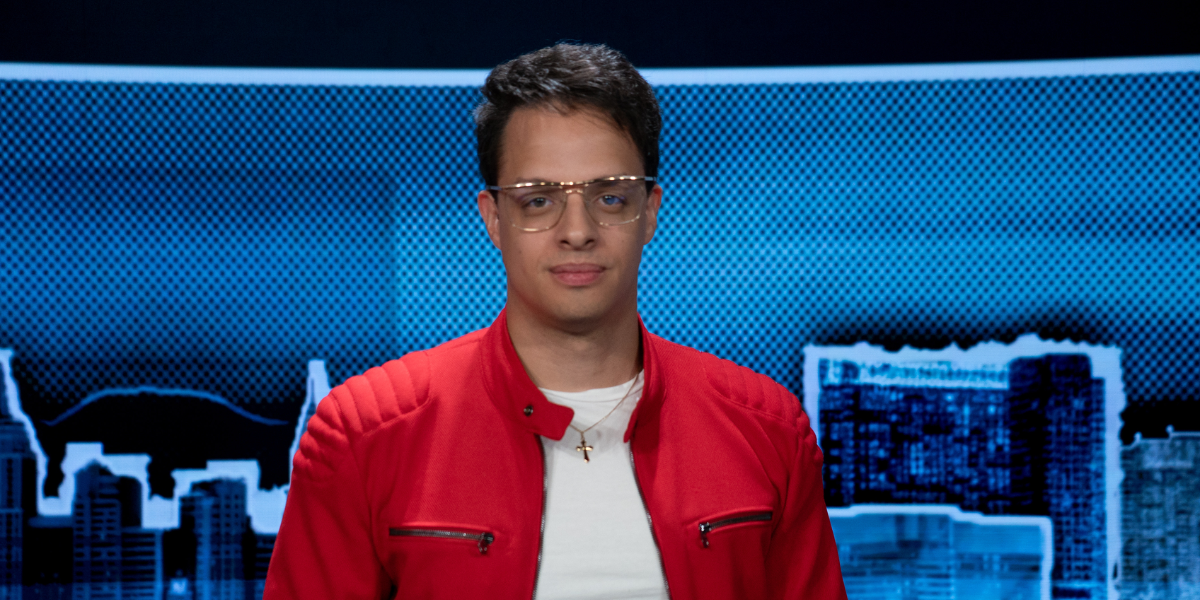
Venezuela-born Italian entrepreneur Sebastian Hidalgo is revolutionizing sales with a unique blend of hostage negotiation and military-grade psychology. He is also banned from his native country, a civilian, and a service provider for US DefenseTech companies.
Sebastian D. P. Hidalgo is a sales strategist with a unique background. With training in high-stakes negotiation and psychological operations (PsyOps) and years of experience in management consulting and B2B sales, he has developed a sales methodology that prioritizes influence over force. Known for creating the SWAT Sales Method (Sales With Advanced Tactics), Hidalgo’s approach helps clients overcome traditional sales challenges and achieve substantial results without resorting to high-pressure tactics. This earned Durindal, his company, the title of Best Sales Training Firm in the USA.
After finding out he was banned from his country, we decided to interview him to dig deeper into his persona through this interview.
What first pulled you toward understanding human behavior under pressure rather than following a conventional business or academic path?
Sebastian D. P. Hidalgo: I’ve always been fascinated by the human mind. First of all, I’m a two-time immigrant who speaks five languages. But I started as a South American kid who found himself in an Italian school having to learn three languages at once, while knowing only one. I had to develop soft skills really quickly. On top of that, I had to bridge the gap with different cultures.
All of that made me develop a fascination for people. How they think, why they think it, and how it affects their actions.
Your background is hostage negotiation and psychological operations. However, you have never claimed a military background and we couldn’t find public information about your service. What’s the full story?
Sebastian D. P. Hidalgo: I don’t claim military status because I don’t have one. Lying and inflating things has become a normal thing nowadays, but reality is that I have accomplished enough to where I don’t need to lie.
The story behind my training is an interesting one: In Italy, despite being young, I developed a small but influential network. A mentor introduced me to a professor in Rome – a professor who had connections to an institution training peacekeepers. That also came with Italy’s first training in hostage negotiation.
And I wasn’t a fit for it, the professor said. I was too young, and the course was for law enforcement professionals or at least students from a military academy. So he rejected me. But I’m stubborn. I emailed and called him every week for six months, and he finally caved in: “I’ll introduce you. But I can’t guarantee you anything.”
So I met the people responsible for the initiative. To this day they train intelligence personnel all around the world. And they saw potential in me, so they managed to make an exception somehow… and I was in.
How did hostage negotiation and psyops shape the way you understand persuasion compared to traditional sales training?
Sebastian D. P. Hidalgo: Both disciplines helped me understand that current methods fail because they are based on extracting value, not on building trust. And business runs on trust.
And of course, there are methods like Sandler that emphasize relationship-building. But they’re formulaic and obsolete. They don’t understand that trust is just the foundation.
The top sellers I’ve met in every industry are hailed because they are influential. They have networks willing to make introductions and vouch for them. So I developed a methodology to teach sellers how to become influential and save 10 years of experience in the process.
You work with techniques that can clearly move people and outcomes. How do you personally define the line between influence, coercion, and manipulation?
Sebastian D. P. Hidalgo: Influence is when you get someone to do something for their reasons, and those reasons also benefit you. Manipulation is when you push someone into doing something for your reasons, and your reasons don’t benefit them.
In sales, coercion is when you use what you know about a prospect to guilt-trip them and shame them into a decision they are not sure about.
The SWAT Sales Method can be used for manipulation. And you can use it for good, or for evil. But if we ever catch someone using it to manipulate, we will cancel their certification and disavow them from ever getting trained by us again.
The current administration arrested the Venezuelan President Nicolas Maduro. You have publicly stated that you are banned from Venezuela. What happened?
Sebastian D. P. Hidalgo: In 2020, my family and I exposed documented misconduct by a Venezuelan governor. This campaign lasted about 12 months where we leveraged open-source information and social listening to piece together a puzzle whose pieces were spread across dozens of individuals.
The governor in question was deposed indeed but retaliated, appealing to Venezuelan laws that make it illegal to criticize public officials. So for me and my family, returning to the country carries a real risk of detention.
However, I treat it less as a personal story and more as a reminder of how quickly systems can reclassify accountability as a threat. This ban situation strongly influences how I think about resilience and failure, and why at Durindal we focus on helping organizations identify weak signals before consequences become irreversible.
What is Durindal, and why did you decide that the United States was the right environment for its mission?t
Sebastian D. P. Hidalgo: Well, first of all my co-founder Garrath Robinson is an American and army vet. Born and raised. We started Durindal to bring to dual-use DefenseTech companies the sales, operations and go-to-market know-how we’ve gathered across more than 12 industries.
The United States concentrates the decision-makers, institutions, and operational complexity where dual-use technologies are actually tested against real-world challenges. Operating here makes the most sense.
When you look back at Venezuela, what was the first moment you realized the system was breaking down, even though most institutions were still insisting everything was normal?
Sebastian D. P. Hidalgo: It was a war on three fronts, and the result of deliberate planning by the Chavez government. The first signal was when private companies got expropriated. All small businesses that didn’t agree with the government were shut down.
Then you have education. The regime overhauled the education system, re-writing history books to match their narrative. And finally, you have media control. The propaganda machine was constant and relentless, always shaping and controlling opinion.
At the time, institutions normalized these shifts because the public-facing structures still resembled a democracy. Looking back, those were typical signs of long-horizon failure: small concessions compounded while legitimacy lagged behind reality.
Beyond commercial success, what problem does Durindal exist to prevent, not just solve?
Sebastian D. P. Hidalgo: DefenseTech is a lively industry that produces innovation, and that innovation often ends up benefitting the lives of people and institutions.
Durindal exists to prevent technically sound systems from failing once they interface with institutions, incentives, and reality. For example, all industries have had great products that never got to be adopted, and that’s because most failures are not technical. They are contextual, organizational, and narrative failures.
Having lived through that kind of slow, invisible collapse, how does it shape the way you think about prevention and resilience today, especially in the systems Durindal focuses on?
Sebastian D. P. Hidalgo: Having seen how systems can appear stable while quietly becoming fragile, we focus less on prediction and more on stress-testing assumptions.
Resilience comes from understanding where a system absorbs pressure and where it silently transfers it to its weakest links until failure becomes inevitable.
If someone reads your story and thinks, “This is extreme,” what do you think they are underestimating about how fragile systems and decisions really are?
Sebastian D. P. Hidalgo: Comfort is dangerous. Businesses and states have something in common: They both underestimate how quickly incentives change once comfort removes the pressure to question assumptions. Fragility builds quietly, not dramatically.
Connect with Sebastian:
LinkedIn: https://linkedin.com/in/sebastian-dp-hidalgo
Email: [email protected]
Company: https://durindal.com/