Astralithos Is Rethinking How Industrial Plants Learn And Evolve

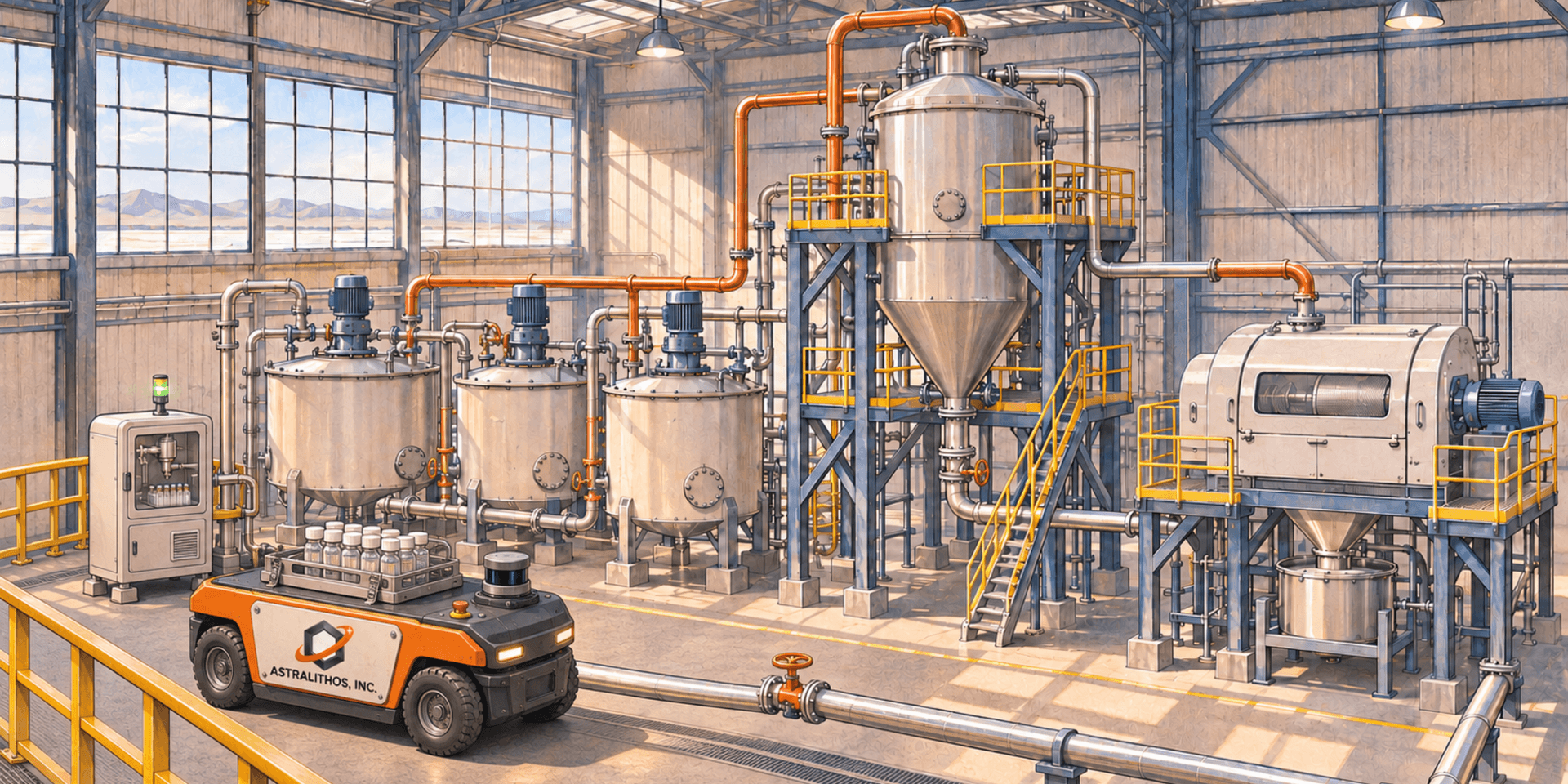
Astralithos is developing physical AI that uses results of production run to guide the next. Its goal is to let smaller teams operate critical-mineral plants.
A lithium refinery can store years of readings and still rely on one experienced operator when impurities rise. The shift log might record that she opened a valve. What the next shift needs to know is why she opened it, how long the change took to reach the product, and how much lithium it cost to bring purity back into range.
Palash Gangopadhyay, PhD, founded Astralithos to sell the operating crew of a process plant as a product. The company is developing physical AI that combines knowledge of chemistry and plant operations with sensors and robotics. Its aim is for equipment to handle routine decisions and physical tasks, so fewer people are needed on the floor and specialists can focus on unfamiliar conditions.
A November step toward field testing
On November 18, Astralithos signed a memorandum of understanding with Victory Ridge Capital, a private equity firm focused on mineral supply chains. The companies intend to review operating data from assets Victory Ridge evaluates and explore applications at future investments where the technology fits. Astralithos targets 2027 for field deployment.
“Physical AI only counts once it works in a real plant,” Gangopadhyay wrote in announcing the agreement. He said the company will measure results against each plant’s own baseline.
What a lithium refinery can learn from one run
A refinery removes impurities from brine, crystallizes a lithium product, then separates and washes the crystals. Some of the liquid returns to the crystallizer. It carries dissolved lithium worth recovering, along with impurities that can build up over several passes.
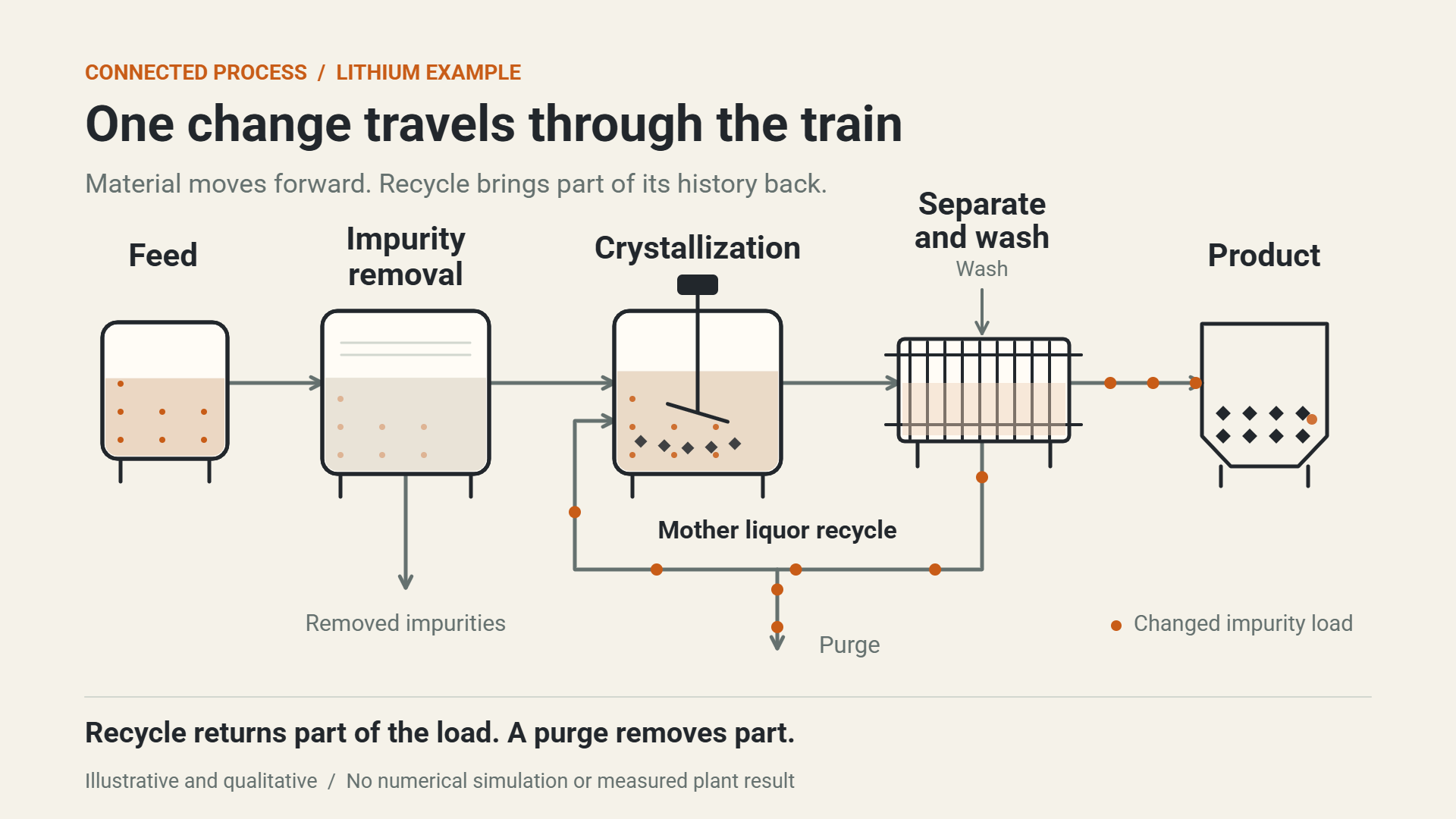
In this illustrative lithium process, recycling liquid returns material to the crystallizer. A purge removes part of that stream. Illustration by Astralithos.
When impurities rise, the plant can slow the feed or drain more liquid from the recycle loop. Draining more can protect product purity, but it also sends lithium out with the waste. A useful operating record connects the chosen move to the feed chemistry, the time it took to work and the amount of saleable product recovered.
What the multidimensional model adds
Gangopadhyay describes the mathematics in the open-access preprint Mathematical foundations of multidimensional AI for dynamic chemical process networks. For each chemical component, the model counts what enters a vessel, what leaves and what reactions produce or consume. Connecting those balances tells the model when an upstream move should show up in the finished product, even when material sits in tanks or circles back through the plant.
A lab result belongs to the moment the sample was taken. Lithos, the company’s proposed system, would use flows and inventories to estimate where that material is now. If the uncertainty could change which move makes sense, Lithos would request a fresh sample. A mobile robot could take the sealed sample to the lab.
In a simulated three-stage process, selecting settings jointly scored 13.2% higher on a combined measure of yield, product loss and purity than choosing feasible settings stage by stage. Both approaches met the model’s limits. The searches used different amounts of computation. Field testing will measure what the approach delivers on actual equipment.
How one run changes the next
The company is training VSK, its prototype chemical-engineering model, to interpret process evidence. Wensura helps engineers compare options and costs. CritPath AI shows what a delay would do to the production schedule. Together, those inputs would help Lithos weigh the value of waiting for a lab result against the cost of delaying production.
Within approved limits, the plant’s control system would carry out a change. Once the affected material reached the sampling point, Lithos would compare the measured purity and recovery with its forecast. The next time similar brine arrived, the plant would have a tested response to draw on. A second site could use that record after checking its own feed and equipment.
The scale-up experience behind the idea
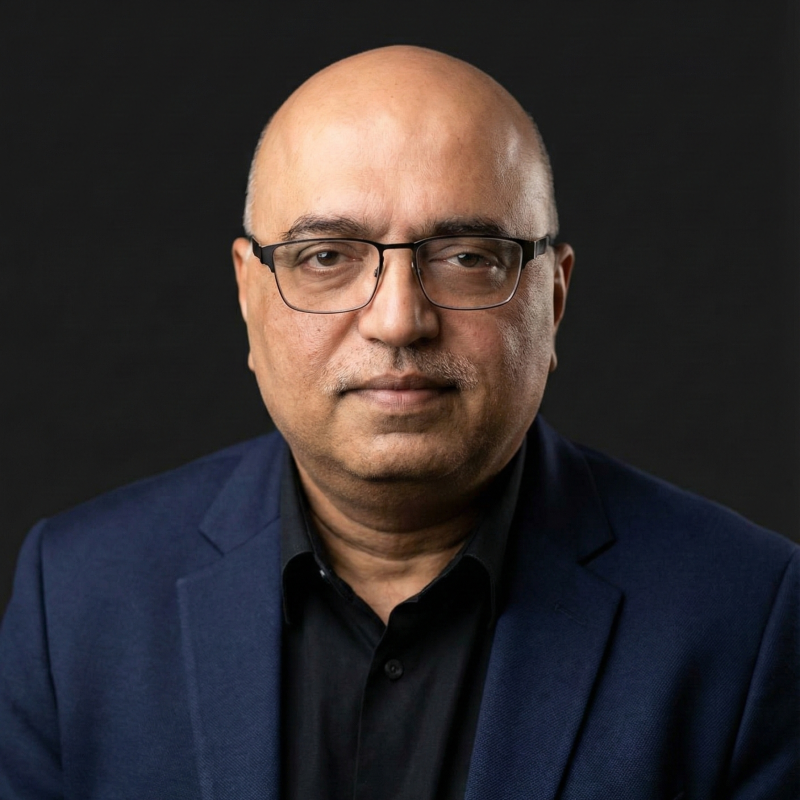
Palash Gangopadhyay, founder and CEO of Astralithos.
Gangopadhyay developed graphite-purification and battery-material technologies as a research professor at the University of Arizona. Urbix licensed technologies from that work, and Gangopadhyay became its chief technology officer. He describes the challenge of bringing that experience to a new plant in his essay, Why I Started Astralithos.
What the first field test needs to show
Astralithos plans to begin with a filtration retrofit, then build the capability into new machines and connect them across a process line. Sampling and material transfer are among the first physical tasks it wants to automate.
A field test can put the staffing goal in measurable terms. For comparable feed, how many operator hours and specialist callouts does it take to sustain the target purity and production rate? Tracking those figures alongside material loss would show whether a smaller team can repeat a good run.
Company information is available at astralithos.ai. Gangopadhyay also shares updates on LinkedIn.

CEO Times Contributor
Covers global markets, corporate finance, and the executive careers built on them.
This article features partner, contributor, or branded content from a third party. Members of the CEO Times editorial staff were not involved in the creation of this content. All views and opinions are those of the contributor alone.