
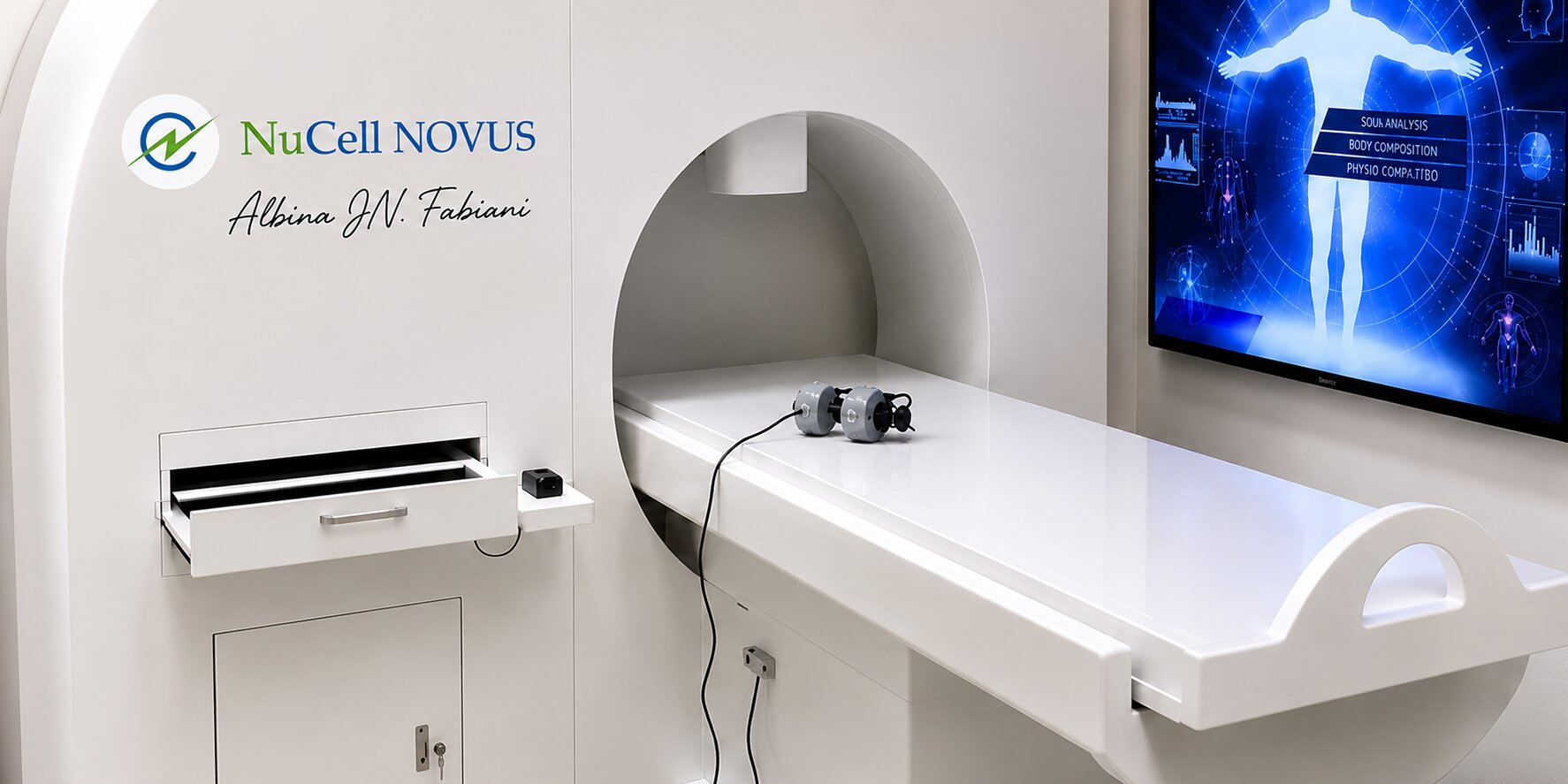
Founder Albina Fabiani’s methodology reframes healthcare service growth around structured judgment, training, and operational consistency.
In healthcare, progress is often associated with the newest device, the most advanced platform, or the latest technical capability. Yet for many service-based organizations, the real challenge is not simply gaining access to technology. It is knowing how to use available tools responsibly, consistently, and within a clear professional framework.
That distinction is becoming increasingly important as advanced equipment becomes more accessible to clinics, wellness centers, and healthcare-adjacent service providers. When similar tools can be financed, leased, or purchased by multiple operators, technology alone becomes less of a lasting differentiator. The stronger advantage comes from the system behind the technology: the standards, training, documentation, and decision-making process that guide how services are delivered.
NuCell NOVUS INTERNATIONAL, an international network of NuCell NOVUS Centers for Medical Biophysics, reflects this shift. The organization is built around a methodology developed by its founder, Albina Fabiani, DSc in Medical Biophysics from Italy. Rather than presenting technology as the central story, Fabiani has focused on the disciplined structure that determines how tools are selected, organized, and applied within the company’s model.
That focus grew from years of professional development and observation. In any service environment, individual experience can be powerful, but it can also be difficult to transfer. A founder may develop strong judgment over time, but if that judgment remains only in the founder’s mind, the organization becomes difficult to scale. Each new location must recreate the same level of understanding from the beginning.

Fabiani’s work addresses that challenge by turning professional knowledge into a more structured operating approach. The goal is not to rely on instinct alone, but to create a repeatable framework that can be taught, reviewed, and improved over time. For a growing network, that kind of structure matters. It gives each center a clearer way to follow the same principles while still operating as an independently owned location.
This is especially relevant in fields where clients often see the equipment before they see the process. A machine may be visible, but the quality of the surrounding system is less obvious. Scheduling, intake, training, service standards, documentation, and internal decision-making all shape the client experience. These quieter operational details often determine whether a brand can maintain consistency as it grows.
NuCell NOVUS’s model places emphasis on that less visible layer. Each center is connected to a centrally developed methodology, allowing the network to share a common standard rather than relying solely on the individual habits of each operator. This helps create a more unified identity across locations and gives the organization a clearer foundation for expansion.
For Fabiani, the philosophy is straightforward: technology should not lead the organization. Professional judgment should. “Our responsibility is not to introduce another technology,” Fabiani says. “Our responsibility is to understand when, why, and under what biological conditions a technology should be used.”
Within the context of the company’s business model, that statement reflects a broader principle. Tools can support a service, but they do not replace the need for careful evaluation, structured training, and responsible oversight. A thoughtful operating system helps ensure that technology is not treated as a standalone solution, but as one part of a wider professional process.
This approach also helps reduce one of the common risks in founder-led service businesses. When a company depends entirely on one person’s expertise, growth can become fragile. The stronger long-term path is to document the knowledge, train others in the method, and create systems that can continue beyond one individual’s daily involvement.
NuCell NOVUS is working from that premise. Its value is not presented as a single device or trend, but as a body of knowledge organized into a system. That system can be shared across centers, refined through continued experience, and used to support a more consistent service model.
The broader lesson extends beyond one company. In healthcare and healthcare-adjacent services, technology will continue to evolve. New tools will appear, and existing tools will become easier to access. But as availability increases, organizations will need to compete on more than equipment. They will need clear standards, strong training, responsible communication, and a repeatable approach to service delivery.
NuCell NOVUS represents one version of that future. Its work points to a practical idea that many growing service organizations eventually face: lasting value is built not only by what a company owns, but by how clearly it understands, organizes, and transfers what it knows.
For those interested in learning more about the NuCell NOVUS model and its international network of centers, the company offers further information through its official channels.