
Wind Harvest International: Best Renewable Energy Innovation in California of 2025


Wind Harvest, a Davis, California-based company, has been awarded the prestigious title of Best Renewable Energy Innovation in California of 2025 by Best of Best Review. This recognition highlights the company’s groundbreaking work in transforming the future of wind energy through their innovative technology, which is designed to capture the untapped potential of low-level winds that have long been unusable by traditional wind turbines.
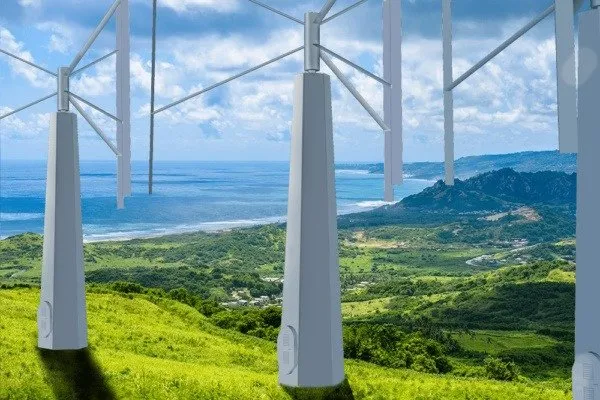
Led by CEO and co-founder Kevin Wolf, Wind Harvest’s vertical axis wind turbines (“VAWT”) are in the last steps of the utility-scale product commercialization process. With eight recently granted patents, this unique technology is capable of harnessing energy from winds closer to the ground. The primary market is the “understory” of wind farms where excellent low-level wind is too turbulent and problematic for traditional large turbines that instead focus on capturing high-altitude winds. The Wind Harvester VAWT presents a significant opportunity to increase energy production in existing wind farms without the need for new infrastructure or additional land.
“We’re not building turbines for taller towers—our products allow wind farm owners and properties with good wind to harvest the renewable resource no other technology can use,” says Kevin Wolf, CEO of Wind Harvest. “What property owner wouldn’t want to make twice the income from an existing asset with very little additional impact on the land?”.
A $200 Billion Opportunity
With an estimated 150 gigawatts of untapped low-level wind in existing wind farms, Wind Harvest’s technology opens a $200 billion opportunity in the renewable energy market. With a market so large, Wind Harvest anticipates licensing its technology so that other Original Equipment Manufacturers can help meet the expected huge demand. As Wolf says, these wind farms are the windiest in the world and can do little to increase their energy production without tapping into their “understory” resource.
[IMAGE: https://bizweekly.com/wp-content/uploads/2025/07/unnamed-2-17.png]
By strategically placing an average of five rows of Wind Harvesters® between two rows of conventional turbines, some wind farms can boost their total energy output by three times or more on the same land. In regions like California, Hawaii, the U.K., and much of the Caribbean—where electricity prices already sit near the top of global league tables—deploying this technology is expected to play a significant role in lowering steep power bills and help these markets hit their renewable-energy targets.
Technology Ready for Deployment
With over a decade of development and successful field trials of different prototypes, the Wind Harvester® 4.0 is ready to complete third party, international certification and begin sales. A full-scale prototype in Texas validated the company’s proprietary, Sandia National Laboratory based, VAWT engineering code. That critical milestone has allowed Wind Harvest’s engineers to significantly improve the simplicity, efficiency and cost effectiveness of their final commercial product. For example, their patented arm-blade hinge connection ensures that Wind Harvesters can withstand the large forces occurring with every revolution 10 to 20 million times per year. Another key patent is their polygonal (hexagonal) mast that reduces costs and increases turbine durability. Wind Harvest predicts that without their pending blade patent, competitors won’t be able to make large extruded aluminum blades which is the core of its technology breakthroughs. As a result, the technology fits seamlessly into existing wind-farm markets and can unlock an additional revenue stream through royalty payments from prospective competitors.
California’s Renewable Energy Future
California’s ambitious renewable energy goals have placed a strong emphasis on wind power but new federal opposition to leasing the ocean for offshore wind farms is likely to block its planned path forward. Wind Harvest can play a pivotal role in helping the state achieve its energy objectives. For example, third-party validated analysis of the potential for VAWTs in the San Gorgonio Pass wind farms predicts that adding Wind Harvesters could increase the wind resources area’s capacity by 3000 MWs, with a product that has a fatigue life expected to exceed 70 years.
Moreover, Wind Harvesters are also being recognized outside California for their potential. The refinery in St. Croix, U.S. Virgin Islands wants to have Wind Harvesters provide lower cost electricity to run its operations without risking downtime from extreme weather events like hurricanes.
What Sets Wind Harvest Apart
Wind Harvest’s technology stands out in the wind energy industry for several reasons:
- Breakthrough Design: Without its recently granted patents, vertical-axis turbines may not be able to operate well in low-level, turbulent winds.
- Massive Market Impact: The system unlocks a $200 billion market that needs a new technology to harness untapped low-level wind at existing wind farms.
- Environmental Responsibility: The turbines are designed to be bird-friendly and hurricane-resistant, ensuring minimal environmental impact while providing reliable power generation.
- Scalable Solution: Wind Harvest’s components are easy to make with multiple suppliers competing for the orders. Adding VAWTs in the understories of existing wind farms is much easier to permit and develop than new projects on raw land where the wind speeds are often lower.
- Long-term, low-cost energy: With a service life of 70-plus years, minimal transport, installation, and maintenance expenses, and high expected uptime, Wind Harvesters are poised to deliver some of the lowest-cost electricity available worldwide.
- Robust forecasted financial return: Their long asset life and ultra-low operating costs translate into potentially shorter payback periods, making the technology a sound investment in Wind Energy.
Looking Ahead to a Greener Future
With the official commercial rollout of the Wind Harvester® slated for 2026, Wind Harvest is positioning itself to make a substantial impact on the global renewable energy landscape. As demand for clean energy solutions continues to grow, Wind Harvest’s innovative approach offers a way to significantly increase energy output while minimizing the need for new land development or costly infrastructure upgrades.
The recognition of Wind Harvest International as the Best Renewable Energy Innovation in California in 2025 is a testament to their continued innovation and leadership in the renewable energy sector. As the company moves forward with its technology, it will play a critical role in shaping the future of wind power—unlocking new energy potential and helping California and the world reach their clean energy goals.
To learn more about Wind Harvest and its groundbreaking technology, or to follow their progress as they prepare for the next phase of development, visit:

CEO Times Contributor
Covers leadership, business strategy, entrepreneurship, and the people building innovative companies.
This article features partner, contributor, or branded content from a third party. Members of the CEO Times editorial staff were not involved in the creation of this content. All views and opinions are those of the contributor alone.