
Watch Prices Are Rising. And Fewer People Are Buying Them Just to Tell Time

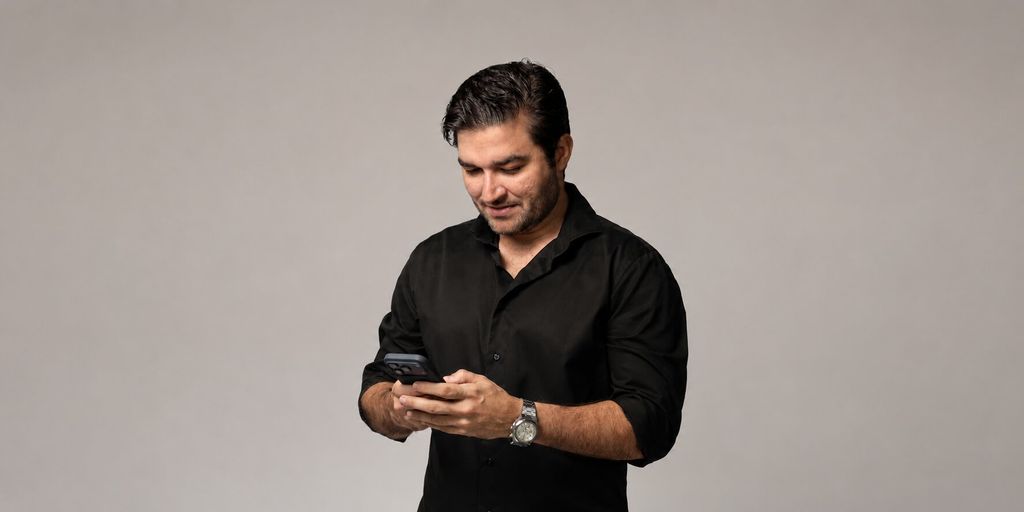
In a smartphone driven world, luxury watches continue to gain value, evolving from timepieces into symbols of identity, heritage, and lasting legacy.
For decades, watches were an everyday necessity. Today, any smartphone can display the time with perfect accuracy. Yet luxury watch prices continue to rise, and global demand remains remarkably strong.
At first glance, this seems contradictory.
If virtually nobody needs a watch to know the time anymore, why are people still spending thousands, and in some cases millions, of dollars on mechanical timepieces?
According to Renan Bastos, a specialist in the luxury watch market, this represents one of the most significant transformations the watch industry has ever experienced.
“Decades ago, a watch was a necessity. Today, it is a choice. And precisely because it is a choice, it has taken on much greater meaning for the people who buy it.”
The answer helps explain one of the most important shifts in the luxury market in recent years. Watches are no longer viewed solely as functional tools. Instead, they have become symbols of craftsmanship, personal identity, achievement, and long-term value.
“When someone buys a fine mechanical watch today, they are rarely purchasing it just to tell time. They are buying history, craftsmanship, identity, and often an asset they intend to keep for decades,” says Bastos.
[IMAGE: https://bizweekly.com/wp-content/uploads/2026/06/download-1-55.jpg]
The Market Continues to Grow
Despite ongoing economic uncertainty around the world, the luxury watch market continues to demonstrate resilience.
The United States remains the largest market for Swiss watches, while brands such as Rolex, Patek Philippe, Audemars Piguet, Cartier, Richard Mille, and Vacheron Constantin continue to benefit from strong demand among affluent buyers and collectors.
At the same time, manufacturers have implemented price increases across much of the industry.
Rising gold prices, higher production costs, the strength of the Swiss franc, and deliberate scarcity strategies have all contributed to higher retail prices.
But numbers alone do not tell the entire story.
According to Renan Bastos, rising prices demonstrate that consumers continue to see exceptional value in fine mechanical watches.
“If the decision were purely rational, watches would have lost relevance long ago. What sustains this market is the combination of heritage, exclusivity, and emotional connection.”
Watches as a Symbol of Identity
One of the most significant shifts in recent years involves how consumers perceive their watches.
In the past, luxury watches were often associated primarily with status. Today, many buyers are looking for something more personal.
The watch has increasingly become an extension of the owner’s identity.
“When someone chooses a watch, they are saying something about themselves. Certain pieces communicate history, knowledge, lifestyle, and even personal values. That helps explain why some models become so desirable,” explains Bastos.
This evolution has also fueled growing interest in independent watchmakers and limited-production timepieces that offer unique stories and exceptional craftsmanship.
The Return of Quiet Elegance
Another major trend in 2025 and 2026 is the growing demand for smaller, more elegant watches.
Models ranging from 36mm to 39mm have regained prominence across many collections.
This shift mirrors a broader cultural movement known as quiet luxury.
Rather than seeking products that immediately attract attention, many consumers are prioritizing quality, refinement, and timeless design.
According to Renan Bastos, this trend reflects a more mature luxury consumer.
“There is a growing appreciation for understated sophistication. Consumers no longer feel the need to prove anything. They are choosing pieces that hold personal meaning, regardless of whether everyone around them recognizes them.”
More Legacy, Less Consumption
The growth of the secondary watch market also highlights an important change in buyer behavior.
Increasingly, consumers view certain watches as long-term assets and objects capable of transcending generations.
While not every watch appreciates in value, many references continue to attract strong demand from collectors worldwide.
According to Renan Bastos, one of the unique characteristics of fine watchmaking is its ability to remain relevant over time.
“Few luxury goods can maintain cultural, emotional, and financial value for decades. A watch can be worn by a father, then passed to a son, and eventually to a grandson, carrying a family’s story along the way.”
This combination of heritage and emotional significance is becoming increasingly important, particularly among younger buyers.
The Paradox of the Digital Age
Perhaps the most fascinating aspect of today’s watch market is its contrast with modern technology.
We live in a world defined by constant updates, rapid consumption cycles, and products that become obsolete within a few years.
A mechanical watch operates according to an entirely different philosophy.
It requires no software updates, delivers no notifications, and can continue functioning for decades, or even centuries, when properly maintained.
For many consumers, that permanence has become part of its appeal.
For Renan da Rocha Gomes Bastos, the continued growth of the luxury watch industry proves that watches are no longer competing with technology.
“The smartphone won the battle for functionality. The watch won the battle for meaning. That is why great watches continue to appreciate in value, even in a fully digital world.”
And perhaps that explains one of the greatest paradoxes in today’s luxury market.
The less people need watches to tell time, the more valuable they seem to become.
Because for a growing number of consumers, the finest watches no longer exist simply to measure time.
Connect with Renan Bastos on Instagram and LinkedIn to follow his insights and ongoing commentary on developments in the luxury watch industry and related technology trends.
They exist to tell stories.

CEO Times Contributor
Covers global markets, corporate finance, and the executive careers built on them.
This article features partner, contributor, or branded content from a third party. Members of the CEO Times editorial staff were not involved in the creation of this content. All views and opinions are those of the contributor alone.