The Glass, Silence and the Antidote

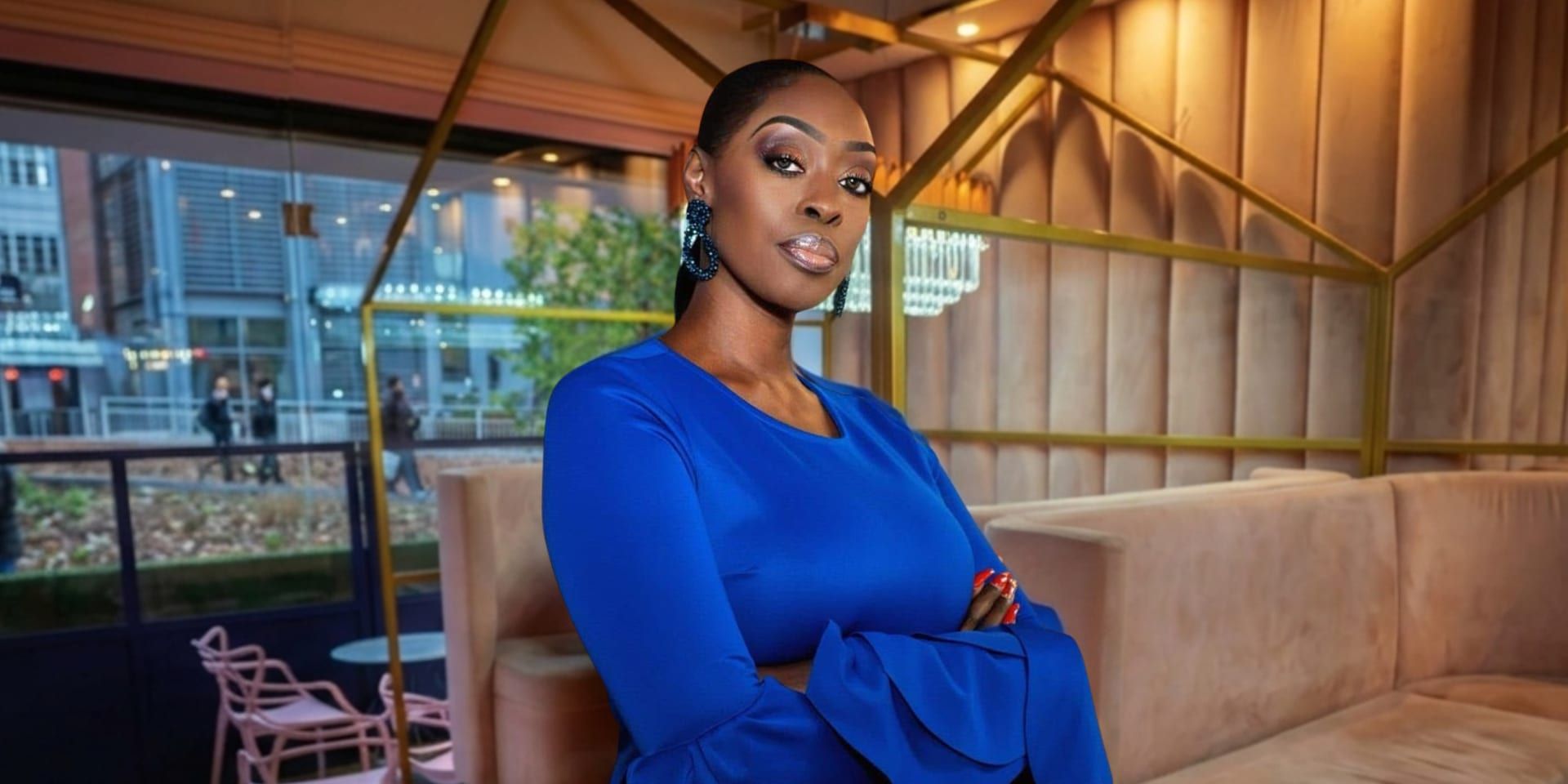
Dilys Sillah explores how silence, conditioning and communication shape leadership, relationships and AI readiness in a changing world.
Why Silence Is the Greatest Force Working Against Us in Relationships, Leadership, Culture and the Age of AI
There is a particular kind of silence that Dilys Sillah has learned to recognise: the silence of someone who no longer believes their words have the right to take up space, rather than someone who has nothing to say.
She has seen it in boardrooms in London, in executive coaching sessions in the UAE, and in conversations with professionals in the rest of the world, who lead organisations yet struggle to speak from the centre of their own authority. Capable people hesitating before offering ideas they already know are valuable. Brilliant individuals becoming smaller the moment they walk into certain rooms.
That silence, she believes, is rarely accidental. It is learned, and more importantly, it can be unlearned. For more than three decades she has devoted her work to understanding how people lose access to the capacities they were born with and what it takes to restore them. A question that has taken her beyond traditional leadership development into human development, communication, culture and, more recently, artificial intelligence.
The Glass Framework™ and the Architecture of Restoration
Dilys Sillah believes one idea explains far more of human behaviour than most leadership theories acknowledge: people rarely fail because they lack ability, more often they have lost access to capacities they once possessed.
That belief became the foundation of The Glass Framework™, her original methodology, whose premise is deceptively simple: You were born whole, the glass was full, and life depleted it. The explanation is rarely weakness, and it is seldom poor decision-making. Life takes from people, adverse experiences take from people, culture can take from people, and even the systems designed to protect and nurture children can, when driven by fear rather than understanding, quietly diminish the very qualities they were intended to develop.
The result often appears decades later; in boardrooms, in relationships, in leadership, in the moment someone is simply asked, “What do you think?” and something inside them falls silent.
The Glass Framework™ does not ask people to become someone new. It asks them to reconnect with the version of themselves that existed before depletion, before conditioning, and before they learned to make themselves smaller than they truly are.
Within the framework, Dilys identifies a series of human capacities that can become depleted and restored. The Capacity to Love™ shaping not only intimate relationships but every meaningful human connection. The Capacity to Heal™ determines whether people merely understand their experiences intellectually or genuinely recover from them. The Capacity to Lead™, influencing whether leadership is exercised from fear and control or from presence and authority, and The Capacity to Communicate™, connecting directly with the demands of today’s professional world, where careers, influence and increasingly AI itself depend upon the ability to communicate with clarity.
“Most people think communication is about skill,” she says. “It isn’t, it’s about permission, the question is never ‘Can you speak, it is, Do you believe you are allowed to?’.
The Question Defining the Age of AI
In 2018, Dilys travelled to Scotland to hear paediatrician and researcher Dr Nadine Burke Harris speak about Adverse Childhood Experiences (ACEs). What she heard that day gave new language to something she had already observed for years in her own practice: what happens to children rarely remains in childhood.
It shapes the adults they become, including how confidently they use their voice, how quickly they retreat into silence when situations feel unsafe, and how they build relationships, lead organisations and navigate professional life.
It became one of several influences that shaped her forthcoming book, They Taught Us to Be Quiet. Then They Gave Us AI. Culture, Communication and the Liberation of the African Voice, due for publication in 2027.
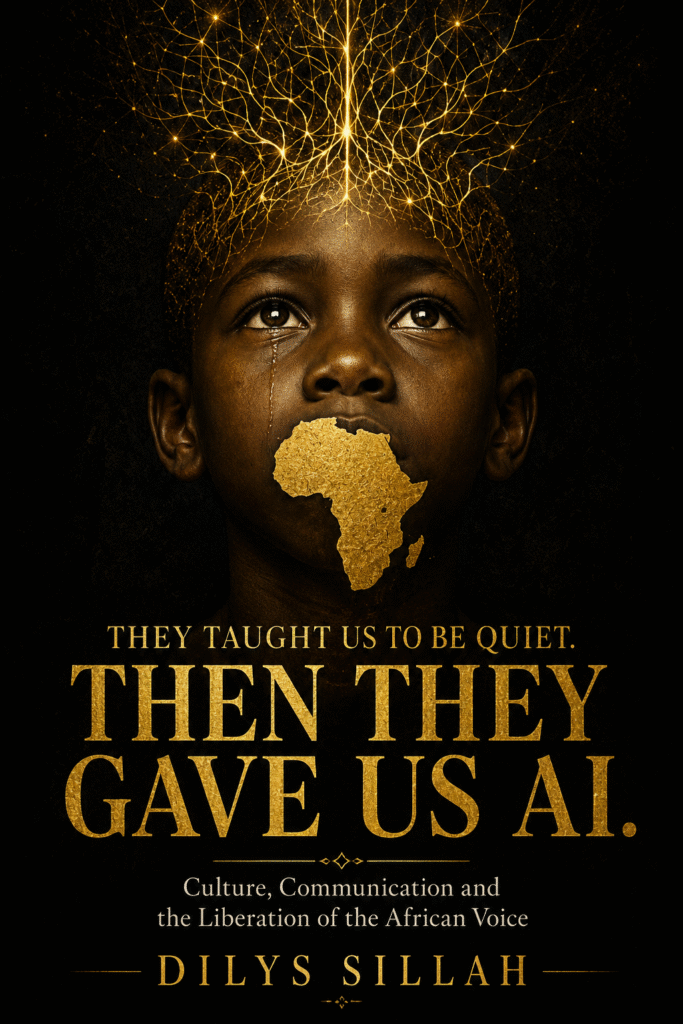
The book argues that many African cultural traditions, while rooted in love and respect, also conditioned generations of children to become exceptionally careful about when, where and how they spoke. Those patterns of communication are now colliding with an AI age that rewards clarity, curiosity and confident articulation.
“Artificial intelligence does not care about our culture,” she says. “It does not understand our conditioning, it simply waits, it rewards whoever communicates with clarity, confidence and the authority of someone who was never taught to be quiet.”
Artificial intelligence is often described as a technological revolution. Dilys argues that it is equally a psychological one, exposing the quality of human communication with remarkable precision, revealing hesitation, clarity, confidence and uncertainty simply because it can only respond to what people actually communicate rather than what they intend.
For professionals who have spent decades editing themselves before they speak, AI becomes an unexpected mirror, reflecting how confidently they have learned to express themselves as much as what they actually know.
The Conditioning Gap
One of the original concepts emerging from Dilys Sillah’s work is what she calls the Conditioning Gap: the distance between what people are capable of expressing and what they believe they are permitted to express; shaped by upbringing, environment, cultural expectation and repeated social reinforcement.
It appears in professional life as hesitation, under-articulation and the avoidance of visibility. In relationships as the inability to ask for what is needed, to receive what is freely offered, or to communicate honestly. In the AI era in the prompt box itself, where professionals qualify, soften, edit and diminish their own thinking before pressing ‘Enter’.
Her work addresses this gap by rebuilding the internal permission structures that depletion gradually erodes, rather than by simply teaching people to communicate differently, because in her view communication breakdown is rarely a skills problem, it is a permission problem.
A Voice Built on Substance
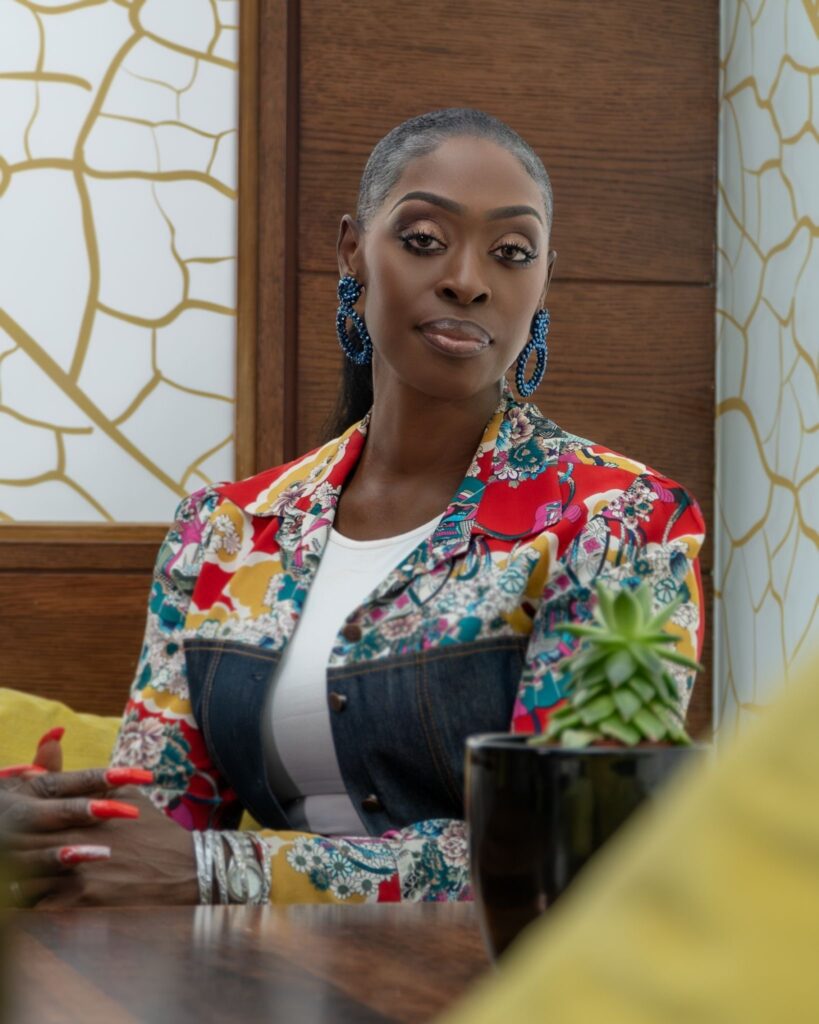
Although her forthcoming book will not be published until 2027, it has already attracted attention from academics, practitioners and Pan-African intellectuals interested in the intersection of culture, communication and artificial intelligence.
Beyond her writing, Dilys hosts the podcast Speak with Dilys: The Person Behind the Title, exploring the psychology of human behaviour, power and identity.
Her work spans executive coaching, leadership consultancy, organisational development, research and thought leadership internationally, bringing together human development, communication and AI adoption in a way that is increasingly distinctive.
Her work continues to be centred on one fundamental question:
“What becomes possible when people recover the parts of themselves they were taught to suppress?”
What Comes Next?
As artificial intelligence reshapes how organisations communicate, decide and lead, Dilys Sillah believes the greatest challenge sitting beneath all of it is human rather than technological.
While many experts are asking how AI will change the future of work, she is asking a different question: What happens when a generation of people conditioned into silence is expected to communicate with machines that reward confidence, clarity and authority?
It is a question that sits at the intersection of human development, communication and artificial intelligence, one that is becoming increasingly relevant as organisations invest heavily in AI while overlooking the human conditions required for its successful adoption.
Her work offers more than a new way of thinking about communication. It offers a path back to wholeness, reminding us that before people can communicate more effectively with artificial intelligence, they must first recover the capacities that make them fully human.
Dilys Sillah is a Human Development Practitioner, Communication Specialist and Executive Leadership Coach. Learn more at www.dilyssillah.com. Discover her work and community through her website and social channels at Facebook, Instagram, Tiktok and LinkedIn.

CEO Times Contributor
Covers leadership, business strategy, entrepreneurship, and the people building innovative companies.
This article features partner, contributor, or branded content from a third party. Members of the CEO Times editorial staff were not involved in the creation of this content. All views and opinions are those of the contributor alone.