Kiwi Offices Rewrites The Small Office Model


Christopher Jerjian saw empty offices and imagined a better future for small businesses.
The turning point did not arrive with a ribbon cutting. It arrived in the quiet after another large tenant left behind space that no longer matched the market. For Christopher Jerjian and the management team behind Kiwi Offices, the problem was not simply vacancy. It was a signal. Across New Jersey, small businesses still needed professional offices, but the old office model had stopped serving them. Kiwi Offices grew from that insight: give small companies private, flexible, turnkey office space without the premium pricing or shared-space compromise.
Kiwi Offices And The Shift In Demand
Before Kiwi Offices became a brand, the team operated Ibis Plaza in Hamilton Township, Mercer County, a large Class B office complex known locally to a generation of central New Jersey businesses. In the 1980s and 1990s, that world looked very different. A 50,000-square-foot or 100,000-square-foot office user was not unusual. Large companies took large leases, and office parks were built around that expectation. Over time, those deals grew smaller. Today, in this segment of the market, a 5,000-square-foot or 10,000-square-foot lease can feel substantial.
The reason was not a single event. It was a slow restructuring of work itself. Companies downsized. Jobs moved offshore. Digital tools made real-time remote collaboration possible across borders. Then COVID-19 accelerated the work-from-home shift, leaving many Class B and Class C offices with rising vacancies as leases expired. Some properties that once represented stable office assets became candidates for conversion into multifamily or industrial developments. Jerjian’s team watched this change closely, not as outsiders studying a trend, but as operators responsible for real buildings, real tenants, and real decisions.
After the 2008 financial crisis, large vacancies became harder to ignore. Many landlords waited for the market to return to its old pattern. The Kiwi Offices team made a different choice. They believed demand had not disappeared; it had changed shape. Small businesses, independent professionals, local service companies, and growing teams still wanted a credible business address, a private place to work, and a space that felt like their own. What they did not need was excess square footage, a complicated buildout, or a lease structure designed for companies far larger than theirs.

How Kiwi Offices Turned Vacancy Into Value
The first real test came inside a contiguous 26,000-square-foot space at Ibis Plaza. Rather than chase another large user, the team reimagined the space as a collection of smaller offices supported by shared amenities. They added a break area, a conference room, and a practical operating model. The concept launched in 2014 as Ibis Express Offices. Within a year, the entire project was fully leased. That result confirmed the team’s thesis. The market did not need another oversize office suite. It needed smarter access to private office space.
The idea of small office space was not new. Executive office providers such as Regus had long offered furnished offices with added services, while coworking brands such as WeWork popularized shared environments and desk-based memberships. Yet Jerjian saw a gap between those categories. Executive office models could feel like hotels, with menus of services that increased the price. Coworking could suit some people, but it often emphasized shared space over privacy. Kiwi Offices took another route. Its model is closer to a serviced furnished apartment for business: turnkey, private, practical, and priced for small companies that value autonomy.
In 2015, the team purchased a dated medical building in Mount Laurel, New Jersey. By 2016, it had been retrofitted and rebranded as Kiwi Offices. The second-generation design improved on the Ibis Express model with smaller offices and two conference rooms. The location proved even more successful, giving the company a clearer identity and a repeatable formula. Kiwi Offices was no longer an experiment inside one office park. It was becoming a focused response to a structural change in the office market.
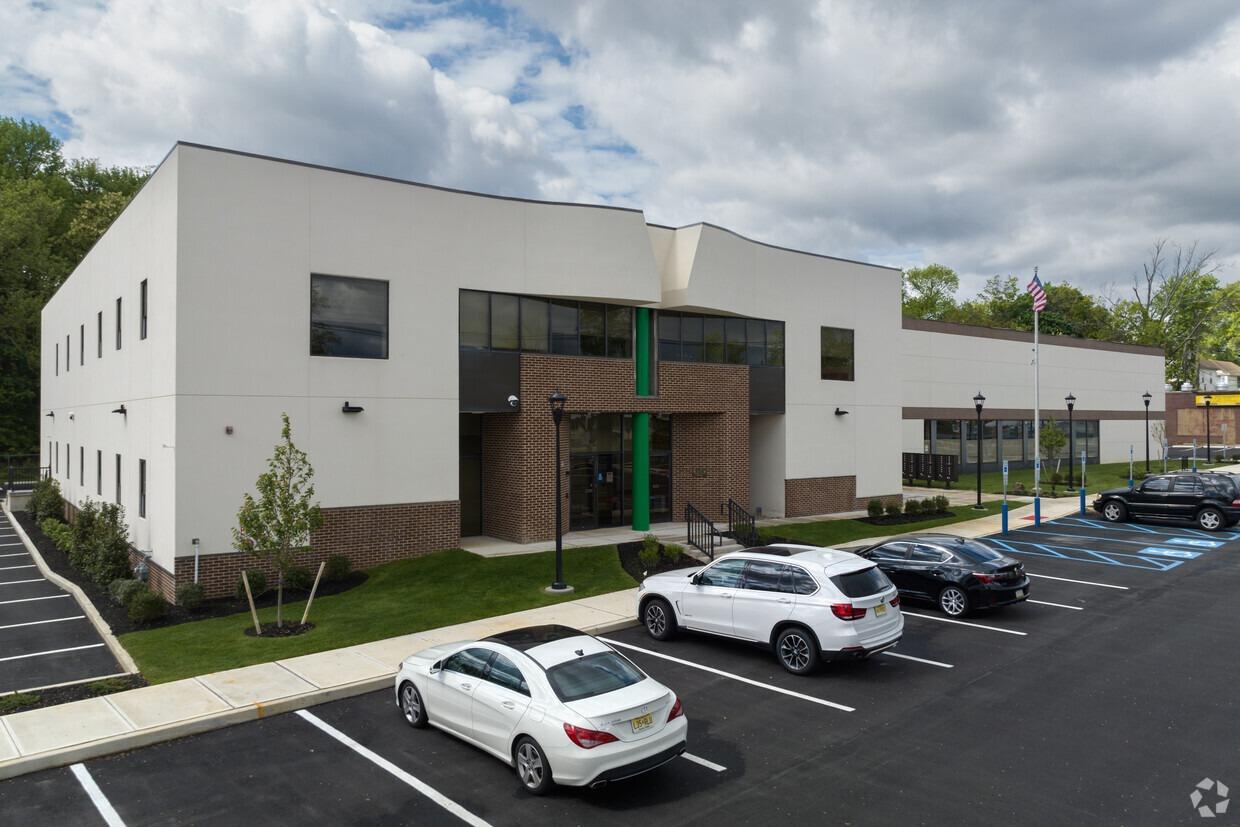
The next chapter began in 2019, when Kiwi acquired an abandoned medical building in Cherry Hill, New Jersey. The site included two office buildings and was in significant disrepair. For many operators, that condition would have been a warning. For Kiwi Offices, it was an opportunity to apply lessons learned from Hamilton and Mount Laurel. Pandemic delays slowed the project, but the long-term view held. On April 17, 2023, the Cherry Hill location opened. Its two-story East Building introduced a third-generation design with approximately fifty offices in varying sizes, including interconnecting suites that allow tenants to expand as needs change.
Why Kiwi Offices Serves Small Businesses Today
The strength of Kiwi Offices lies in its restraint. It does not try to be everything to everyone. Instead, it serves a defined audience with a clear promise: professional, flexible office space for small businesses that want privacy, speed, and value. The spaces are turnkey, which means tenants can focus on clients, operations, and growth rather than furniture, buildouts, or hidden complexity. Conference rooms support meetings. Shared amenities reduce friction. Private offices protect concentration, confidentiality, and identity.
That combination matters because small businesses often live in the gap between home offices and traditional leases. A home office may save money, but it can blur boundaries and weaken professional presence. A conventional lease may offer control, but it can require time, capital, and square footage a company does not need. Coworking may offer convenience, but some teams outgrow open environments quickly. Kiwi Offices gives these businesses another option. It offers the dignity of a real office with the flexibility of a modern service model.
For Jerjian, the value is not simply in the physical space. It is in matching the office to the way small businesses actually operate in 2026. A tenant may need one private office today, then an interconnecting suite later. A consultant may want a place to meet clients without paying for unused rooms. A local firm may want a furnished, credible base in Cherry Hill or Mount Laurel without the long process of creating an office from scratch. Kiwi Offices packages those benefits into an arrangement that feels accessible, professional, and grounded.
The company’s story also reflects a broader lesson in real estate. Markets change, but useful space can be reborn when operators understand the people they serve. The Kiwi Offices team did not wait for 100,000-square-foot users to return to buildings designed for another era. They listened to the demand that remained, then made it easier for smaller companies to step into a polished office environment on terms that made sense.
For small business owners, the benefit is both practical and emotional. A good office can create separation from home, confidence for client meetings, and a stronger sense of permanence. As its guiding idea suggests, the goal is not merely to rent space. It is to give business owners an office their way, with less friction and more control.
If a business needs a private, flexible office in Cherry Hill or Mount Laurel, Kiwi Offices offers a clear next step. Business owners can explore the available spaces, compare the fit for their team, and book a tour. For many small businesses, the right office is not the largest one. It is the one that lets them move faster, look sharper, and work with confidence.
Explore More About Kiwi Offices
Connect with Kiwi Offices, Christopher Jerjian on LinkedIn, Facebook, Instagram, and X.

CEO Times Contributor
Covers business, innovation, and leadership, with a particular interest in entrepreneurs and emerging brands.
This article features partner, contributor, or branded content from a third party. Members of the CEO Times editorial staff were not involved in the creation of this content. All views and opinions are those of the contributor alone.