
Inside The BEAD Program: How Anaptyx And Kenneth Carnesi Are Helping Small Vendors Find Opportunity

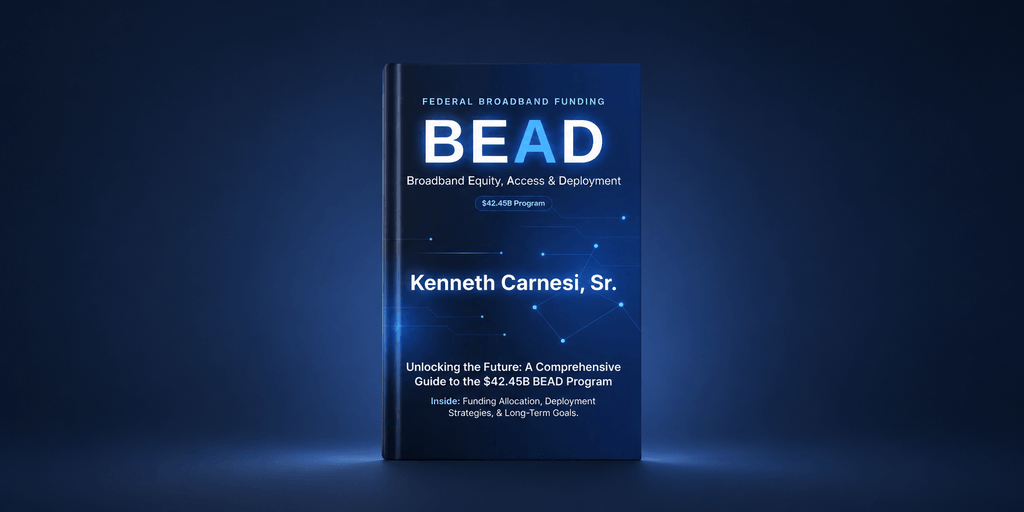
Anaptyx and Kenneth Carnesi Sr. offer a practical look at BEAD and what federal broadband funding means for small technology businesses.
The following questions are posed by the interviewer. All responses are from Kenneth Carnesi Sr., COO and Director of Government Sales at Anaptyx.
For many small technology companies, the Broadband Equity, Access, and Deployment Program can seem like an opportunity designed for someone else. The federal program represents $42.5 billion in funding, yet its rules, compliance requirements, and state level structures can be difficult for a small IT vendor, managed service provider, or internet service provider to navigate.
Kenneth Carnesi Sr. takes a different approach. In his book, BEAD: Federal Broadband Equity, Access & Deployment Program: What It Means for Small Business IT Vendors, MSPs & ISPs, he translates the program into practical business language. Through his work with Anaptyx, where he serves as COO and Director of Government Sales, Carnesi brings a perspective shaped by both federal program knowledge and hands-on experience in the managed services industry.
Q: Why Should Small Technology Businesses Pay Attention To BEAD?
A: Because BEAD is about more than broadband construction.
The program was created under the Infrastructure Investment and Jobs Act of 2021 to expand high-speed internet access in communities that remain unserved or underserved. While large broadband companies may seem like the obvious beneficiaries, the broader ecosystem creates potential roles for smaller technology businesses.
Municipalities and community organizations need more than infrastructure. They need technology partners that can help deploy, manage, secure, monitor, and maintain networks.
That creates potential opportunities for MSPs, IT vendors, local ISPs, subcontractors, and specialized technology providers.
My book helps those businesses understand where they fit.
Q: What Is The Biggest Challenge For Small Vendors?
A: The biggest challenge may be understanding how the money actually moves.
BEAD is a federal program, but federal agencies do not simply select local technology vendors. Funding moves through the federal government and states before projects reach communities and organizations responsible for deployment.
That means vendors need to understand state broadband programs, municipal procurement, local priorities, and potential partnerships.
I describe this structure in practical terms. Instead of telling a small business owner to study hundreds of pages of federal documentation, the book breaks the process into understandable steps.
The goal is to turn confusion into preparation.
Q: How Does Anaptyx Fit Into The BEAD Conversation?
A: Anaptyx brings an operational perspective to the discussion.
The company has experience working with government and municipal organizations and focuses on technology services that extend beyond the initial network installation.
That experience is important because a broadband project does not end when the infrastructure is built.
Communities also need reliable Wi Fi, network monitoring, cybersecurity, technical support, performance management, and ongoing maintenance.
Anaptyx's approach emphasizes what happens after deployment. That perspective complements my book, which explains how smaller technology companies can position themselves within the broader BEAD ecosystem.
Q: What Makes Carnesi's Book Different?
A: It focuses on action rather than theory.
BEAD can be intimidating because it combines federal requirements with state programs and local procurement procedures. My book addresses those layers while continually bringing the discussion back to what a business owner should actually do.
The book also covers eligibility, municipal procurement, regional opportunity mapping, registrations, compliance, teaming, subcontracting, and managed services.
It addresses requirements involving Buy America provisions, prevailing wage rules, accessibility obligations, and federal supply chain restrictions.
The practical value comes from connecting those requirements to specific preparation steps.
A company should not wait until an RFP appears to discover an incomplete registration, a missing certification, or equipment that requires additional review.
Q: Why Are Municipal Relationships So Important?
A: Because local knowledge can become a competitive advantage.
A small technology company may not have the size of a national contractor, but it may have something equally valuable: proximity to the community.
Local vendors can understand municipal needs, respond quickly, develop relationships with decision makers, and provide ongoing support.
My book encourages vendors to begin relationship building before a formal procurement process starts.
That requires research and patience. Vendors need to understand which communities have relevant broadband needs, identify decision makers, learn how procurement works, and establish credibility before they ask for business.
The approach changes the traditional sales question from "Who has an RFP?" to "Where can we provide meaningful value?"
Q: Where Do Teaming And Subcontracting Fit?
A: They can give smaller companies another path into the BEAD ecosystem.
A small vendor does not necessarily need to win a prime contract to participate in a major broadband project.
Smaller businesses can identify prime contractors looking for local partners and negotiate teaming arrangements that establish clear expectations.
My book also discusses practical considerations such as payment terms, liability limitations, and provisions that can help protect a smaller company's interests.
For a business that lacks the resources to pursue a large project independently, the right partnership can provide a more realistic route to participation.
Q: What About Managed Services?
A: This is one of the book's most compelling ideas for MSPs.
A broadband installation can be viewed as a one-time project, but the network still needs to operate after the installation is complete.
That creates potential demand for recurring services.
Managed Wi-Fi, monitoring, cybersecurity, technical support, service level management, and network maintenance can become part of the long-term relationship between a technology provider and a community.
For MSPs built around recurring services, this perspective is important. BEAD does not have to be viewed solely as a construction opportunity. It can also be viewed as a potential entry point into longer term managed technology relationships.
Q: Is BEAD The Same Everywhere?
A: No, and this is one of the book's most important warnings.
Although BEAD is a federal program, states have significant responsibility for implementing their individual programs.
Rules, scoring systems, procurement structures, and local preferences can vary.
That means a national strategy cannot simply be copied from one state to another.
Instead, I recommend researching each market carefully. Vendors can use broadband availability data, state information, and local research to identify communities that may represent meaningful opportunities.
The process requires more work, but it can also reveal opportunities that a broad national search might overlook.
Q: What Should A Vendor Do First?
A: Prepare before the opportunity arrives.
My book concludes with a ninety-day action plan designed to move readers from research to execution.
Early steps include completing necessary registrations, researching state and municipal opportunities, reviewing compliance requirements, identifying potential partners, and developing a regional opportunity map.
The larger lesson is preparation.
Government procurement can move quickly once an opportunity becomes active. Businesses that have already completed their administrative work and developed relationships are better positioned to respond.
Q: What Is The Central Message Of The Book?
A: Small businesses should not automatically assume that BEAD belongs to large corporations.
The central argument of the book is that smaller technology companies can bring qualities that large organizations may struggle to replicate, including local knowledge, community relationships, responsiveness, and specialized expertise.
The opportunity requires preparation, compliance, research, and relationship building. It is not automatic, and success is not guaranteed.
However, for businesses willing to understand how the program works, BEAD can open a broader conversation about the role of local technology providers in expanding and sustaining broadband access.
Award Recognition
The work of Kenneth Carnesi Sr. and Anaptyx has also received recognition in 2026. Carnesi's book, BEAD: Federal Broadband Equity, Access & Deployment Program: What It Means for Small Business IT Vendors, MSPs & ISPs, was named Best Broadband Policy & Strategy Book in the United States of 2026, recognizing its practical approach to helping small technology businesses understand federal broadband funding, compliance, procurement, and potential opportunities within the BEAD ecosystem. At the same time, Anaptyx LLC was recognized as Best Managed Wi-Fi Provider in the United States of 2026 for its work in managed Wi-Fi, network engineering, municipal connectivity, HOA and MDU networks, and commercial wireless infrastructure. Together, these recognitions reinforce the connection between Carnesi's focus on helping businesses understand broadband opportunities and Anaptyx's hands-on experience delivering and managing the technology infrastructure that supports connected communities.
Turning Federal Funding Into Local Technology Opportunity
The BEAD Program represents a major investment in broadband infrastructure, but infrastructure alone does not determine whether a community receives lasting value.
Networks need to be managed. Users need reliable access. Organizations need support. Security needs to be maintained. Equipment needs to be monitored and eventually replaced.
That is where the connection between Anaptyx's operational experience and my practical business guidebook becomes particularly relevant.
For small IT vendors, MSPs, and ISPs, the question is not simply whether BEAD exists. The more useful question is where their expertise can contribute to the network's full lifecycle.
Readers interested in Kenneth Carnesi Sr.'s book can explore it through books.by. To learn more about Anaptyx and its work with managed networks and broadband opportunities, visit Anaptyx.

CEO Times Contributor
Covers global markets, corporate finance, and the executive careers built on them.
This article features partner, contributor, or branded content from a third party. Members of the CEO Times editorial staff were not involved in the creation of this content. All views and opinions are those of the contributor alone.