General Holdings And The Union-First Thesis

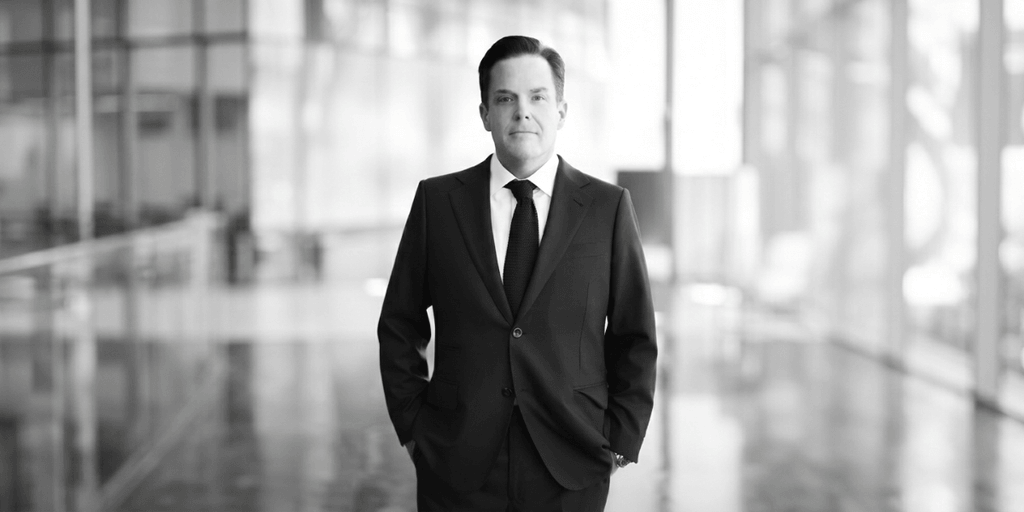
General Holdings and Paul Scribner explain why workforce-first investing can reshape hard industrial asset transactions.
The room that matters is not always the boardroom. For General Holdings Limited, the more important table was the one where the people who understood the machinery, the risks, the stoppages, and the institutional memory were already seated. Paul Scribner, founder and Chief Executive Officer, saw a pattern that many investors had treated as background noise. Deals around idled industrial assets were failing not because the assets were impossible to revive, but because the approach was wrong from the first conversation.
Why General Holdings Starts With Labor
General Holdings is a private investment holding company incorporated in the Dubai International Financial Centre. It invests as a principal from its own balance sheet, taking concentrated positions in energy, industrial infrastructure, distribution, and real assets. Yet Scribner is careful to frame the company less as a personal story and more as an argument. The subject, in his view, is not the romance of a young platform or the gloss of cross-border finance. It is how capital behaves when it enters places with complicated histories and working people who have seen too many promises arrive in polished documents.
That distinction matters because the assets General Holdings studies are rarely simple. They are often large, practical, and unfashionable: industrial plants, ports, heavy infrastructure, and related real assets built with public ambition, then slowed or idled by circumstance. Many investors look at them and see political risk. Scribner sees something more specific and, in some ways, more uncomfortable.
“Political risk is the explanation people reach for when they do not want to examine their own approach,” he says.
The standard path is familiar. An investor begins with formal authority, structures the transaction, builds the model, and treats the workforce as a constituency to be briefed later. On paper, the sequence looks efficient. In practice, it can become fatal. The people who know how the asset works may not hold the title, but they often hold something just as powerful: the practical consent without which a complex industrial asset cannot function.
“The workforce at a state-built asset holds a veto whether or not your term sheet acknowledges it,” Scribner says. “You can find that out at the beginning or you can find it out two years in.”
General Holdings chose the beginning. Its approach rests on formal cooperation with workforce representatives before moving deeper into a commercial process. That ordering is the thesis. It is slower, less theatrical, and harder to compress into a conventional transaction timetable. It also changes the tone of every conversation that follows. Rather than arrive with a plan for people, the investor arrives after first listening to the people most affected by the plan.
This is not sentiment dressed as strategy. It is a recognition that some assets are not merely financial instruments. They are workplaces, civic symbols, industrial ecosystems, and repositories of local skill. Treating labor as an obstacle may save time in a spreadsheet, but it can destroy trust on the ground. Treating labor as a counterparty does not remove friction. It makes the friction visible early enough to matter.
The General Holdings View Of Risk
Scribner’s argument cuts against a habit that has shaped global capital for years. Investors often categorize difficult markets by headline risk, then move inward with a defensive posture. They assume that the principal challenge is external: politics, regulation, volatility, or legacy ownership. Those factors may be real, but General Holdings begins with a different diagnosis. Many failures, Scribner suggests, come from misreading the social structure around the asset.
That misreading can be costly even when capital is abundant. Large firms can move quickly, but speed can become a weakness when the subject is an idled industrial asset with deep local memory. A faster process may close a data room. It may not build legitimacy. It may secure a meeting. It may not secure cooperation from the people expected to return a facility to productive order.
General Holdings is designed for a different rhythm. It is not a fund, and it does not manage third-party capital. That structure shapes its behavior. Without an external fund clock driving exits or deployment mandates, the firm can evaluate assets through the lens of long-term ownership rather than near-term transaction velocity.
“We are not a fund,” Scribner says. “Nobody is waiting on us to exit, which means we can afford to be patient in places where patience is the only thing that works.”
That patience is not passive. It requires proximity, repetition, and a willingness to sit with stakeholders before a transaction becomes convenient. It also requires a view of ownership that extends beyond control. Scribner has written for years about culture, obligation, patronage, and what capital owes the places where it operates. Through GH Insights and his own essays, he returns to a consistent principle: ownership is not exhausted at signing.
“Ownership carries obligations that outlive the transaction,” he says. “That is not sentiment. In these markets it is the operating condition.”
The point is not that every industrial asset can or should be brought back. Nor is it that every workforce relationship produces alignment. Rather, the General Holdings thesis is that the first question should not be, “How do we manage labor?” It should be, “What does labor know, what does labor need, and what would make labor believe this owner is different from the last one?”
That question may appear soft to investors trained to privilege documentation over trust. In practice, it is hard. It forces difficult conversations before momentum builds. It brings local obligations into view before capital gains narrative control. It can slow a process that others are racing to complete. Yet for assets that have already outlasted multiple failed approaches, speed is not proof of seriousness.
What General Holdings Asks Readers To Consider
Today, General Holdings occupies a distinct place in the investment landscape. It is small enough to be selective, structured enough to bring institutional discipline, and independent enough to avoid chasing liquidity for its own sake. The more important common thread is ownership style. The firm looks for assets where patience, operational seriousness, and stakeholder alignment matter more than fashionable growth language.
The leadership structure reflects that operating posture. Paul Scribner serves as Chief Executive Officer, with Gregory Man as President and General Counsel and Justin Inniss as Chief Operating Officer. The company has drawn coverage from publications including Khaleej Times, Fast Company Middle East, The Arabian Post, Emirates Reporter, and Arabian Business, while Scribner has appeared in CEOWorld leadership features and MSN leadership coverage. He treats that recognition with restraint.
“I would rather be judged on whether this closes than on how it reads,” he says.
That sentence captures the tension at the center of the General Holdings story. This is a company asking to be understood through a thesis, not applause. It argues that mispriced industrial assets are not merely distressed things waiting for better capital. They are dense human systems. Their value cannot be separated from the workers who know them, the communities that carry their memory, and the obligations that arrive with any owner who claims to be long-term.
The broader lesson here is useful far beyond one company. It challenges the comfortable assumption that difficult markets fail because local conditions are irrational. Sometimes the irrational act is to enter a place with a prewritten structure and call it strategy. Sometimes the smarter choice is to begin where the power actually sits, even if that power does not appear first in the documents.
Those interested can explore General Holdings for a clearer view of how patient ownership, workforce alignment, and real asset discipline can change the conversation around industrial value. The firm’s commentary, its thesis, and Scribner’s writing help explain why the next serious industrial deal may begin not with the loudest capital, but with the first honest conversation.
Explore More About General Holdings Limited
Connect with General Holdings, GH Insights, Paul Scribner, LinkedIn, and Medium.

CEO Times Contributor
Covers leadership, business strategy, entrepreneurship, and the people building innovative companies.
This article features partner, contributor, or branded content from a third party. Members of the CEO Times editorial staff were not involved in the creation of this content. All views and opinions are those of the contributor alone.