Andre Gejde on Why Fintech Growth in Mexico Starts With Distribution


Andre Gejde approaches fintech growth in Mexico through distribution, unit economics, and operating structure rather than attention alone.
A product can be well designed, commercially promising, and ready for a new market, yet still struggle to reach the customers it was built for. In Mexico, Andre Gejde believes that gap often has less to do with the product itself than with what happens after the launch decision is made. Distribution, acquisition economics, partnerships, pricing, and regulatory structure all determine whether a product can move from potential to actual use.
That perspective defines Gejde's work as a fintech growth executive focused on Mexico. At 22, he works across commercial growth, market entry, and expansion, applying an economics-based approach to questions that are often treated as marketing problems.
Andre Gejde Treats Growth as an Operating Function
Gejde's approach began with economics. After studying economics and graduating from IEAD, Instituto Europeo de Alta Dirección, he developed a professional focus on pricing, liquidity, market structure, and the economics behind customer acquisition and commercial expansion.
That foundation shaped a view of growth that goes beyond visibility.
"Growth in Mexico is not a marketing problem. It is a distribution and regulation problem. Most companies arrive with a good product and lose their first year figuring out how it actually reaches people," Gejde says.
For him, growth begins with understanding the mechanics behind a customer's decision to use a product. How much does it cost to acquire that customer? What is the customer worth over time? Which channels can reach the right audience? And can the operating structure behind the product support the business as it expands?
"I measure growth in three numbers: what a customer costs, what a customer is worth, and whether the structure behind the product can hold both. Everything else is noise," Gejde says.
That framework gives his work a practical emphasis. Rather than separating marketing, distribution, pricing, and operations into unrelated functions, he considers them parts of the same commercial system.
Why Gejde Focuses on Mexico
Mexico sits at the center of Gejde's professional work. He describes the country as an underserved fintech market with a large and young population, high mobile adoption, significant remittance flows, and an established regulatory framework.
The opportunity, however, does not eliminate the complexity of operating locally.
Companies entering Mexico need to understand how customers discover products, how distribution relationships work, how pricing translates into acquisition economics, and how the structure supporting a product fits the market. A product can solve a real problem and still struggle if those pieces are not connected.
"Mexico is the most underserved fintech market in Latin America. Large, young, mobile-first, with remittance flows most countries would envy and a regulatory framework that already exists. The opportunity is not building the market. It is operating in it well," Gejde says.
His focus on Mexico is deliberate. Rather than approaching the country as one market among many, he concentrates his professional work on understanding its commercial and operating environment.
Commercial Responsibility in Practice
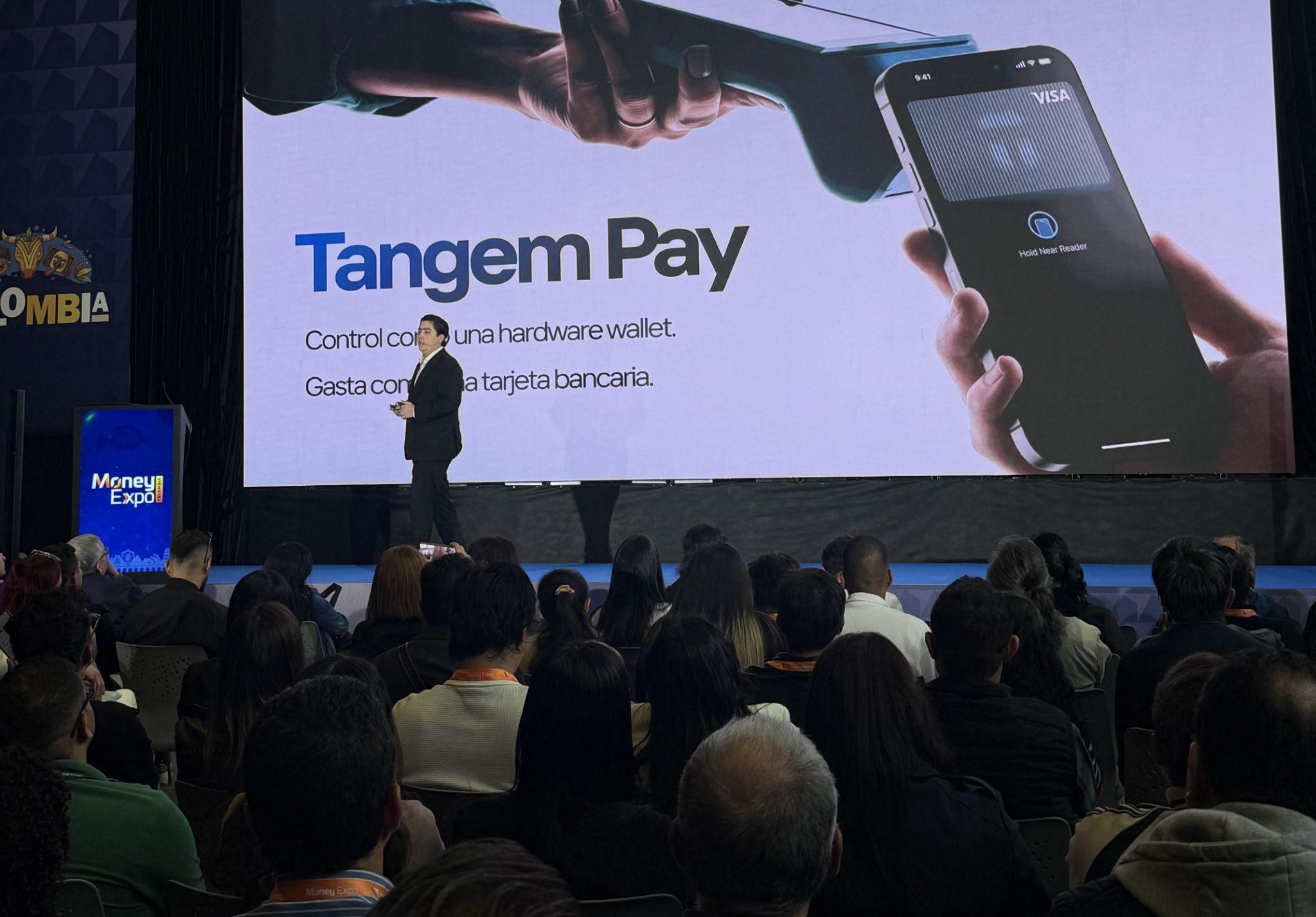
Gejde currently serves as Regional Growth Manager for Mexico at Tangem, where his responsibilities include distribution, partnerships, pricing, and go-to-market execution.
He also serves as an advisor to Onchain by Bitso and is a partner at Integra, a Mexico City operating firm that helps companies launch and run in Mexico through a single accountable team.
The roles give context to his growth philosophy. Each involves questions that extend beyond attracting attention. Distribution has to reach customers. Partnerships have to support commercial objectives. Pricing has to make economic sense. The structure around a product has to support its operation in the market.
At Integra, Gejde works alongside a team that has delivered more than 30 projects in Mexico. His involvement there adds an operational dimension to his commercial work, particularly for companies that need to understand how market entry translates into day-to-day execution.
Together, these roles reflect a consistent theme in Gejde's career: growth is not isolated from the rest of the business. It depends on how the pieces work together.
Distribution Over Noise
Gejde's philosophy also explains his emphasis on data.
In a crowded growth environment, attention can become a substitute for measurement. Reach, impressions, and visibility can create the appearance of momentum without answering the questions that determine whether a business is actually growing.
Gejde's approach is more specific. He looks at customer acquisition cost, customer value, distribution, pricing, and the structure supporting the product.
His personal rule is simple: "With data, without noise."
That principle informs how he evaluates plans and communicates about growth. The objective is not to make a strategy appear larger. It is to understand which parts of the system are producing results and which need to change.
For companies entering Mexico, that distinction can be significant. A strong product may create an opening, but distribution determines whether customers can actually find and adopt it. A marketing campaign may generate interest, but the economics behind acquisition determine whether that interest can become a sustainable commercial model.
Building a Career Around the Mexican Market
Gejde has also developed experience speaking about fintech and digital financial markets in Latin America. He has presented before AMFE, Asociación Mexicana de Entidades Financieras Especializadas, and at Money Expo in Mexico and Colombia, Mexico Blockchain Week, Peru Blockchain Conference, UNAM, and Tecnológico de Monterrey.
He works in both Spanish and English and has maintained a professional focus on Mexico throughout his work.
His experience also includes co-leading Mexico expansion initiatives for the Solana ecosystem with Superteam Mexico.
The breadth of his work is notable, but Gejde's own framing remains consistent. He does not position growth as a matter of generating the most attention. He approaches it as a discipline built around economics, distribution, and the operating conditions required to support a product.
What Growth Looks Like From the Inside
The central idea behind Gejde's approach is straightforward: growth becomes more useful when it can be measured and connected to the underlying business.
For a company entering Mexico, that means asking practical questions before assuming that demand alone will solve the problem. Who is the customer? How will the product reach them? What will acquisition cost? What will the customer be worth? What partnerships support distribution? Can the operating and regulatory structure sustain the model?
Those questions form the basis of Gejde's work across his roles.
His professional profile is therefore less about a single campaign or achievement and more about a consistent method. He approaches Mexico through the numbers behind growth, the channels that create distribution, and the structures that allow companies to operate after the initial market entry.
For executives and companies evaluating growth in Mexico, Gejde's work offers a perspective centered on the mechanics of expansion rather than attention alone. His professional background and current work can be explored through his LinkedIn profile.

CEO Times Contributor
Covers leadership, business strategy, entrepreneurship, and the people building innovative companies.
This article features partner, contributor, or branded content from a third party. Members of the CEO Times editorial staff were not involved in the creation of this content. All views and opinions are those of the contributor alone.