
Why So Many Successful People Still Feel Like Something Is Missing

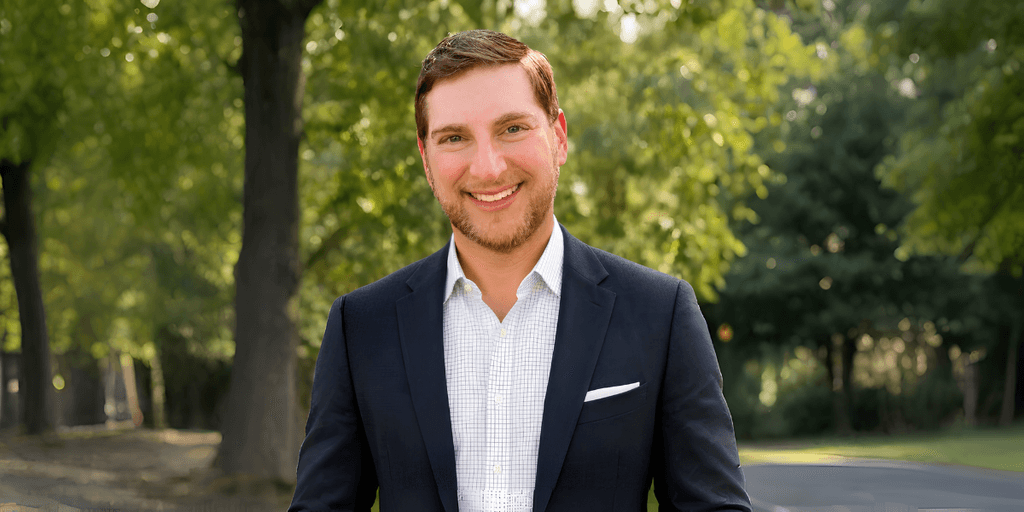
Why psychologist and former Meta researcher Dr. Evan Fishman says the biggest gap isn’t success vs. failure—it’s knowledge vs. experience.
By nearly every conventional measure, Dr. Evan Fishman had built a remarkable career. He earned a Ph.D. in Motivational Psychology, completed a postdoctoral fellowship at Stanford University, and later worked as a Senior UX Researcher at Meta, where he studied human behavior through products used by billions of people. His work focused on understanding what motivates people, how habits form, why we seek, and what drives our decisions.
Yet beneath all of those questions, another quietly emerged—one that would eventually reshape both his life and his work: Why do so many successful people still feel like something is missing?
The Question That Changed Everything
After leaving Meta, Dr. Fishman found himself sitting on the edge of his bed, uncertain about what came next. He expected to wrestle with questions about his career. Instead, his wife asked him something he still hasn’t stopped reflecting on: “When did we stop being enough for you?”
At first, the question didn’t seem to have much to do with work. Yet over time he realized it was pointing toward something much deeper. For years he had unconsciously organized his life around the assumption that peace always existed somewhere else—just beyond the next accomplishment, the next promotion, or the next version of himself. For a while, he thought he was grieving the loss of a job. Eventually, he realized he was grieving the loss of an identity.
Looking back, Dr. Fishman came to see that he had spent years studying motivation without fully examining the force that had been motivating his own life. He had built a career understanding why people strive, achieve, and pursue meaningful goals, yet had rarely paused to ask whether the striving itself was obscuring the very peace he hoped it would one day deliver. That question eventually became the foundation of his work.
The Difference Between Knowing and Direct Knowing
That realization gradually became the foundation of Dr. Fishman’s work as a psychologist, awareness coach, and speaker.
“We often know exactly what would help us,” he says.
“We know we should be more present. We know comparison steals joy. We know worrying rarely changes tomorrow. We know gratitude matters. But knowing isn’t the same as living.”
For years he assumed that a deeper intellectual understanding of the mind would naturally lead to a deeper experience of peace. Psychology could explain why we worry. Research could reveal patterns in attention and behavior. Science could predict human decision-making. Yet none of that guaranteed the experience he—and so many others—were actually seeking.
As he often explains, it’s a little like reading every book ever written about swimming while never stepping into the water. Knowledge is valuable. But eventually something has to become lived.
That distinction between conceptual knowledge and direct knowing has become one of the defining ideas in Dr. Fishman’s work.
The Art of Noticing
If there is one word that appears throughout Dr. Fishman’s work more than any other, it is notice. He believes that noticing is one of the most overlooked human capacities—not because it changes reality, but because it changes what becomes available within reality. Much of what people spend their lives searching for isn’t necessarily absent. More often, it has simply gone unnoticed beneath the constant activity of the thinking mind. His invitations are intentionally simple: notice the narration, notice beauty, notice your direct knowing, notice peace, notice what’s already here. While the practice sounds almost ordinary, he believes it opens the door to an entirely different way of experiencing life.
One metaphor Dr. Fishman frequently returns to is that thoughts and emotions are like scenes in a movie. Some scenes are joyful. Others are heartbreaking or terrifying. Yet throughout every moment of the film, the screen itself remains unchanged. He believes awareness is much like that screen—not separate from our experience, but the quiet presence in which every experience unfolds. When we identify only with the movie, we become swept away by every plot twist. When we begin to notice the screen, our relationship to the movie changes. The scenes continue, but they no longer define us in quite the same way.
Rather than asking people to suppress their thoughts or eliminate difficult emotions, Dr. Fishman invites them to become curious about the awareness that has been present through every experience of their lives. In his view, lasting transformation doesn’t come from controlling the contents of consciousness as much as recognizing the context in which consciousness appears. It is this shift—from being completely immersed in the movie to recognizing the screen that holds it—that allows people to meet life with greater clarity, resilience, and peace.

We Don’t Experience Life. We Experience Our Relationship to Life.
One observation has become central to Dr. Fishman’s coaching. Most people devote enormous energy to trying to change their experience. They want different thoughts, different emotions, greater confidence, less anxiety, and more certainty. While those desires are completely understandable, he believes they often point in the wrong direction.
Instead of asking how to change experience, Dr. Fishman encourages people to explore a different question: What if the greatest opportunity isn’t changing experience at all, but changing our relationship to experience? A fearful thought can arise without needing to be believed. Anxiety can be present without becoming an identity. Uncertainty can exist without taking away our capacity for peace. The circumstances of life may not immediately change, but our relationship to those circumstances can.
He believes this shift is subtle but profound. When we stop treating every thought and emotion as something to fix, eliminate, or obey, we create the possibility of relating to our inner world in an entirely different way. Rather than fighting our experience, we begin to understand it. Rather than trying to control every passing thought, we become curious about the awareness in which those thoughts appear.
Psychology Meets Awareness
Today Dr. Fishman works primarily with high-achieving professionals—leaders, entrepreneurs, executives, and lifelong learners who have accomplished many of the things they once believed would make life feel complete.
Clients often arrive expecting techniques to eliminate anxiety or silence the mind. Instead, they’re usually surprised by the simplicity of the first invitation.
“Let’s notice what’s already happening.”
From there, something unexpected begins to unfold. Rather than fighting their thoughts, they begin relating to them differently. Rather than endlessly searching for peace, they begin recognizing moments where peace had quietly been present all along.
His background in psychology gives him a deep appreciation for research, evidence, and the scientific study of human behavior. His own journey taught him something equally important: understanding ourselves intellectually is valuable. Experiencing ourselves directly is transformative.
A Different Kind of Success
If you’ve ever had the strange feeling that you’ve built a life that looks successful from the outside while quietly wondering why it doesn’t feel the way you expected, perhaps the problem isn’t you. Perhaps you’ve simply been asking achievement to answer a question it was never meant to answer.
That’s the conversation Dr. Fishman now dedicates his work to exploring.
Through private coaching, speaking engagements, writing, guided meditations, and group programs, he helps people bridge the gap between psychology and direct experience—not by asking them to become someone new, but by helping them notice what has been quietly present all along.
One sentence has gradually become the simplest expression of his philosophy:
“You already are what you’re looking for.”
At first, the statement can sound almost paradoxical. Most of us have organized our lives around the belief that peace must be earned through enough achievement, enough certainty, or enough self-improvement.
Dr. Fishman’s work gently questions that assumption. While growth continues throughout life, he believes peace isn’t something we manufacture. It is something we learn to recognize.
Explore More About Dr. Evan Fishman
Dr. Evan Fishman is a psychologist, speaker, and awareness coach who helps high-achieving professionals bridge the gap between conceptual knowledge and direct experience. After earning a Ph.D. in Motivational Psychology, completing a postdoctoral fellowship at Stanford University, and working as a Senior UX Researcher at Meta, he shifted his work toward helping people experience greater peace, clarity, and authenticity in everyday life. Through private coaching, speaking, writing, guided meditations, and group programs, he explores the intersection of psychology, awareness, and human flourishing.
Readers interested in learning more about his work can visit evanfishman.com, where additional resources, testimonials, and information about coaching are available. To experience—not just understand—what this article describes, download Dr. Fishman’s free guided meditation, A Moment of Peace, at evanfishman.com/peace.
Professional updates and insights can also be found on LinkedIn, Substack, Instagram, and TikTok under @dr.evanfishman. For speaking engagements, coaching inquiries, or media opportunities, Dr. Fishman can be reached at dr.evanfishman@gmail.com.

CEO Times Contributor
Covers leadership, business strategy, entrepreneurship, and the people building innovative companies.
This article features partner, contributor, or branded content from a third party. Members of the CEO Times editorial staff were not involved in the creation of this content. All views and opinions are those of the contributor alone.