
This Developer Built An App That Does Almost Nothing, And That’s Exactly Why It’s Brilliant


Cardly Reminder proves brilliance can be simple: no tracking, no data mining, just a gentle nudge to pay your bills on time.
In Silicon Valley’s race to build the next super-app that manages every aspect of your financial life, Al Turay did something radically different. He built an app that refuses to do almost everything.
No AI-powered spending analysis. No cryptocurrency integration. No investment advice. No budgeting tools. No credit score monitoring. No bank account linking. The app doesn’t even know how much money you have.
All it does is tap you on the shoulder and whisper: “Hey, your credit card bill is due tomorrow.”
And that deliberate simplicity might just be the most revolutionary thing to happen to personal finance apps in years.
The idea struck Turay not in a gleaming tech incubator or venture capital boardroom, but during one of those universal moments of modern adult panic, realizing at 11:47 PM that his credit card payment was due at midnight. As he frantically logged into his banking app, fumbling with passwords and two-factor authentication, a thought crystallized: Why does avoiding a forty-dollar late fee require sharing my entire financial DNA with yet another tech company?
“Everyone was trying to be the Swiss Army knife of finance,” Turay explains from his North Carolina home, where he developed Cardly Reminder while juggling a full-time job and running his small business. “Meanwhile, millions of responsible adults just needed someone to remind them to do something they already planned to do anyway. It’s like building a GPS system when all people really need is an alarm clock.”
The numbers validate his instinct. Despite having access to sophisticated banking apps, automated payment systems, and financial management platforms, Americans still pay an estimated eighteen billion dollars annually in credit card late fees. That’s not a technology problem, it’s a human problem. And human problems, Turay discovered, often require surprisingly human solutions.
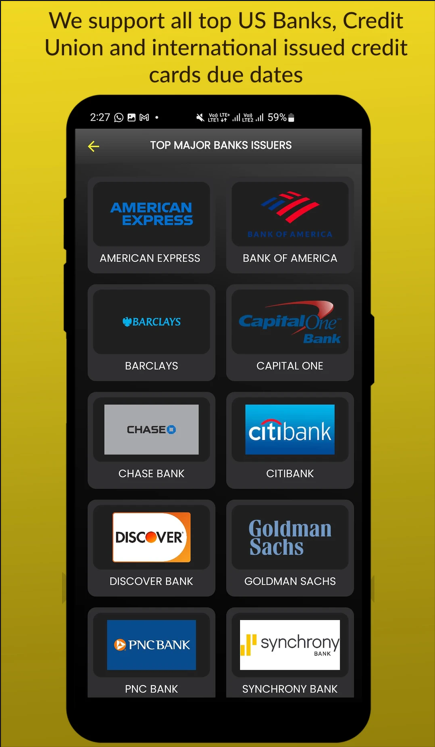
Consider the typical credit card holder’s reality. Sarah, a marketing manager in Chicago, has four credit cards: her primary rewards card, an airline card for travel, a store card she got for the discount, and an old card she keeps for emergencies. Each has a different due date. Her bank’s app can show her balances and accept payments, but it won’t remind her about the store card from a different issuer. Her calendar could work, but manually entering recurring reminders for multiple dates feels archaic. Automatic payments seem logical until an unexpected expense means she needs to control which card gets paid when.
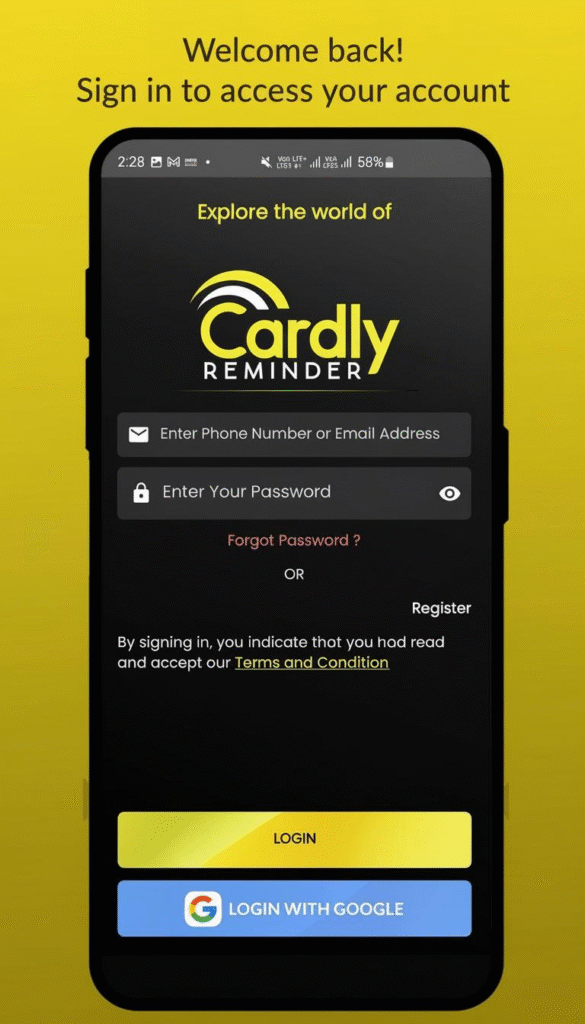
Enter Cardly’s almost absurdly simple proposition: You tell it when your bills are due, and it reminds you to pay them. That’s it. The entire onboarding process takes less time than reading this article.
The app’s restraint borders on the philosophical. In an age where every app seems desperate to become your everything, Cardly remains steadfastly, almost stubbornly, focused on its single purpose. When users suggested adding balance tracking, Turay resisted. When investors presumably asked about monetization through financial product recommendations, the answer was no. The app doesn’t even require users to create an account initially, you can start using it within seconds of downloading.
This radical simplicity has attracted an unexpected coalition of users. Tech-savvy millennials appreciate the privacy-first approach, exhausted by apps that harvest their data like digital combine harvesters. Baby boomers love that they can use it without calling their kids for help. College students, drowning in textbooks and term papers, find relief in not having to remember one more thing. Small business owners, managing multiple business cards alongside personal ones, finally have a system that doesn’t require MBA-level spreadsheet skills.
“We get emails from users who are almost confused by how simple it is,” Turay laughs. “They keep looking for the catch. Where’s the subscription fee? What data are we selling? When do we start pushing credit card offers? The answer is always the same: We just remind you to pay your bills. That’s the whole business model.”
The elegance extends to the user interface, which displays virtual cards that mirror the actual ones in your wallet, a visual cue that transforms abstract due dates into tangible reminders. See your blue card on screen? Time to pay your blue card in real life. It’s a design choice that seems obvious in hindsight but required months of refinement to perfect.
Perhaps most remarkably, Cardly has achieved something that billion-dollar fintech companies struggle with: trust. By explicitly not requesting sensitive financial information, the app sidesteps the primary barrier preventing many people from using financial tools. Your grandmother who still balances her checkbook by hand? She can use Cardly without fear. Your friend who covers their laptop camera with tape? They’re comfortable with Cardly’s approach.
The app’s success raises provocative questions about the entire app economy. How many other “problems” are actually simple human needs wrapped in unnecessary technological complexity? How many apps could be improved by doing less, not more? In Turay’s view, the pendulum has swung too far toward complexity.
“We’ve been conditioned to believe that more features equals more value,” he observes. “But sometimes the most valuable thing you can do is solve one problem perfectly instead of solving ten problems poorly. A hammer doesn’t need to be a screwdriver too.”
The early metrics suggest users agree. With thousands of downloads and a perfect five-star rating on the Apple App Store, Cardly is quietly building a devoted following among people who just want to pay their bills on time without enrolling in financial surveillance capitalism. Users report saving hundreds in avoided late fees, but equally important is what they describe as reduced financial anxiety, no longer lying awake wondering if they forgot something.
As major banks and financial institutions pour millions into increasingly complex financial management platforms, Turay’s humble reminder app stands as a compelling counterargument. Sometimes innovation isn’t about adding, it’s about having the courage to stop. Sometimes the most sophisticated solution is admitting that the problem wasn’t that complicated to begin with.
In a world of financial apps that want to be your advisor, analyst, banker, and broker, Cardly just wants to be your friend who remembers things. The friend who texts you, “Don’t forget your Visa bill is due tomorrow.” The friend who never asks to borrow money, never judges your spending, and never shares your secrets.
That’s not nothing. That’s everything.
Ready to experience the power of purposeful simplicity? Download Cardly Reminder on the Apple App Store or Google Play Store. Visit cardlyreminder.com to learn more, and join the conversation on Facebook, TikTok, and Instagram. Questions? Reach out at wecare@cardlyreminder.com

CEO Times Contributor
Covers global markets, corporate finance, and the executive careers built on them.
This article features partner, contributor, or branded content from a third party. Members of the CEO Times editorial staff were not involved in the creation of this content. All views and opinions are those of the contributor alone.