
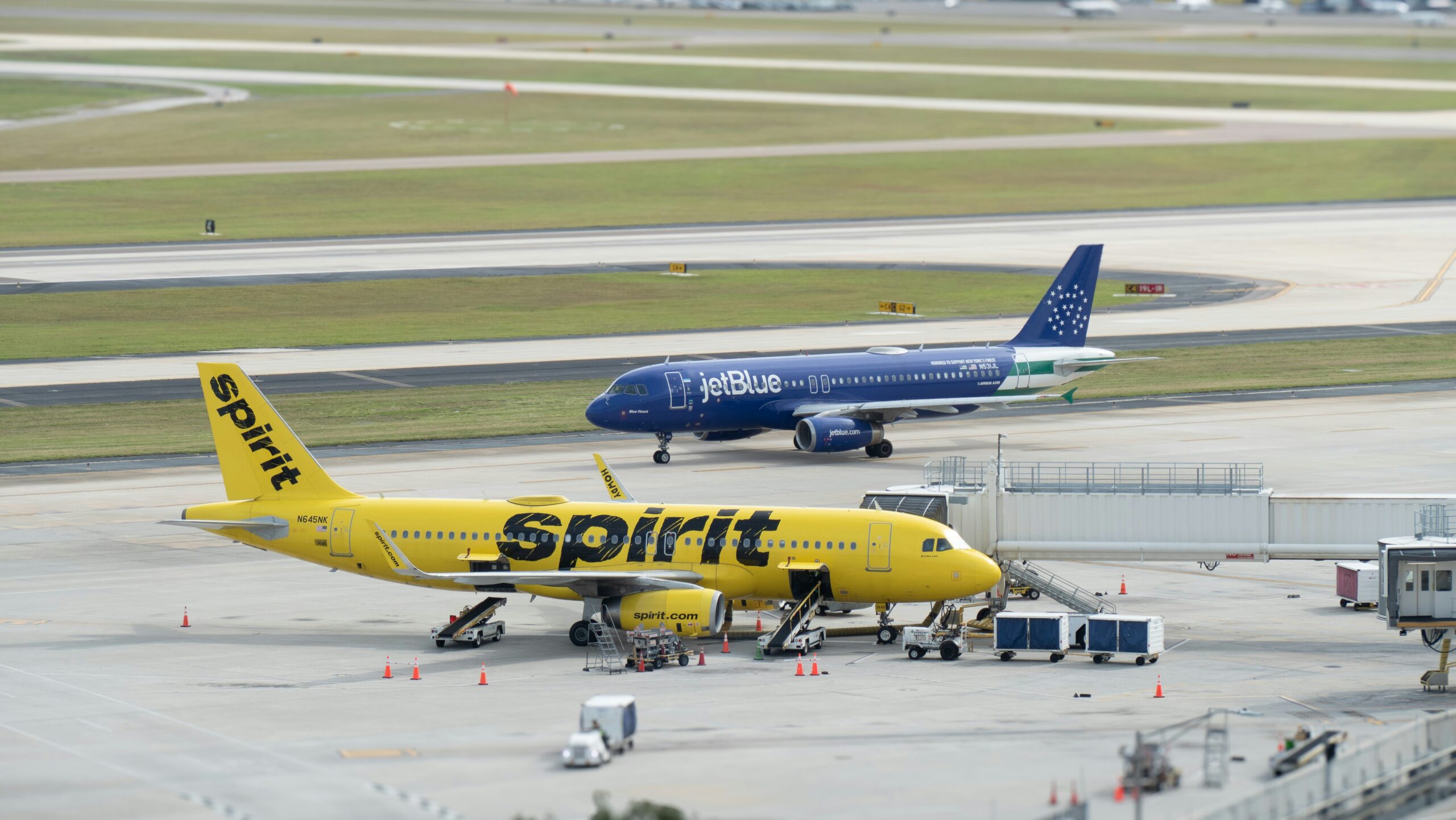
Spirit Airlines announced on April 17, 2025, that industry veteran Dave Davis will become its next President and Chief Executive Officer, taking up the role on April 21. This follows the airline’s emergence from Chapter 11 bankruptcy in March 2025, marking a pivotal moment in its effort to redefine its brand and business model.
Davis brings with him extensive leadership experience. He served as President and Chief Financial Officer at Sun Country Airlines since 2018, and previously held finance leadership roles at Northwest Airlines and US Airways. At Sun Country, Davis was instrumental in scaling the airline’s fleet and financial performance, contributing to a run of 10 consecutive profitable quarters. His track record positions him well to navigate Spirit through its turnaround.
Robert Milton, Chairman of Spirit Airlines, emphasized Davis’s strengths during the announcement. He praised Davis’s “wealth of experience and a solid track record of accomplishments,” highlighting his dual insight from both legacy carriers and ultra‑low‑cost models, as essential for Spirit’s transformation.
Davis responded to his new position with enthusiasm and resolve: “I am thrilled to join Spirit at this critical time in the company’s history. I look forward to working with the more than 11,000 Spirit Team Members to deliver value for our Guests, shareholders and the communities that we serve.”
Spirit Airlines filed for Chapter 11 bankruptcy in November 2024 amid mounting debt, persistent losses, and failed merger attempts—implicit in its decision to reject takeover bids from Frontier and JetBlue, with JetBlue’s proposal eventually blocked by a U.S. court. The restructuring wiped out approximately $795 million in debt and injected $350 million in fresh capital from bondholders, enabling the airline to emerge from bankruptcy protection in March 2025.
Despite these steps, Spirit remains under pressure. In 2024, the airline reported a negative operating margin of 22.5% and an operating loss of $1.1 billion. It also saw its liquidity margin shrink, though year-end cash held at over $900 million, partly thanks to debt conversion and adjustments in its fleet strategy.
Under Davis’s leadership, Spirit is poised to shift its brand identity from pure ultra‑low‑cost to a more premium positioning. Reuters noted Davis’s mandate to “move away from its no‑frills image and rebrand itself as a premium airline,” a strategic shift reflecting rising consumer expectations and economic uncertainties.
To support this repositioning, Spirit has built a new senior leadership team including Duncan Dee as Senior Vice President of Corporate Communications and Trey Urbahn as Senior Commercial Advisor. Dee brings communications experience from Air Canada and media analysis, while Urbahn, with a diverse background across Etihad, JetBlue, and Breeze, will guide network, pricing, yield management, and onboard products.
Davis steps in as the airline industry faces multiple challenges: tepid consumer demand, volatile fuel prices, and stiff competition from both legacy carriers and fellow low-cost operators. Southwest Airlines has rolled out its own basic-economy fares, and United and others have expanded into budget pricing, intensifying pressure across market segments.
Spirit is also dealing with operational disruptions, such as fleet-wide engine defects that grounded planes and affected scheduling and customer satisfaction. The legacy challenge of balancing punctuality, service quality, and cost control is now more acute under the new strategic direction.
Both analysts and stakeholders are watching closely to see whether Spirit can thrive as an independent carrier. After rejecting merger offers and navigating Chapter 11, the airline must prove it can deliver sustainable profitability and market differentiation in a crowded marketplace.
Davis’s appointment—and the broader leadership overhaul—signals Spirit’s commitment to stand independently. The ship has been steadied, but refining its cost model, enhancing revenue per passenger, and executing a rebranding strategy will be critical to long-term viability.
As CEO, Dave Davis inherits a company that is stabilized but unsteady—debt-laden yet infused with capital; independent yet facing existential questions. His focus is expected to center on rebranding and market positioning, elevating Spirit’s image beyond bare-bones airfare, likely through enhanced service bundles and customer-facing offerings. Operational excellence and reliability will be key, as will resolving structural and mechanical issues while maintaining cost discipline. Finally, financial turnaround is paramount: turning losses into profits by leveraging pricing strategies, reshaping the revenue mix, and maximizing asset efficiency.
With a strengthened leadership cohort and a clearer strategic aim, Davis’s performance will be judged on whether Spirit can move from crisis management to growth, carve out a middle-ground niche in the airline sector, and justify its independence to investors and consumers alike.
This leadership transition marks a defining crossroads for Spirit Airlines. Under Dave Davis’s leadership, the company must translate restructuring efforts into a sustainable platform for growth and relevance. Its success—or failure—could reshape the ultra‑low‑cost legacy and recalibrate expectations across the competitive airline landscape.