
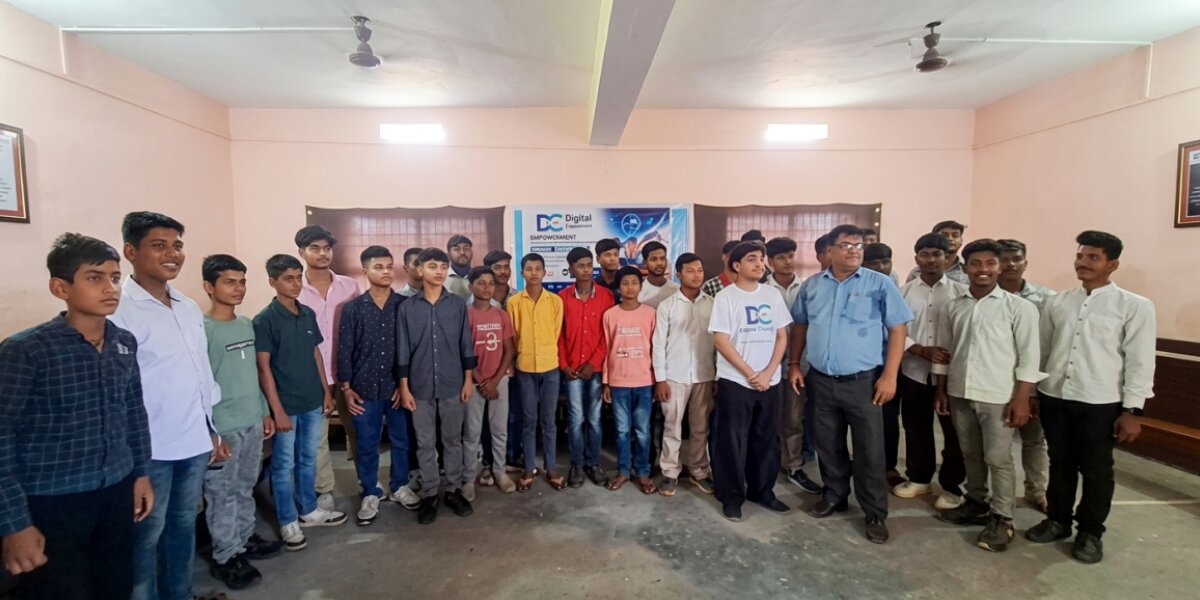
University of Massachusetts Amherst student Manit Awtani is closing India’s digital divide — and now guiding students from first keystrokes to MIT RAISE coding
Amherst, USA / Begusarai, Bihar — Manit Awtani, a second-year Computer Science student at the University of Massachusetts, Amherst, is showing that meaningful change can start in a college dorm and reach a village half a world away. In March 2024, he launched Digital Coders, a community project in collaboration with the KCS Foundation India, to bring computer education to underprivileged government-school students in one of Bihar’s most underserved regions.
Determined that the opportunity should not depend on geography, Manit raised the funds to purchase 20 computers and establish a fully equipped learning lab in a remote village of Begusarai District, Bihar. Recognising that access alone is not enough, he personally designed a curriculum spanning basic computer skills to advanced coding — structured for students who, in many cases, had never used a keyboard before.
The response has been extraordinary. To date, 2,566 students have enrolled in the program. Digital Coders is built on a “train the trainer” model, which multiplies its impact by equipping local instructors to teach independently. Every weekend, Manit hosts sessions remotely, gathers student feedback, and mentors the trainers — keeping the initiative community-driven and self-sustaining.
With many students now confident in basic computing, Manit is advancing the program to the next level. He is training the trainers to deliver the MIT RAISE coding curriculum, along with courses in Artificial Intelligence and Python — giving rural learners exposure to the same foundational skills shaping technology worldwide.
On 26 June, Manit travelled to Begusarai to meet students, trainers, and managing authorities in person. During the visit he interacted with more than 1,000 students, listening to their experiences, observing classes first-hand, and refining the program based on what he learned on the ground.
“Watching these students move from switching on a computer to writing their first Python program is incredible,” said Manit. “They are proving that talent is everywhere — it just needs access. This is only the beginning.”
Buoyed by the program’s success, Manit is now raising funds to establish another computer lab in a different remote part of Bihar, extending the same opportunity to hundreds more children.
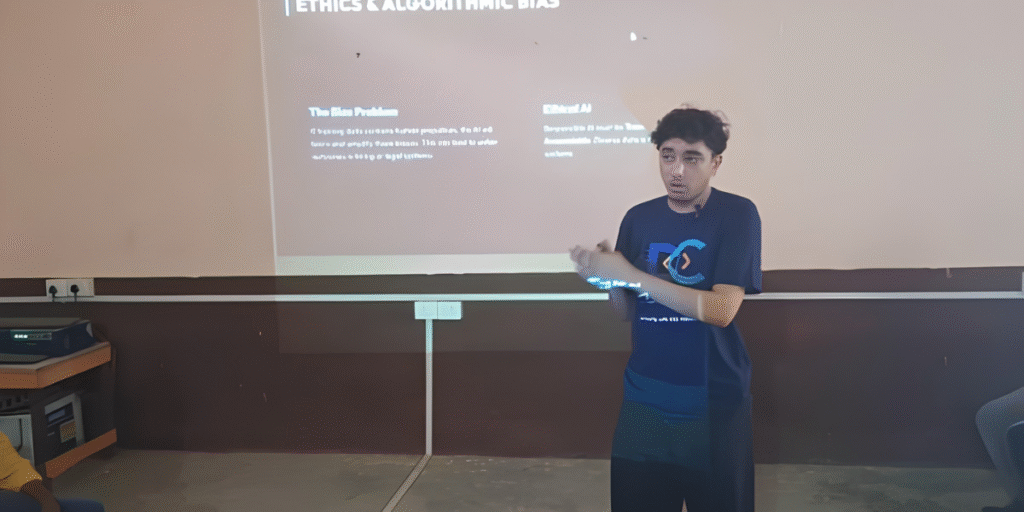
About Digital Coders: Digital Coders is a youth-led community initiative delivering computer education, coding, AI, and Python training to underprivileged government-school students in rural Bihar, India, in partnership with the KCS Foundation India.
Awtani’s journey illustrates how a university student’s education can become a resource for communities far beyond the campus where that education takes place.
His Computer Science studies at the University of Massachusetts Amherst provide the technical foundation, but Digital Coders depends just as much on community partnership, curriculum development, fundraising, communication, and a willingness to listen.
The programme’s story is ultimately about more than computers. It is about giving students the chance to discover that technology is something they can understand, question, create with, and potentially build a future around.
From a university setting in Amherst to a rural learning centre in Bihar, Digital Coders has created a bridge between two very different educational environments. Its growing reach suggests that when access meets mentorship and local commitment, a student’s first keystrokes can become the beginning of an entirely new direction.
The success of the initial programme has encouraged Awtani to look beyond the first learning centre. He is now raising funds to establish another computer laboratory in a different remote part of Bihar.
The proposed expansion would extend computer education and advanced digital learning to hundreds more children, while building on the training and community based model developed through Digital Coders.
The next phase is therefore not simply about adding another room filled with computers. It is about replicating an educational model that combines equipment, curriculum, local instructors, remote mentorship, and progressive technology education.
If that model continues to expand, each new lab could become another entry point into computer science for students who might otherwise have limited access to technology.
Readers interested in the work of KCS Foundation India and its community initiatives can learn more about the organization and its focus on empowering women and girls through its official website. kcsf.in
Those who would like to follow Dr. Pankaj Jha and learn more about his community and education initiatives can connect with him through Facebook, X, LinkedIn, and Instagram.