
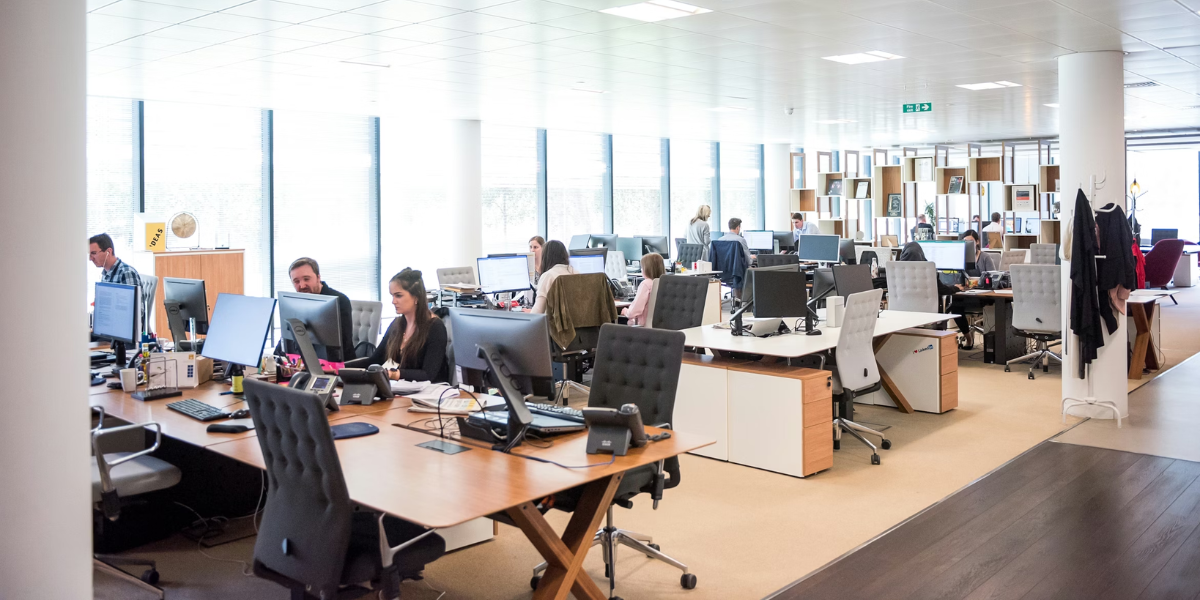
Corporate workplace strategy became one of the most closely watched business developments on May 10, 2026, as several major U.S. companies continued expanding return-to-office requirements in response to changing productivity goals, operational demands, and leadership priorities. The shift reflects a broader reassessment among executives regarding how organizations balance flexibility, collaboration, and long-term business performance in the post-pandemic economy.
Across the technology, finance, consulting, and professional services sectors, executives are increasingly adopting stricter in-office attendance policies after years of hybrid and remote work arrangements. Business leaders say the transition is being driven by efforts to improve team coordination, strengthen company culture, accelerate decision-making, and support innovation in increasingly competitive markets.
Several large employers have expanded mandatory office attendance requirements during the second quarter of 2026. Companies including Amazon, JPMorgan Chase, and Dell Technologies have continued tightening expectations around employee office presence as part of broader organizational restructuring and productivity initiatives.
Executives supporting the policy changes argue that in-person collaboration remains important for mentoring, leadership development, innovation, and corporate communication. Many companies are particularly focused on strengthening coordination among engineering, product development, and executive leadership teams as businesses accelerate investments in artificial intelligence, automation, and digital transformation.
Amazon CEO Andy Jassy has previously emphasized that face-to-face collaboration improves organizational speed and creativity, particularly for large teams managing complex projects. Similar perspectives have been echoed by leaders across banking, consulting, and enterprise technology sectors.
The renewed emphasis on office attendance is also affecting commercial real estate markets. Analysts say rising occupancy levels in major business districts are beginning to improve demand for office leasing in cities including New York, Dallas, Chicago, and San Francisco. While vacancy rates remain elevated compared to pre-2020 levels, several commercial real estate firms reported stronger leasing activity during the first half of 2026.
Business strategists note that workplace decisions are increasingly being tied directly to corporate performance objectives. Rather than treating office attendance solely as a human resources issue, executive teams are integrating workplace planning into broader operational and financial strategies.
Consulting firms monitoring the trend say many organizations are moving away from universal remote work models and instead adopting structured hybrid systems with mandatory in-office collaboration days. These approaches are designed to balance employee flexibility with leadership goals related to accountability, culture, and productivity.
At the same time, the transition continues generating debate among employees and management teams. Workforce surveys indicate that many professionals still value remote flexibility as a key factor when evaluating career opportunities. Hybrid work remains the preferred arrangement for a majority of employees in professional and technology-focused industries.
Human resources experts warn that companies implementing aggressive return-to-office mandates may face retention challenges if policies are not communicated effectively or aligned with employee expectations. Competition for experienced talent remains strong in sectors including software engineering, finance, cybersecurity, and healthcare management.
Nevertheless, many executives believe the long-term benefits of stronger in-person collaboration outweigh the risks. Some organizations are redesigning office spaces to support team-based work rather than traditional individual desk layouts. Investments in meeting technology, collaborative workspaces, and flexible scheduling systems are also becoming more common.
The trend is influencing leadership development strategies as well. Corporate training specialists argue that younger professionals benefit significantly from direct mentorship, observation, and real-time interaction with senior executives. Companies concerned about succession planning and management development increasingly view physical workplace presence as an important component of leadership growth.
Economic analysts say the broader impact of workplace policy changes could extend across multiple sectors. Increased office attendance may benefit transportation providers, hospitality businesses, restaurants, retail operations, and urban service industries that experienced reduced activity during remote work expansion.
Meanwhile, technology vendors providing remote collaboration tools continue adapting their business models as workplace expectations evolve. Rather than focusing exclusively on fully remote operations, many enterprise software providers are repositioning products around hybrid workforce management and cross-location collaboration.
For executives and entrepreneurs, the changing workplace landscape highlights the importance of adaptability in organizational leadership. Companies are being forced to balance employee preferences, operational efficiency, talent competition, and long-term strategic goals in an environment where workplace norms continue evolving rapidly.
Business advisors note that there is unlikely to be a single universal model for the future of work. Instead, organizations are expected to continue experimenting with different structures depending on industry demands, workforce demographics, operational complexity, and leadership philosophy.
As of May 10, 2026, the growing expansion of return-to-office policies represents one of the most important developments shaping executive leadership, workforce strategy, and corporate culture across the American business environment.