
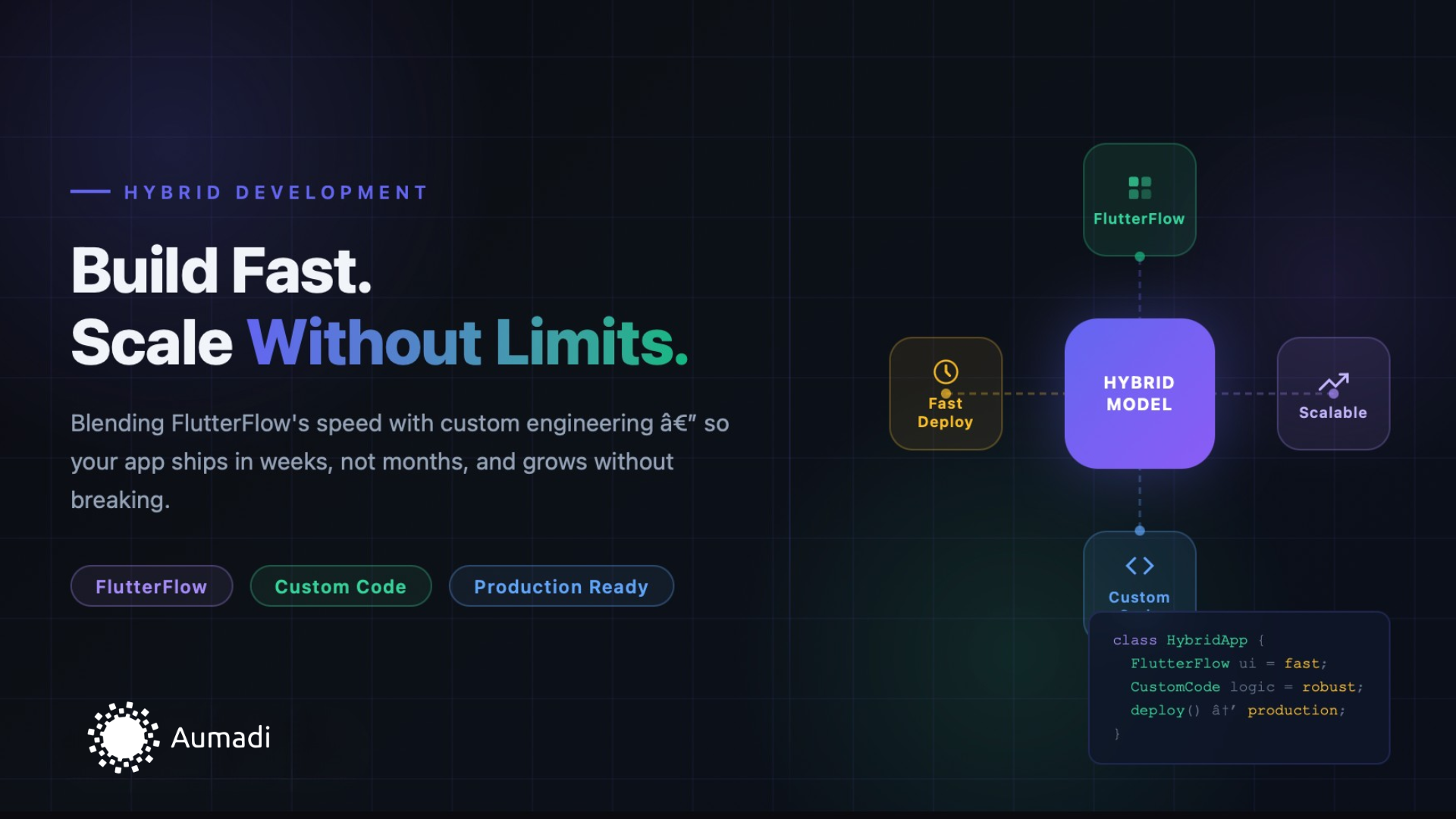
Aumadi Technologies blends custom code and FlutterFlow to create fast, scalable, and maintainable app solutions.
Most businesses face the same dilemma: build it fast, or build it right. Traditional choices, such as custom coding and no-code platforms, often force businesses into a tough decision between long development timelines and scalability, or quick, low-maintenance solutions with limited growth potential. A new hybrid approach is emerging, blending the best of both worlds to create cutting-edge, scalable applications without compromising on quality.
The Hybrid Model: Speed Meets Sustainability
As the demand for faster and more flexible development grows, the hybrid model combines the speed and ease of low-code platforms with the control and scalability of custom code. This approach enables businesses to develop applications quickly while ensuring that those apps can evolve alongside their growing needs.
Unlike traditional methods that require businesses to choose between speed and long-term growth, the hybrid model offers a balance that allows for rapid deployment and scalability. By combining low-code platforms like FlutterFlow with custom engineering practices, developers can create production-ready applications that are designed to grow.
The Dilemma in App Development: Speed vs. Quality
For most businesses, developing an app means making a tough choice between two extremes: either go with custom code, which can take months or even years, or use no-code platforms that promise speed but may lack long-term reliability and scalability.
Custom code offers flexibility and control, but at a high cost in both time and resources. No-code platforms, on the other hand, allow businesses to prototype and launch quickly, but they can become a burden as the business grows, with unstable or hard-to-maintain applications resulting in a poor user experience.
The hybrid approach resolves this dilemma by ensuring that applications are not only developed quickly but are also built to scale sustainably. By incorporating solid architecture principles and clean code into the development process, businesses can maintain flexibility without sacrificing the long-term stability of their applications.
The Hybrid Solution: Combining Low-Code with Custom Code
The core of the hybrid model lies in how low-code platforms, like FlutterFlow, are integrated with custom engineering practices. Unlike many agencies that only use no-code tools for simple applications or prototypes, the hybrid approach uses low-code tools to create fully-fledged, production-ready applications. This strategy enables rapid prototyping, fast iterations, and immediate deployment, while still ensuring that the application can handle future growth. It’s the model Aumadi Technologies has built its practice around.
By combining the speed of low-code development with the adaptability of custom code, businesses can build scalable apps that are not only quick to deploy but also robust and maintainable in the long run.
Flexibility for the Future: Building for Long-Term Success
App development should not be a sprint but a journey, and the hybrid approach emphasizes long-term flexibility and iterative improvement. This focus on creating adaptable products sets the hybrid model apart from traditional development practices that emphasize speed at the expense of future adaptability. Aumadi’s certified agency profile on Clutch shows the results of this approach in practice.
Apps built using the hybrid approach are designed to evolve over time, allowing businesses to make continuous improvements as their market needs change. With a foundation in both custom code and low-code platforms, businesses can scale their applications with ease and stay ahead of the competition.
The Hybrid Model’s Advantages in App Development
The hybrid approach offers several key benefits that are critical for success in today’s digital marketplace:
- Quick to Deploy, Built for Growth: By leveraging the capabilities of low-code platforms like FlutterFlow alongside custom development, the hybrid model enables businesses to launch applications quickly without compromising future scalability.
- Scalable and Maintainable: Unlike traditional no-code solutions, the hybrid approach ensures that apps are built with clean, maintainable code that can grow with the business, offering long-term stability.
- Iterative and Flexible: The hybrid approach emphasizes collaboration and ongoing development, ensuring that apps can evolve and adapt to meet changing business needs over time.
Looking Toward the Future of App Development
As the app development landscape continues to evolve, hybrid models combining low-code platforms with custom code are becoming indispensable tools for businesses seeking to launch innovative digital products quickly. The hybrid approach offers a perfect balance between speed, cost-effectiveness, and future growth potential.
This model not only addresses the challenges of traditional development methods but also enables businesses to maintain flexibility, ensuring that their apps can scale and evolve as their needs change.
By focusing on both the speed of low-code platforms and the stability of custom code, the hybrid model is revolutionizing the app development process, offering a smarter, more sustainable way to create apps that grow with businesses.
To learn more about how Aumadi is utilising the hybrid model that is shaping the future of app development, explore the following resources:
- Aumadi Technologies’ FlutterFlow Expert Profile
- Aumadi Technologies on LinkedIn
- Aumadi Technologies Profile on Contra
- Visit Aumadi Technologies’ Official Website