
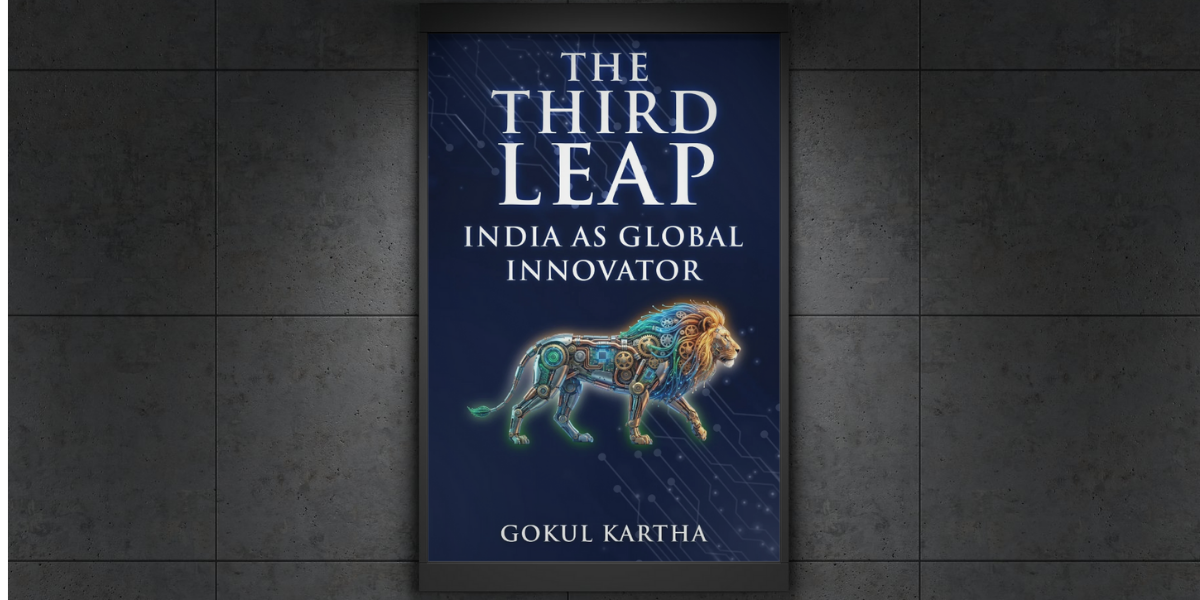
Gokul Kartha’s book, The Third Leap, offers a clear roadmap for India’s transformation from a services-driven economy to a global leader in deep-tech.
In the rapidly advancing world of technology, one question looms large: Where will the next great technological power emerge from? While the world has long looked to Silicon Valley as the epicenter of innovation, one visionary is pointing to a different source, India. Gokul Kartha, a technologist, writer, and entrepreneur, believes that India’s next leap lies not in outsourcing or services, but in creating and owning the technologies that will shape the future.
In his new book, The Third Leap, Kartha lays out a bold blueprint for India’s rise as a global deep-tech powerhouse, calling for a transition from a services-driven economy to one focused on developing cutting-edge technologies such as artificial intelligence, robotics, space exploration, and advanced manufacturing.
A Technologist’s Journey: From Kerala to Global Leadership
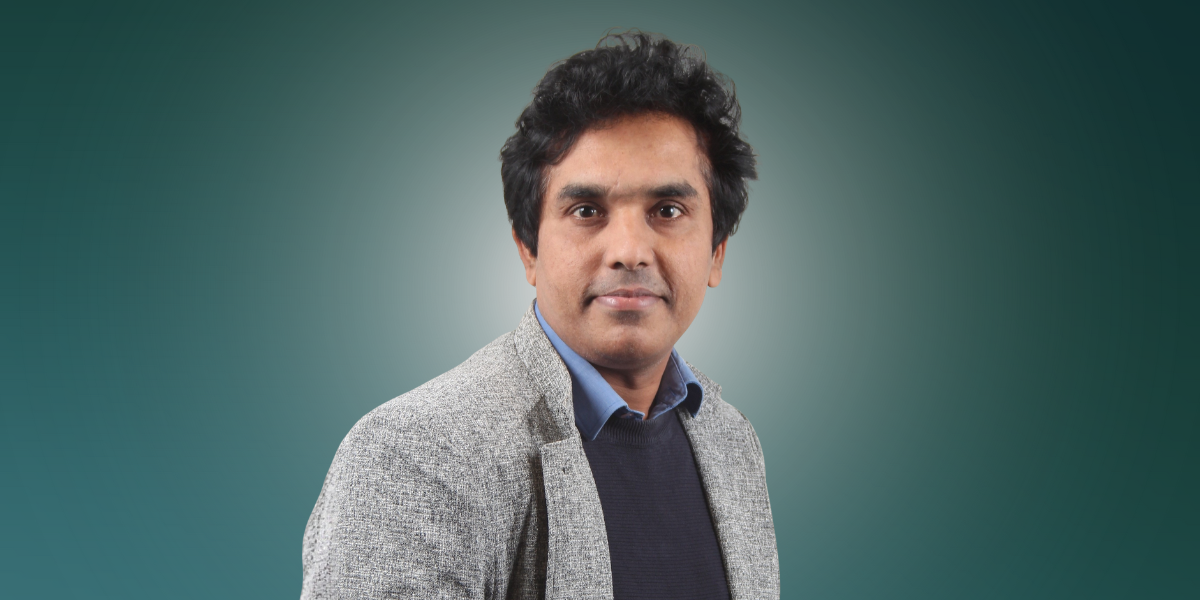
Gokul Kartha’s career is a testament to resilience, reinvention, and determination. Born in Kerala, India, with limited access to technology, Kartha started his career with very few resources. However, his curiosity and relentless work ethic propelled him from a small village to the global technology stage. His work in fields such as embedded systems, automotive software, and AI-driven solutions took him across Finland, Germany, South Korea, and the Netherlands, where he led multicultural teams to tackle complex engineering problems.
Having worked in some of the most advanced technological ecosystems globally, Gokul’s perspective is shaped by both his engineering expertise and his ability to see how technology can drive economic progress. His book, The Third Leap, encapsulates this vision for India’s technological future.
The Need for India’s Third Leap
India’s journey in the tech world has largely been defined by its role as a services hub. While this has brought the country into the global spotlight, Gokul argues that relying on outsourcing and services will not sustain India’s growth. According to him, India’s “first leap” was outsourcing, positioning it as a global IT services leader. The “second leap” came with the digital revolution, building robust infrastructure and a consumer market. Now, Gokul proposes, the nation must make the “third leap”, one that involves creating and owning transformative technologies.
“India’s next leap will not come from outsourcing, it will come from building, inventing, and owning the technologies that shape the future,” Gokul asserts. This “third leap” is about transitioning from a services-driven economy to one that fosters deep-tech innovation, positioning India as a global leader in sectors like AI, robotics, and advanced manufacturing.
The Roadmap: How India Can Make the Third Leap
To achieve this transformation, Gokul outlines a practical roadmap that India can follow. Key components of this roadmap include talent development, policy reforms, infrastructure investments, and nurturing a culture of deep-tech entrepreneurship.
“A nation becomes a global power not by consuming innovation, but by creating it,” he writes in The Third Leap. The shift, Gokul argues, should begin with a reorientation of India’s approach to technology, focusing not just on adopting technologies but on fostering research, experimentation, and invention.
One core theme of the book is India’s immense potential in its people. Gokul believes that India’s brightest minds in science, engineering, and entrepreneurship can drive the country’s leap into deep-tech innovation. By investing in education, skill development, and nurturing talent, India can compete globally in AI, robotics, and other critical fields.
The Importance of Deep-Tech for National Strength
Deep-tech is more than just an emerging industry, it is key to national strength, according to Gokul. Technologies like AI, semiconductors, and advanced manufacturing will define the next industrial revolution. The nations that lead in these fields will control the future of global economic power. Gokul advocates for India to lead this charge by investing in homegrown technological development and fostering collaboration between businesses, universities, and research institutes.
“Deep-tech is not just an industry; it is a national strength,” Gokul explains. “India must invest in its engineers, researchers, and innovators to harness this potential and create its own technological infrastructure.”
Frameworks for Innovation: ReAgile, Device ML Fusion, and OpenRoadSim
Gokul’s expertise is not just theoretical; it is grounded in hands-on experience. He has contributed to innovative frameworks like ReAgile, a remote-first engineering methodology that has revolutionized global collaboration. Device ML Fusion, a platform he created, integrates machine learning with embedded systems to offer AI solutions for industries. His work with OpenRoadSim, an open-source automotive infotainment simulation system, is another example of his contributions to global technology.
These frameworks showcase Gokul’s philosophy: true innovation comes from building systems from the ground up. His work demonstrates that when deep technical expertise is combined with global collaboration, transformative results can follow, something he believes is crucial for India’s future.
A Vision for the Future: The Third Leap as a Movement
The Third Leap is both a practical guide and a vision for India’s future. Gokul Kartha is not just advocating for technological progress, he is calling for a movement that transforms India into a global leader in deep-tech. His book is a roadmap for policymakers, business leaders, and innovators to unite around a common vision: a future where India leads in AI, robotics, and beyond.
As Gokul writes, “The Third Leap is a roadmap, but it is also a movement. It’s about empowering individuals, communities, and organizations to believe in the possibility of a transformed India, where deep-tech drives not just economic growth, but national pride.”
A New India Powered by Innovation
India’s leap into deep-tech is a collective endeavor that requires the dedication of policymakers, entrepreneurs, engineers, and innovators alike. Gokul’s blueprint is clear, India’s brightest days are ahead, but it will take hard work and collaboration to realize this vision.
For more information about Gokul Kartha’s vision for India’s deep-tech transformation, visit his website at gokulkartha.com, and follow his journey on LinkedIn and Instagram.